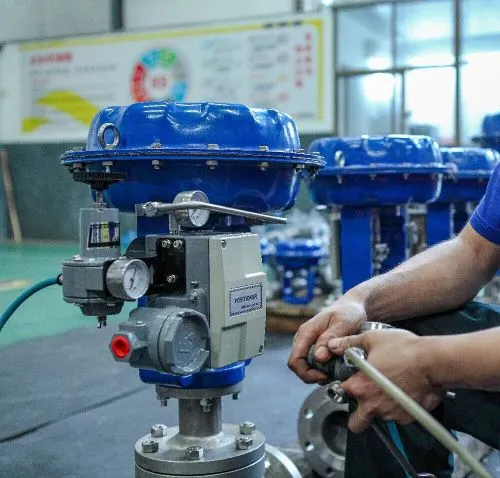

In modern industrial systems, pipeline networks play a role similar to the circulatory system of the human body, transporting various liquids, gases, and process media. Within these systems, valves serve as critical control components responsible for regulating flow, pressure, and isolation. However, to achieve accurate and automated valve operation, another essential component is required—the valve actuator.
In large-scale facilities such as chemical plants, oil refineries, and power stations, thousands of valves may operate across different process units. Relying on manual operation for every valve would not only reduce efficiency but also expose workers to hazardous conditions, including high temperatures, extreme pressure, and toxic environments.
Valve actuators have transformed industrial valve operation by enabling automatic, remote, and intelligent control. From traditional manual mechanisms to advanced smart actuators with digital communication and diagnostic capabilities, these devices have become fundamental components of industrial automation.
Today, valve actuators are widely used in oil and gas, chemical processing, power generation, water treatment, pharmaceutical, and food industries. This article explains the fundamentals of valve actuators, their major types, industrial functions, and key factors for selecting the right solution.
What Is a Valve Actuator?
A valve actuator is a mechanical device that provides the force required to open, close, or position a valve. It converts energy from a power source—such as electricity, compressed air, hydraulic pressure, or manual force—into mechanical movement that controls valve operation.
The actuator determines whether a valve remains fully open, fully closed, or positioned at a specific intermediate point. This allows precise control of fluid flow, pressure, and process conditions according to system requirements.
In automated systems, actuators receive signals from control equipment such as PLCs, DCS systems, or industrial controllers and adjust valve positions automatically.
Basic Functions of Valve Actuators
The primary functions of valve actuators include:
- Opening and closing valves automatically
- Adjusting valve position for flow regulation
- Receiving and executing remote control commands
- Providing valve position feedback
- Monitoring operating conditions
- Supporting fault diagnosis and alarm functions
Modern intelligent actuators can communicate directly with industrial control networks, providing real-time information about valve position, operating status, and equipment health.
Motion Types of Valve Actuators
Although actuators use different energy sources, their output movement generally falls into two categories:
Linear Motion
Linear actuators create straight-line movement and are commonly used with:
- Gate valves
- Globe valves
- Control valves
They move the valve stem upward or downward to control opening and closing.
Rotary Motion
Rotary actuators produce rotational movement and are commonly applied to:
- Ball valves
- Butterfly valves
- Plug valves
Most quarter-turn valves require approximately 90 degrees of rotation for complete operation.
Main Types of Valve Actuators
Valve actuators are classified according to their driving energy source and operating mechanism. The major categories include electric, pneumatic, hydraulic, electro-hydraulic, pneumatic-hydraulic linkage, solenoid, self-operated, and manual actuators.
1. Electric Actuators
Electric actuators use electric motors and gear systems to generate valve movement. They are widely used because of their accurate positioning, easy integration with automation systems, and intelligent control capabilities.
Main Types of Electric Actuators
Multi-Turn Electric Actuators
Designed for valves requiring multiple rotations, including:
- Gate valves
- Globe valves
They convert motor rotation into linear stem movement through a gear mechanism.
Part-Turn Electric Actuators
Used for quarter-turn valves such as:
- Ball valves
- Butterfly valves
- Plug valves
They typically provide 90-degree rotation.
Linear Electric Actuators
Convert rotary motor movement into linear displacement for applications requiring direct stem movement.
Intelligent Electric Actuators
Advanced versions equipped with:
- Microprocessors
- Position sensors
- Communication modules
- Self-diagnostic systems
They support remote monitoring, automatic calibration, fault alarms, and integration with industrial networks.
Electric actuators are commonly equipped with handwheels for emergency manual operation, limit switches for position control, and torque protection systems to prevent damage caused by overload or valve blockage.
2. Pneumatic Actuators
Pneumatic actuators use compressed air to generate mechanical movement. Due to their fast response speed, simple structure, and excellent explosion-proof characteristics, they are widely used in industries with strict safety requirements.
Typical applications include:
- Oil and gas facilities
- Chemical plants
- Natural gas systems
Common Pneumatic Actuator Types
Diaphragm Pneumatic Actuators
Use air pressure on a flexible diaphragm to produce movement. They feature simple construction and reliable operation.
Piston Pneumatic Actuators
Provide higher force output and longer stroke, making them suitable for large valves and high-pressure applications.
Rack-and-Pinion Pneumatic Actuators
Convert piston movement into rotary motion and are commonly used with ball and butterfly valves.
Scotch-Yoke Pneumatic Actuators
Generate high torque output and are suitable for large industrial valves.
Single-Acting Pneumatic Actuators
Use compressed air in one direction and springs for return movement, providing fail-safe operation during air supply failure.
Double-Acting Pneumatic Actuators
Use air pressure on both sides of the piston for stable and powerful operation.
Pneumatic actuators are especially suitable for applications requiring rapid valve response and reliable emergency operation.
3. Hydraulic Actuators
Hydraulic actuators use pressurized hydraulic fluid to generate extremely high output force and torque.
They are commonly used for:
- Large pipeline valves
- High-pressure systems
- Heavy-duty industrial applications
Compared with pneumatic systems, hydraulic actuators provide significantly higher force, making them suitable for large valves that require powerful operation.
Common types include:
- Linear hydraulic actuators
- Rotary hydraulic actuators
- Push-rod hydraulic actuators
- Hydraulic quick-closing actuators
They are often used in critical systems where reliable and powerful valve operation is required.
4. Electro-Hydraulic Actuators
Electro-hydraulic actuators combine electric control with hydraulic power.
A motor-driven pump generates hydraulic pressure, providing:
- High torque output
- Precise positioning
- Fast response
- Remote control capability
Although their structure is more complex and cost is higher, they are ideal for demanding applications such as:
- Large pipeline systems
- Emergency shutdown valves
- High-performance industrial control systems
5. Pneumatic-Hydraulic Linkage Actuators
These actuators combine pneumatic energy sources with hydraulic transmission technology.
They commonly use:
- Natural gas or nitrogen as the driving medium
- Hydraulic oil for power transmission
Advantages include:
- Explosion-proof performance
- High output force
- Remote operation capability
- Emergency shutdown functions
They are widely used in:
- Long-distance pipelines
- Oil and gas fields
- Natural gas transportation systems
6. Manual Actuators
Manual actuators are the simplest valve operating mechanisms. They rely on human force and are mainly used where automation is unnecessary.
Common types include:
- Handwheel operators
- Lever handles
- Gear operators
- Chainwheel operators
- Locking handles
Advantages include:
- Simple structure
- Low cost
- Easy maintenance
However, they are unsuitable for large-scale automation or frequent valve operation.
Importance of Valve Actuators in Industrial Automation
Improving Operational Efficiency
Without actuators, operators would need to manually operate valves throughout large facilities. This approach is inefficient and unsafe for modern continuous production systems.
Actuators enable:
- Centralized control
- Remote operation
- Automated processes
- Reduced labor requirements
Improving Process Accuracy
Industrial control systems continuously monitor parameters such as:
- Pressure
- Temperature
- Flow rate
- Liquid level
Actuators respond automatically to control signals, adjusting valve positions to maintain stable operating conditions.
Enhancing Personnel Safety
Many industrial valves are installed in dangerous locations involving:
- High temperatures
- Toxic substances
- High-pressure environments
Remote actuator operation reduces direct human exposure and improves workplace safety.
Supporting Emergency Protection
In abnormal situations, actuators can quickly move valves into safe positions.
Applications include:
- Emergency shutdown systems
- Safety instrumented systems
- Leak prevention systems
Fast and reliable actuator response can prevent equipment damage and environmental accidents.
How to Select the Right Valve Actuator
Selecting an actuator requires consideration of power source, operating conditions, and control requirements.
1. Power Source Selection
The available energy source is the first consideration.
- Electric actuators: suitable where accurate positioning and intelligent control are required
- Pneumatic actuators: suitable for fast operation and hazardous environments
- Hydraulic actuators: suitable for large valves requiring high force
- Manual actuators: suitable for simple applications
2. Operating Environment
Important factors include:
- Temperature
- Pressure
- Medium characteristics
- Explosion risks
- Installation location
For example, pneumatic actuators are preferred in explosive environments, while hydraulic actuators are better suited for high-load applications.
3. Control Requirements
Different processes require different actuator performance.
For continuous flow regulation:
- Electric actuators
- Pneumatic actuators with positioners
are commonly selected.
For simple opening and closing:
- Basic pneumatic or electric actuators may be sufficient.
For safety-critical applications:
- Spring-return pneumatic actuators
- Electro-hydraulic emergency shutdown systems
are often preferred.
Conclusion
Valve actuators are essential components that enable modern industrial automation, transforming traditional manual valve operation into efficient, accurate, and intelligent control.
Different actuator technologies provide unique advantages: electric actuators offer precision and smart control, pneumatic actuators provide fast response and safety, hydraulic actuators deliver powerful force, and specialized systems such as electro-hydraulic and pneumatic-hydraulic actuators address demanding industrial applications.
Selecting the correct valve actuator requires careful consideration of operating conditions, control requirements, safety standards, and system performance. With proper selection and application, valve actuators improve production efficiency, enhance safety, and ensure reliable operation of industrial processes.China manufacturer offers high-quality industrial products with competitive pricing and advanced production capabilities.
























Sign in to leave a comment.