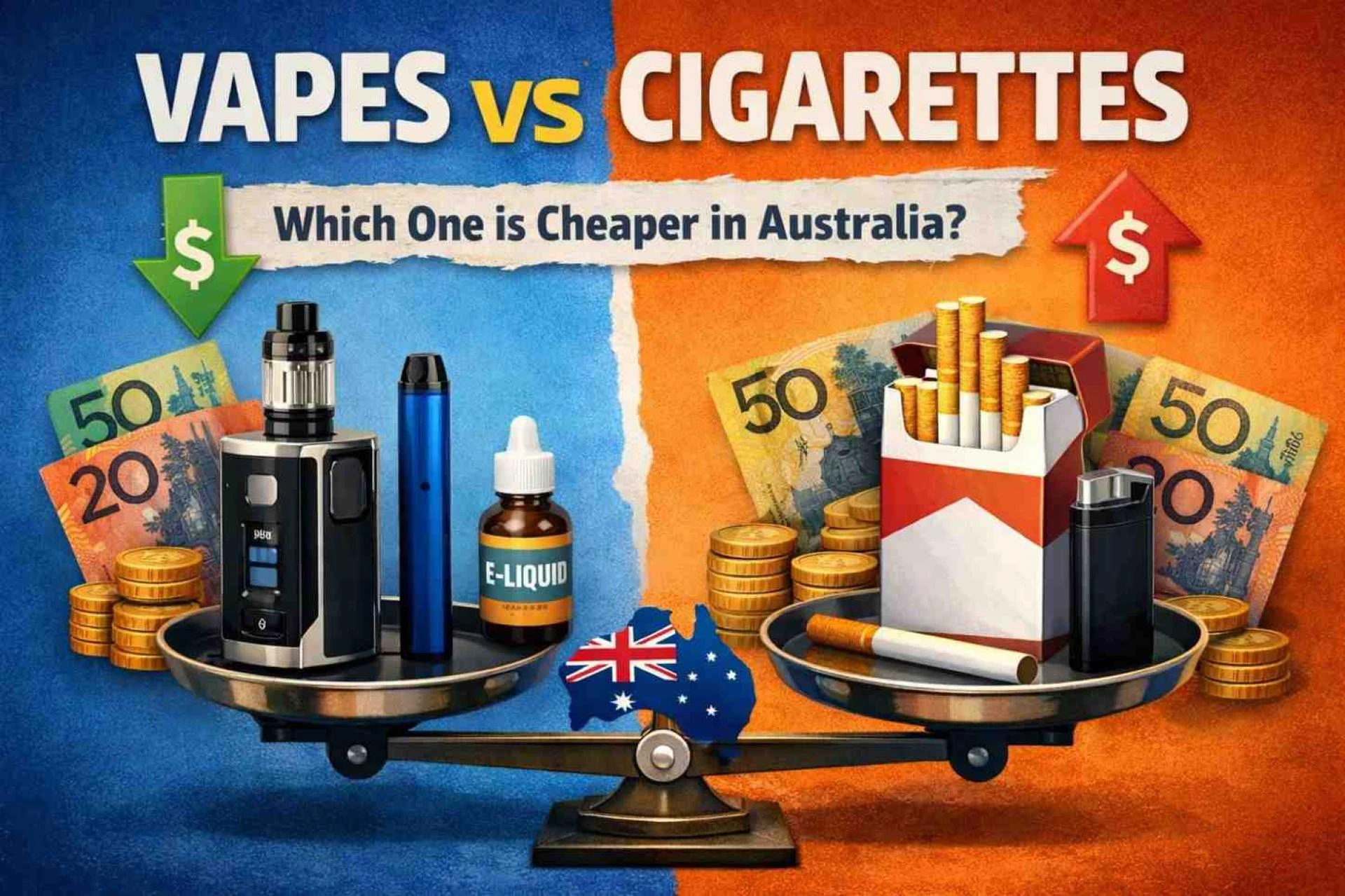

Australians spend more than $20 billion annually on tobacco products, according to the Australian Institute of Health and Welfare's latest National Drug Strategy Household Survey. With excise taxes climbing 5% twice yearly since 2017 and retail prices for a pack of 20 cigarettes often exceeding $40 in major cities like Sydney and Melbourne, smokers face a stark reality. Vaping has surged as an alternative, with over 1 million users nationwide per the 2025 Cancer Council report. But which option truly lightens the financial load? This analysis breaks down costs, hidden fees, and long-term savings to help you decide, based on current 2026 pricing from retailers, government data, and independent studies.
Understanding Cigarette Costs in Australia
Cigarettes dominate the nicotine market but come with Australia's world's highest tobacco taxes. A standard pack of 20 premium cigarettes, such as Marlboro or Winfield, retails for $38 to $45 across states. In New South Wales, expect $42 at a typical convenience store; Queensland adds up to $2 more due to state levies.
Break it down further. Excise duty alone accounts for about 70% of the price, hitting $1.89 per stick as of February 2026 per Australian Taxation Office figures. Add GST (10%), packaging, and retailer margins, and a daily smoker of 20 cigarettes faces $840 monthly or over $10,000 yearly. Bulk buys offer minor relief; a carton of 200 (10 packs) costs $380-$420, but availability tightened under plain packaging laws.
Regional variations hit hard. Remote areas like the Northern Territory see 10-15% markups due to freight, pushing packs to $50. Quitting aids like patches add $50-100 monthly, rarely covered fully by Medicare. Studies from the University of Sydney's tobacco control unit confirm these prices deter casual use but lock in heavy smokers with addiction's grip, turning a habit into a budget breaker.
Breaking Down Vape Expenses
Vaping entered Australia as a smoking cessation tool, now regulated under the Therapeutic Goods Administration (TGA). Nicotine vapes require prescriptions for those over 18, but disposable and pod systems have exploded in popularity, with sales up 25% in 2025 per Euromonitor data.
Entry costs differ sharply. A reusable vape kit (e.g., Vaporesso or GeekVape) runs $50-$100 upfront, with batteries lasting 6-12 months. Pods or coils cost $10-$20 for a pack holding 3-5 units, each lasting 1-2 weeks for moderate users (equivalent to 20 cigarettes daily).
E-liquids drive ongoing expenses. A 30ml bottle of 50mg nicotine salt juice averages $25-$35 from pharmacies or approved vendors. Daily consumption mirrors a pack-a-day habit at 1-2ml, totaling $20-$30 monthly for juice alone. Disposables simplify things: a 5% nicotine device puffing 6,000 hits sells for $25-$40, equaling 4-5 packs of cigarettes and lasting 1-2 weeks.
Taxes apply here too. Vaping liquids carry 10% GST plus import duties on non-TGA products, but no excise like tobacco. Total monthly outlay for a pod vaper: $60-$100, per vaping analytics from Quitline Australia. Upfront investment pays off quickly; break-even versus cigarettes hits in 2-3 months.
Direct Cost Comparison: Packs, Pods, and Long-Term Math
Side-by-side numbers reveal vaping's edge. For 30 days at 20 cigarettes or equivalent puffs:
| Category | Cigarettes (Pack-a-Day) | Vaping (Pod/Disposable) |
| Daily Cost | $40-$45 | $5-$15 |
| Monthly Cost | $1,200-$1,350 | $150-$450 |
| Yearly Cost | $14,400-$16,200 | $1,800-$5,400 |
| Upfront/Setup | $0 (per pack) | $50-$100 (kit) |
| Carton/Bulk Monthly | $380-$420 (200 sticks) | $100-$200 (juice/pods) |
Data sourced from ACCC price monitoring and vape retailer averages (Coles, Chemist Warehouse, 2026 Q1). Vaping saves 60-85% yearly, even after setup. A 2025 Deloitte study on Australian nicotine markets pegs average smoker savings at $8,000 annually switching to vapes.
Hidden costs matter. Cigarettes mean ash disposal, fire risks, and dry-cleaning bills; vapes require occasional coil tweaks but avoid these. Both carry health debates, yet Public Health Agency reviews note vaping's lower combustion toxins, aiding harm reduction for entrenched smokers.
Bulk purchasing amplifies savings. For cigarettes, online options let you buy cigarette online from licensed suppliers, dodging some retail hikes (check state laws). Vapes benefit similarly via prescription services, with multi-bottle deals cutting juice to $15 per 30ml.
Factors Influencing Your Choice
Location tweaks the math. Sydney's high rents pair poorly with $45 packs, favoring vapes' portability. Rural users pay more for freight on both, but vapes ship lighter. Usage patterns count too: social smokers save more on disposables ($10/week), while chain users thrive on refillables.
Regulations evolve. TGA's 2026 nicotine reforms cap strengths at 20mg/ml non-prescription, potentially raising black-market risks for cigarettes (fines up to $222,000 for sellers). Economic pressures like 3.5% inflation amplify switches; ABS data shows tobacco spending down 8% as vapers rise.
Health experts from the Heart Foundation urge consulting doctors, as neither is risk-free. Yet for cost alone, vaping wins for most budgets.
Making the Switch Without Breaking the Bank
In summary, cigarettes drain wallets fastest in Australia's tax-heavy landscape, while vapes offer substantial, data-backed savings for equivalent nicotine hits. Track your spend with apps like Quit Tracker to quantify gains.
For trusted options, explore platforms like My Cigs Australia, which streamlines access to compliant products amid rising costs.











Sign in to leave a comment.