Veterinary Root Elevators — Types, Selection, and Care

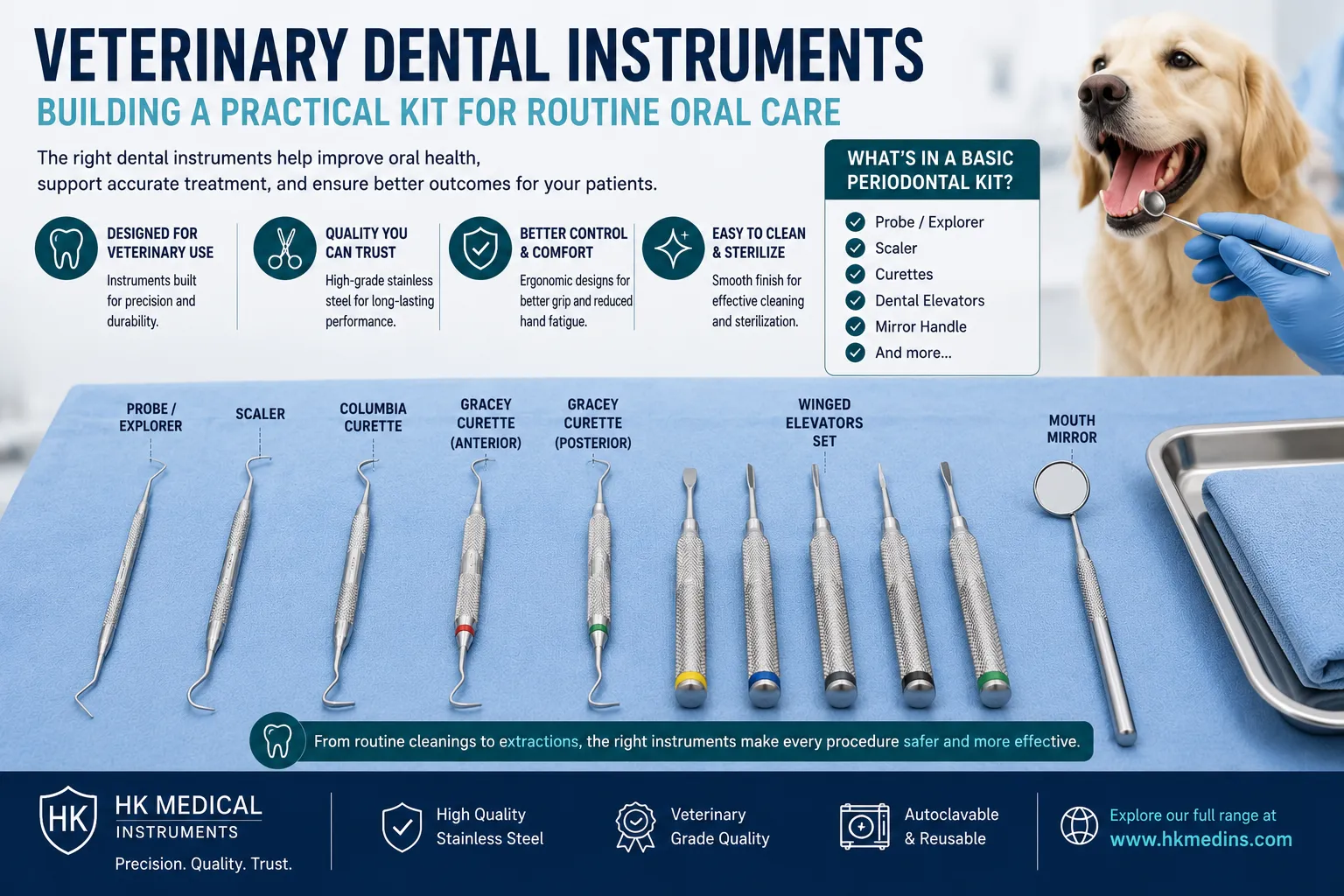
Root elevators are specialised dental instruments used by trained veterinary professionals during selected tooth-extraction procedures. Although the instruments may look straightforward, their working-end shape, size, and handling characteristics matter. Selecting the right pattern requires an understanding of the intended procedure and the anatomy involved.
For clinics purchasing or replacing dental instruments, a useful approach is to review the available patterns, confirm their specifications, and create a set that reflects the practice's actual services.
What is a veterinary root elevator?
A root elevator is designed to help mobilise a tooth or root during an appropriate extraction procedure. Its working end is placed according to the technique used by the veterinarian, and controlled instrument handling is essential.
Root elevators come in different designs and sizes. These variations allow clinicians to select an instrument suited to the tooth, access, and procedure. The instruments are not interchangeable simply because they share the same general name.
Selection and use should be guided by veterinary dental training, the patient's anatomy, and the clinic's established clinical protocols.
Understand the differences between elevator patterns
Different elevator patterns have different working-end geometries and intended applications. The width, curvature, thickness, and length of the working end can influence access and handling.
Bein root elevators are one example found in veterinary dental instrument collections. HK Medical Instruments lists a Bein Root Elevator Set of 5, comprising Figures 2, 3, 4, 5, and 6.
When comparing a set, check the exact figures included and review their dimensions and product descriptions. Do not assume that every figure is appropriate for every tooth or that a larger set automatically offers better coverage. The clinical team should identify which configurations are relevant to its procedures.
Consider the working end and handle
The working end is a central factor in instrument selection. Its shape should match the intended application, and its condition should be inspected before use.
The handle also deserves attention. It should allow the trained user to maintain the grip and control required by the technique. Overall length and balance may influence comfort during handling, but personal preference should be considered alongside the manufacturer's specifications and clinical requirements.
When evaluating products, compare the full dimensions and inspect the instrument for visible defects. Avoid choosing an elevator based only on a photograph or a broad description.
Match the set to the clinic's dental workload
A clinic performing a limited range of dental procedures may require a different inventory from a practice offering more extensive oral surgery. Before ordering, list the procedures performed, identify the relevant instruments, and check the existing stock.
This helps avoid two common problems: missing a required pattern and purchasing duplicates that add little practical value. If multiple clinicians work in the same practice, ask them to agree on the core inventory and document the selected configurations.
A veterinary instrument packs collection can help purchasing teams compare available sets, but every product's contents should be checked against the clinic's own checklist.
Why controlled handling matters
Root elevators are precision dental instruments, and their use requires appropriate training. Excessive force or unsuitable leverage can damage the instrument or surrounding structures. The specific technique must be determined by the trained veterinary professional, not by a general product guide.
From an inventory perspective, clinics should ensure that the team can identify the instrument patterns and knows the procedures for inspection, handling, and reporting damage. Instruments should be removed from use if the working end is bent, chipped, cracked, or otherwise compromised.
Clear storage labels can also help distinguish elevator figures and reduce the risk of selecting the wrong pattern during preparation.
Cleaning and maintenance of root elevators
Dental instruments can retain residue around their working ends and other detailed surfaces. Follow the manufacturer's cleaning and sterilisation instructions, and use the clinic's validated reprocessing procedures.
After cleaning, inspect the instrument for residue, corrosion, wear, and deformation. Ensure that it is dry and stored appropriately according to the manufacturer's guidance. Avoid improvised sharpening or repairs unless specifically authorised by the manufacturer or a qualified instrument service provider.
Maintain a record of damaged or missing elevators and arrange assessment or replacement when needed. A simple inventory log is particularly useful when multiple sets are shared between treatment rooms.
Purchasing questions to ask the supplier
Before ordering, confirm the following:
- Which figures, sizes, and patterns are included?
- What are the dimensions and material specifications?
- What cleaning and sterilisation instructions apply?
- Are individual instruments available for replacement?
- What warranty and return terms apply?
- Does the set match the clinic's intended workflow?
These questions provide a clearer basis for comparison than price or item count alone.
Frequently asked questions
What is a Bein root elevator used for?
It is a veterinary dental instrument used by trained professionals to help mobilise teeth or roots during selected extraction procedures.
Why are several elevator figures available?
Different working-end shapes and sizes may be suited to different clinical requirements. The veterinary professional should select the appropriate pattern based on anatomy, access, and technique.
How should root elevators be maintained?
Follow the manufacturer's instructions for cleaning, sterilisation, inspection, and storage. Assess instruments for damage and remove any questionable item from use until it has been evaluated.
Final thoughts
Choosing veterinary root elevators requires more than counting the instruments in a set. Review the figures and dimensions, match them to the clinic's dental services, and establish clear procedures for handling, cleaning, inspection, and replacement. A well-documented inventory helps the team keep the right instruments identifiable and ready for professional use.









Sign in to leave a comment.