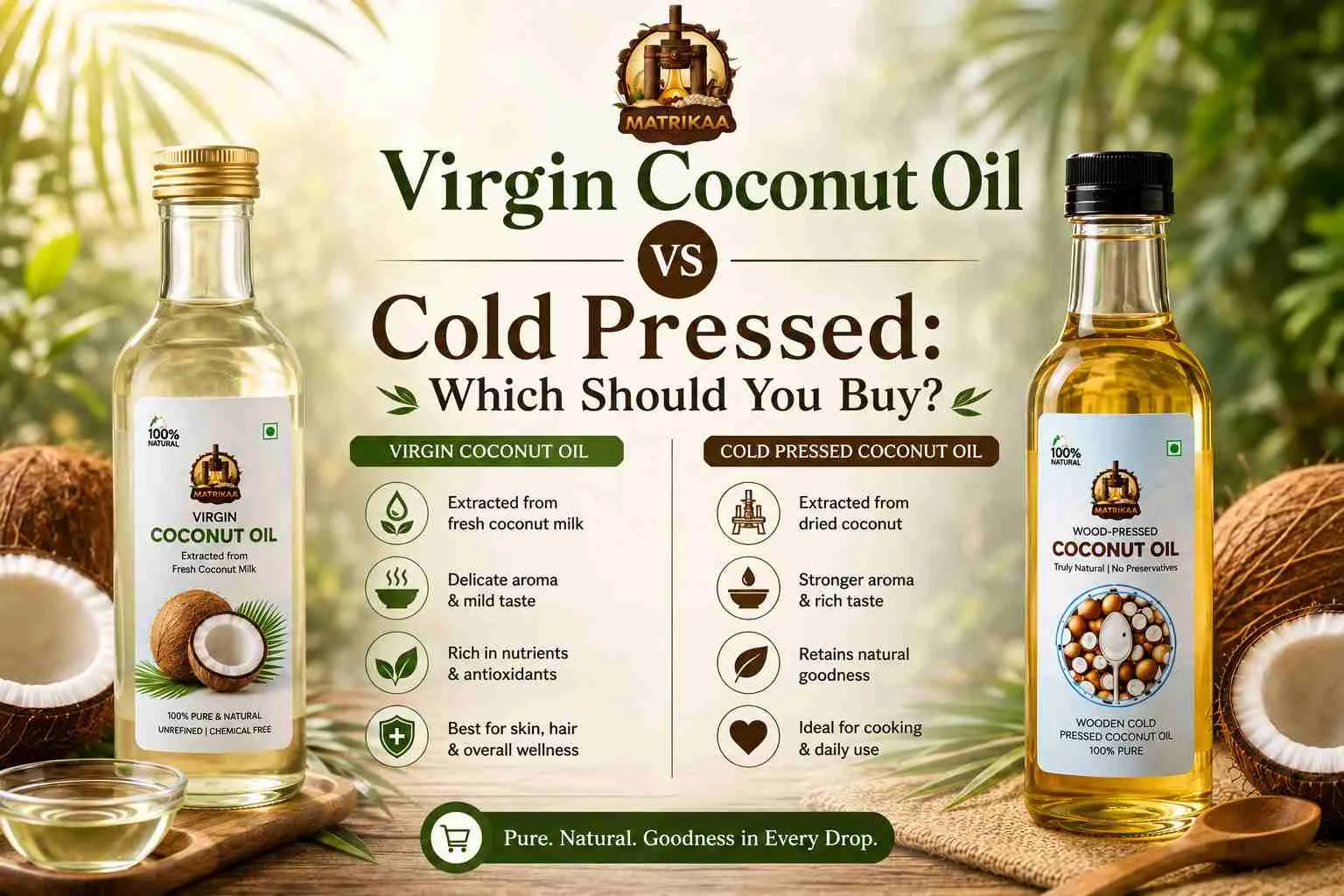

Choosing the right coconut oil can feel confusing because labels often use terms such as virgin, cold pressed, natural, and unrefined. While these words sound similar, they can describe different parts of the oil-making process. Understanding what each term means can help you choose an oil that suits your cooking, skincare, and everyday needs.
Understanding Virgin Coconut Oil vs Cold Pressed
Virgin Coconut Oil vs Cold Pressed is mainly a comparison between the source of the coconut and the way the oil is extracted. Virgin coconut oil is generally made from fresh coconut meat and is not heavily refined. Cold pressed describes an extraction method where mechanical pressure is used with little or no added heat. This means an oil can be virgin and cold pressed at the same time. This difference makes reading labels easier.
What Is Virgin Coconut Oil?
Virgin coconut oil is generally made from fresh coconut meat rather than dried coconut copra. It is produced without the heavy refining, bleaching, or deodorising commonly used for refined oils. Because the fresh coconut is kept closer to its natural state, the oil can retain its pleasant coconut aroma, flavour, and naturally occurring compounds. When considering Virgin Coconut Oil vs Cold Pressed, remember that “virgin” mainly tells you about the starting material and level of processing, not necessarily the extraction method.
What Does Cold Pressed Mean?
Cold pressed describes the way oil is extracted. The coconut is mechanically pressed to release its oil, with little or no added heat and without chemical solvents. The term focuses on the extraction process rather than whether the coconut was fresh or dried. Therefore, Virgin Coconut Oil vs Cold Pressed is not always an either-or choice. An oil can be virgin and cold pressed at the same time when it is made from fresh coconut and extracted gently through mechanical pressing.
Key Difference Between the Two
The easiest way to understand the difference is to remember two questions: What was used to make the oil, and how was the oil extracted? Virgin coconut oil answers the first question by indicating fresh coconut as the source. Cold pressed answers the second by describing mechanical extraction with minimal heat. This means the two terms can overlap. A high-quality bottle may carry both descriptions, giving you information about the coconut source and the extraction process.
When comparing Virgin Coconut Oil vs Cold Pressed, it is useful to read the complete product label instead of focusing on one large word on the front. Check whether the oil comes from fresh coconut, how it was extracted, and whether refining or chemical processing was used. This gives you a clearer picture of what you are actually buying.
Which One Is Better for Daily Use?
There is no single answer for everyone. Your choice can depend on what matters most to you. If you specifically want oil made from fresh coconut, virgin coconut oil can be a suitable option. If your priority is gentle mechanical extraction, look for a clearly labelled cold pressed product. For many people, an oil that combines both qualities may be an appealing choice because it offers information about both the source and the extraction method.
Coconut oil is versatile and can be used in different parts of everyday life. In the kitchen, it can be used for baking, cooking, and moderate-heat sautéing. Its natural coconut aroma can add a pleasant touch when used in suitable recipes or personal-care routines.
What Should You Check Before Buying?
Before buying coconut oil, look beyond attractive packaging and marketing words. Read the ingredient list and product details carefully. Look for clear information about the source of the coconut and the extraction method. A natural aroma and appearance can also help you understand the character of the oil, although these alone cannot prove quality. Transparent sourcing and clear processing information are useful signs when comparing products.
For those who prefer traditionally made oils, choosing a carefully produced cold pressed oil can be a simple way to keep your pantry closer to natural food choices. A cold pressed oil may also pair well with everyday cooking and personal-care routines when used appropriately. Taking a moment to check the label can make the buying decision easier.
A Simple Choice for Your Kitchen
Understanding Virgin Coconut Oil vs Cold Pressed makes the label much easier to read. One term mainly describes the coconut used and the level of processing, while the other describes how the oil is extracted. They are not competing categories, and one bottle can meet both descriptions.
At Matrika Natural Foods, the focus is on traditionally produced oils with simple processing and careful sourcing. If you are looking for coconut oil that fits your everyday needs, take a little time to explore the available options. You can shop now and choose the product that feels right for your kitchen and routine.
In the end, the best choice is the one that matches your preferences, cooking habits, and expectations from an oil. Read the label, understand the process, and choose with confidence. This approach helps you make a more informed everyday purchase with ease.



























Sign in to leave a comment.