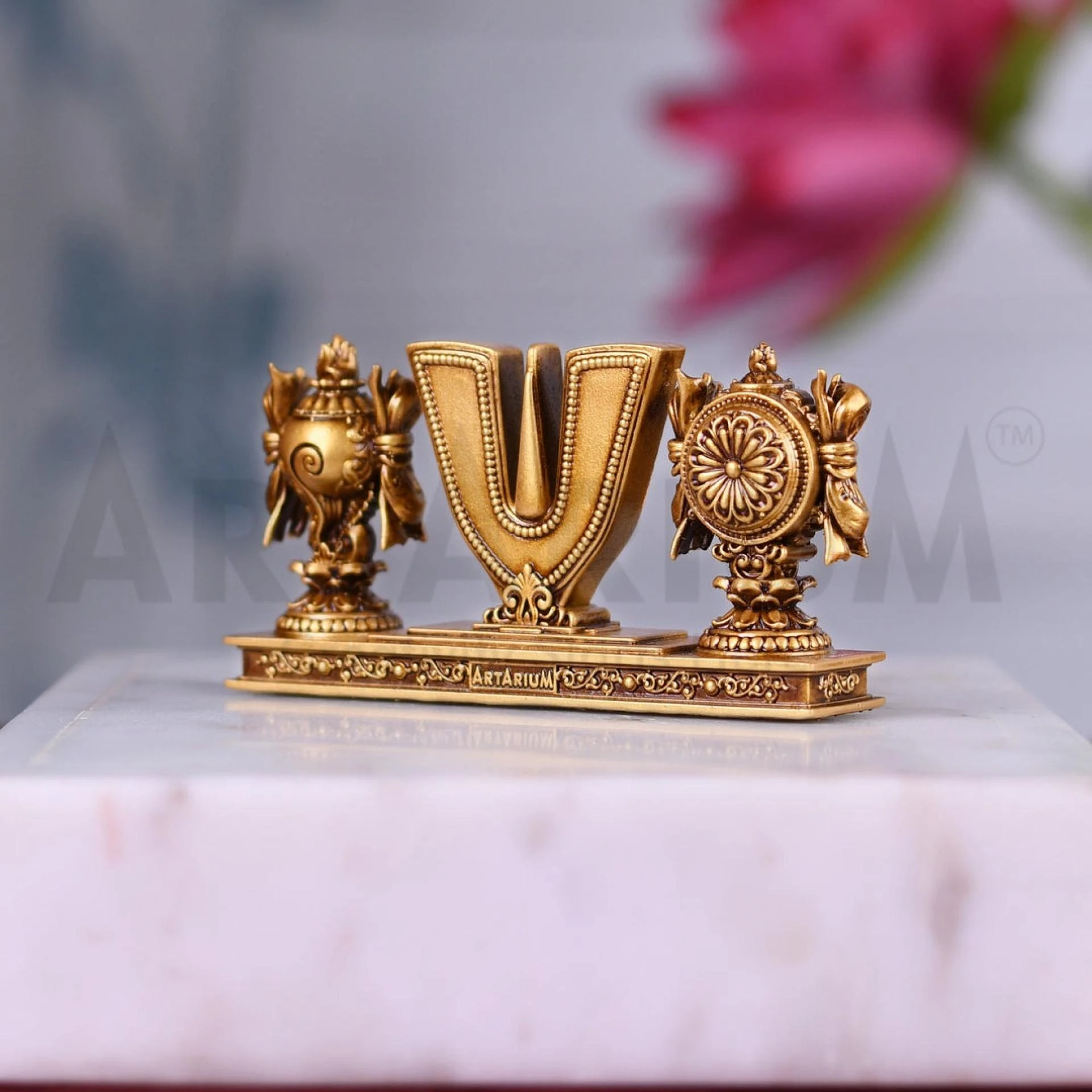

In the vibrant tapestry of Hindu spirituality, adorned with rich symbols and rituals, the Vishnu Tilak emerges as a sacred emblem of devotion, protection, and divine connection to Lord Vishnu, the preserver of the universe and one of the principal deities in Hinduism. Worn by devotees with reverence and devotion, the Vishnu Tilak holds profound significance, symbolizing the eternal bond between the soul and the Supreme Being. As we embark on a journey to explore the essence of Vishnu Tilak, we unravel its symbolism, understand its significance, and delve into its spiritual resonance within the realm of Vaishnavism.
Unveiling the Symbolism:
The Vishnu Tilak, also known as the Urdhva Pundra, is characterized by its distinctive shape and symbolism deeply rooted in the worship of Lord Vishnu. At its core lies the belief in the omnipresence and omnipotence of Lord Vishnu, whose divine grace permeates every aspect of existence.
The shape of the Tilak typically consists of two vertical lines with a central horizontal line connecting them at the base, resembling the shape of Lord Vishnu's iconic weapon, the Sudarshana Chakra. This sacred discus is symbolic of divine protection, spiritual liberation, and the cosmic order. The Tilak is often adorned with red or yellow pigment, symbolizing auspiciousness, purity, and devotion.
Furthermore, the application of Vishnu Tilak is often accompanied by the chanting of sacred mantras dedicated to Lord Vishnu, such as the Vishnu Sahasranama or the Vishnu Gayatri Mantra. This practice invokes the divine presence of Lord Vishnu and fosters a deep spiritual connection with the Supreme Being.
Spiritual Significance:
Beyond its aesthetic appeal, the Vishnu Tilak holds profound spiritual significance for practitioners of Vaishnavism. It serves as a tangible manifestation of one's devotion to Lord Vishnu and a symbol of divine protection and grace.
In Vaishnavite rituals and ceremonies, the application of Tilak plays a central role. Devotees mark their foreheads with the Vishnu Tilak as a sign of spiritual consecration and initiation, invoking the blessings of Lord Vishnu. The Tilak serves as a conduit for divine energy, purifying the mind, body, and soul, and facilitating spiritual elevation.
Moreover, wearing the Vishnu Tilak is believed to bestow divine protection upon the wearer, shielding them from negative energies and malevolent forces. It serves as a talisman against spiritual and physical harm, instilling a sense of peace, security, and divine guidance in the hearts of devotees.
Cultural Reverence:
Within the cultural tapestry of Vaishnavite society, the Vishnu Tilak holds immense significance, serving as a marker of religious identity and cultural heritage. It is not merely a religious symbol but a cherished tradition passed down through generations, shaping the cultural landscape of Vaishnavite communities.
During religious festivals, auspicious ceremonies, and daily worship, the sight of devotees adorned with Vishnu Tilak is a common spectacle. It fosters a sense of spiritual camaraderie and unity among believers, transcending barriers of caste, creed, and social status.
Moreover, the Vishnu Tilak is not confined to religious contexts alone but permeates various aspects of daily life. From morning prayers to festive celebrations, Vaishnavites adorn their foreheads with Tilak as a mark of divine blessing and auspiciousness, seeking the divine grace of Lord Vishnu in all endeavors.
Contemporary Relevance:
In the modern era, as the teachings of Vaishnavism continue to resonate with seekers around the world, the relevance of Vishnu Tilak extends far beyond traditional boundaries. Even in diaspora communities, where cultural traditions may undergo adaptation, the practice of wearing Tilak remains a cherished custom, preserving the spiritual heritage of ancient India.
Furthermore, the Vishnu Tilak serves as a potent symbol of spiritual resilience and fortitude in an ever-changing world. In the face of adversity and uncertainty, devotees draw strength from their faith and devotion to Lord Vishnu, finding solace and guidance in the eternal principles of dharma and righteousness.
Conclusion:
In the rich tapestry of Vaishnavism, the Vishnu Tilak shines as a beacon of divine connection, spiritual grace, and unwavering devotion to Lord Vishnu. Its symbolism steeped in ancient tradition, its significance profound in both spiritual and cultural contexts. As devotees adorn their foreheads with the sacred mark of Vishnu Tilak, they embody the timeless bond between the soul and the Supreme Lord, invoking blessings of divine grace, spiritual liberation, and eternal bliss. Truly, the Vishnu Tilak stands as a testament to the enduring legacy of devotion and reverence in the hearts of millions of Vaishnavites worldwide.










Sign in to leave a comment.