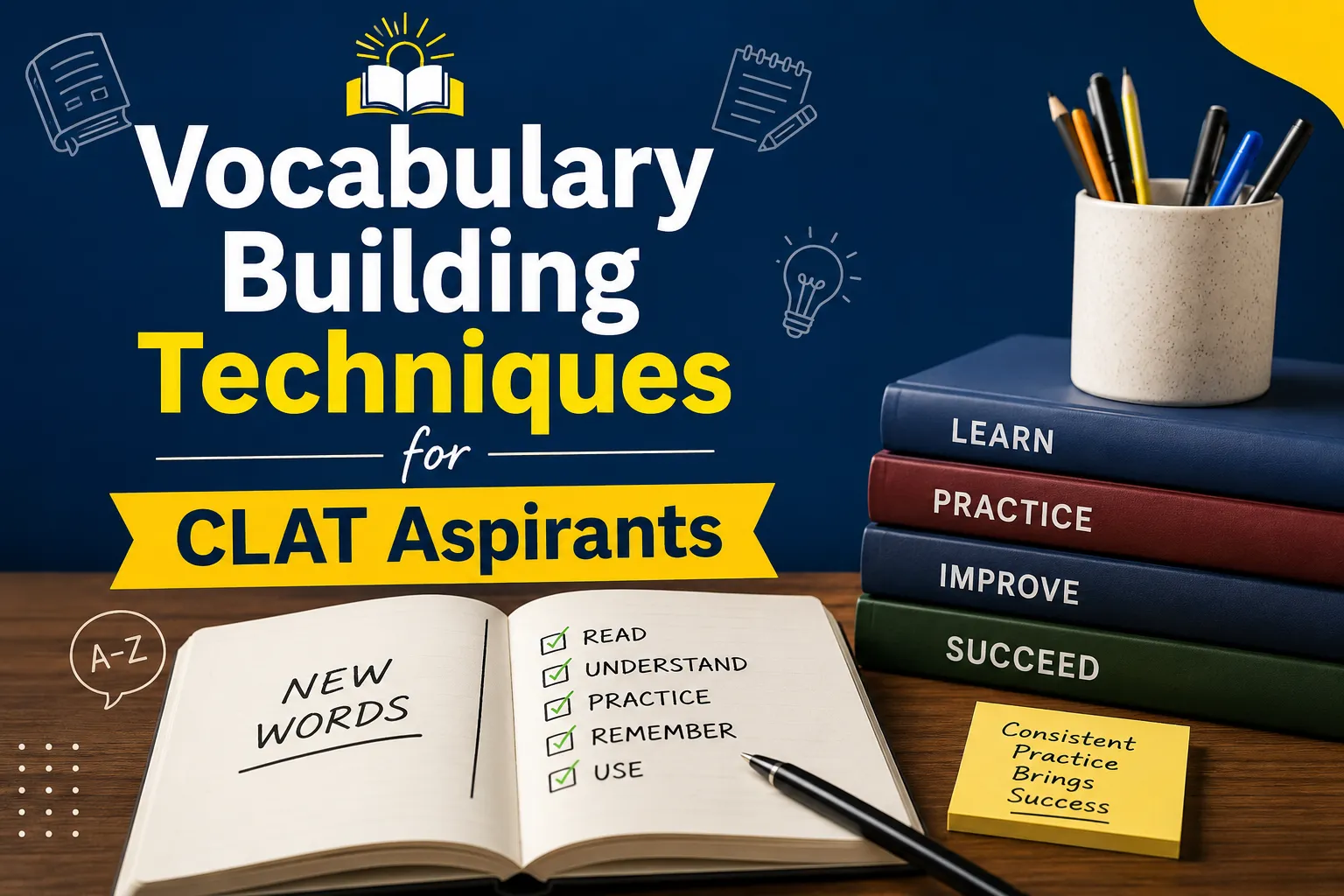

A strong vocabulary is one of the most important skills for success in the Common Law Admission Test (CLAT). The English Language section often includes reading comprehension passages, contextual vocabulary questions, and inference-based questions that require a good understanding of words and their meanings. Developing a rich vocabulary not only improves your English score but also enhances your overall reading speed and comprehension. Students enrolled in the best clat coaching in kolkata are often encouraged to follow systematic vocabulary-building strategies to maximize their performance.
Why Vocabulary Matters in CLAT
CLAT is designed to test a candidate’s reading and analytical abilities. Many questions are based on passages where understanding the meaning of specific words is crucial. A strong vocabulary helps aspirants:
- Understand complex legal and editorial passages.
- Improve reading comprehension skills.
- Identify synonyms, antonyms, and contextual meanings.
- Increase confidence during the examination.
Read Newspapers Daily
One of the most effective ways to improve vocabulary is by reading newspapers regularly. Editorial sections of newspapers contain high-quality language and expose students to new words in context.
While reading:
- Highlight unfamiliar words.
- Note their meanings.
- Observe how they are used in sentences.
- Revise them regularly.
This practice also helps in improving current affairs knowledge, which is equally important for CLAT preparation.
Maintain a Vocabulary Notebook
A vocabulary notebook can be a powerful learning tool. Whenever you come across a new word, write down:
- The word
- Meaning
- Synonyms
- Antonyms
- Example sentence
Revising this notebook every week helps reinforce memory and improves retention.
Learn Words in Context
Memorizing word lists without understanding usage can be ineffective. Instead, learn words through articles, books, editorials, and legal content.
For example, if you encounter the word “meticulous,” understand how it is used in a sentence rather than simply memorizing its meaning. Context-based learning makes vocabulary easier to remember and apply during exams.
Use Flashcards
Flashcards are excellent for quick revision. You can create physical flashcards or use digital applications.
A flashcard should contain:
- Word on one side
- Meaning and example on the other side
Practicing flashcards daily for 10–15 minutes can significantly improve vocabulary over time.
Read Books and Magazines
Reading diverse content exposes you to different writing styles and vocabulary. Consider reading:
- Fiction novels
- Non-fiction books
- Legal articles
- Current affairs magazines
This habit broadens your understanding of language and enhances comprehension skills required for CLAT.
Practice Word Games and Quizzes
Vocabulary games make learning enjoyable and effective. Activities such as:
- Crossword puzzles
- Word association games
- Vocabulary quizzes
- Online word challenges
can help reinforce new words and improve recall ability.
Revise Regularly
Learning new words is important, but regular revision is essential for long-term retention. Create weekly and monthly revision schedules to revisit previously learned words. Repetition helps transfer vocabulary from short-term memory to long-term memory.
Conclusion
Building a strong vocabulary is a gradual process that requires consistency and dedication. Reading newspapers, maintaining a vocabulary notebook, using flashcards, and practicing regularly can significantly improve your language skills. These techniques not only help in the English section but also enhance overall comprehension and analytical abilities. Students preparing through the best clat coaching in kolkata often combine these methods with structured guidance to develop a competitive edge and achieve higher scores in the CLAT examination.




























Sign in to leave a comment.