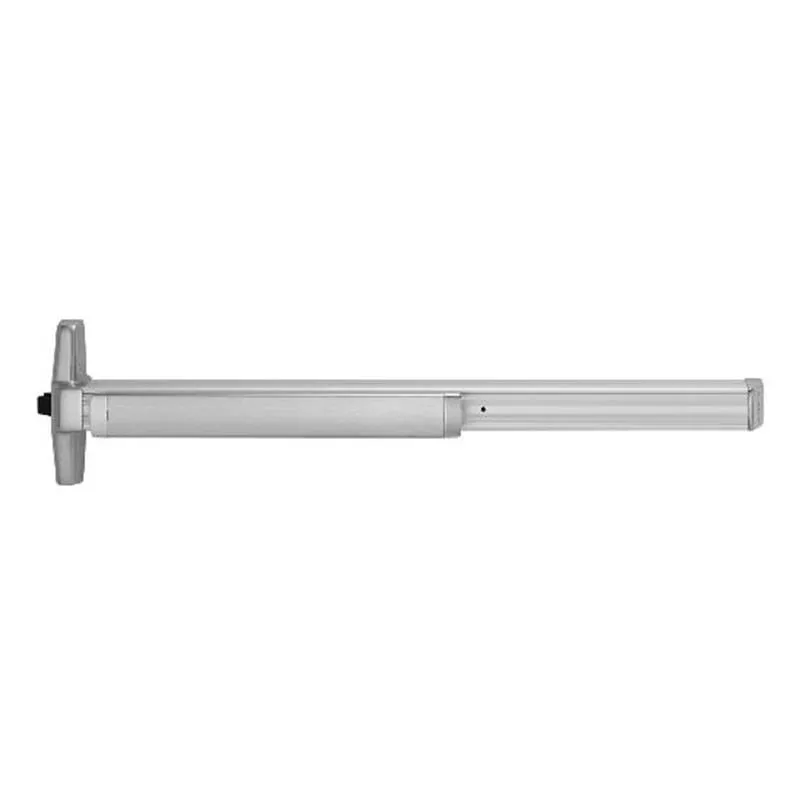

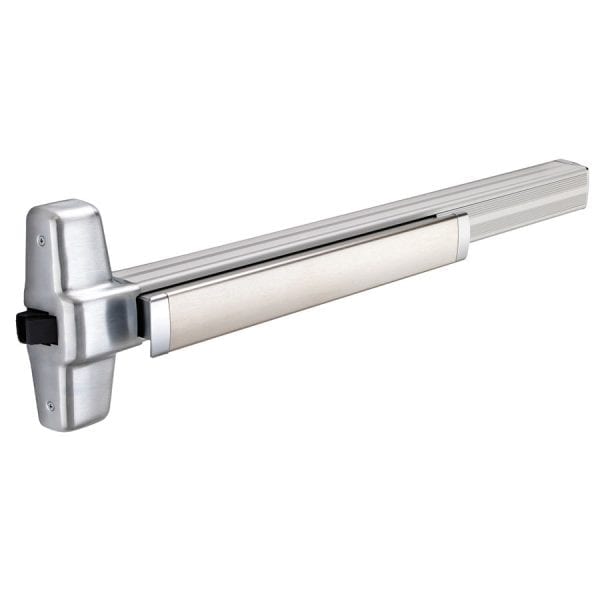
If you manage a commercial building, work as a locksmith, or handle maintenance for a school, hospital, or office property, you have almost certainly worked with a Von Duprin panic bar. It is one of the most widely installed exit devices in North America, found on everything from storefront doors to stairwell exits in high-rise buildings. This guide explains what a Von Duprin panic bar is, how it functions, the common series you will encounter, and what to check when one starts giving you trouble.
What Is a Von Duprin Panic Bar?
A Von Duprin panic bar is a type of exit device, also called panic hardware or a crash bar, mounted on the interior side of a door to allow immediate egress in an emergency. Pushing the horizontal bar retracts the latch and releases the door, letting people exit without needing to turn a knob, twist a lever, or use a key.
Von Duprin is one of the original manufacturers of this kind of hardware. The company's first exit device was installed in 1908, and the basic principle behind it, a pushbar that releases a latch under pressure, is still the foundation of the panic bars manufactured today. Because Von Duprin devices have been in commercial and institutional buildings for well over a century, there is a large amount of hardware still in service that eventually needs parts, adjustment, or repair.
Why Panic Bars Matter for Building Safety
A panic bar is not just a convenience feature. In most jurisdictions, building and fire codes require panic hardware on exit doors serving assembly occupancies, schools, and other spaces where people need to evacuate quickly. The device has to let someone exit with a single motion, even under stress, without any prior knowledge of how the door works. That requirement is why panic bars are engineered and tested to specific life-safety standards, and why a malfunctioning unit is treated as a priority repair rather than something to put off.
How a Von Duprin Panic Bar Works
Most Von Duprin exit devices share the same basic components:
- Push pad or crossbar – the part a person presses to activate the device.
- Latch mechanism – retracts when the bar is pressed, releasing the door from the frame or strike.
- Chassis – the internal housing that connects the pad to the latch and dogging mechanism.
- Trim – the exterior handle, pull, or lever that allows entry from the outside, where applicable.
- Dogging mechanism – a feature on many models that allows the latch to be held retracted so the door can function as a normal push-pull door during business hours.
Depending on the door and the level of security required, a Von Duprin panic bar may use a rim latch (mounted directly to the door and frame), a mortise lock chassis, or vertical rods that extend into the header and floor for two-point locking on double doors.
Rim, Mortise, and Vertical Rod Configurations
- Rim exit devices are the most common configuration for single doors and pair with a rim strike on the frame.
- Mortise exit devices use a mortise lock body set into the edge of the door, often chosen where a keyed cylinder function is needed.
- Concealed and surface vertical rod devices are used on door pairs where the active leaf needs to lock into the frame header and threshold rather than into an adjacent door.
Knowing which configuration you have is the first step in ordering the correct replacement parts, since latches, chassis components, and trim are not interchangeable across configurations.
Common Von Duprin Panic Bar Series
Several Von Duprin series show up repeatedly in commercial buildings:
98 and 99 Series – widely used pushpad exit devices found on storefronts, office buildings, schools, and warehouses. These are workhorse devices, and their latches, dogging keys, and chassis components are among the most frequently replaced Von Duprin parts.
33A Series – an older but still common line of exit devices, often found on buildings that have had the same hardware in place for decades.
QEL Series – electrified exit devices used where the door needs to integrate with access control, alarm monitoring, or remote release systems.
2000 Series – vertical rod devices used on door pairs that require top and bottom latching points.
If your building has a mix of older and newer installations, it is common to have several of these series in service across different doors.
Signs a Von Duprin Panic Bar Needs Repair
A panic bar that is not working correctly is a life-safety issue, not just an inconvenience. Watch for:
- The door does not latch fully after the bar is released.
- The push pad feels loose, sticks, or does not return to its resting position.
- The dogging feature will not hold the latch retracted, or will not release it.
- Visible wear, cracking, or corrosion on the latch, chassis, or trim.
- Excessive force is needed to open the door from the push pad.
Any of these issues should be addressed quickly, since a panic bar that fails to release under pressure defeats the purpose of the device.
Repairing vs. Replacing a Von Duprin Panic Bar
In most cases, a malfunctioning exit device does not need to be replaced as a full unit. Panic hardware is built to be serviced at the component level, and the latch, dogging assembly, cylinder, outside trim, or mounting brackets can typically be replaced individually once the failed part is identified.
Identifying the exact part starts with confirming the series and model number, which is usually stamped on the device chassis or listed on the original installation paperwork. From there, a parts diagram showing an exploded view of the assembly makes it much easier to match the failed component to the correct part number before ordering.
Finding Von Duprin Panic Bar Parts
Because Von Duprin hardware has been installed across so many buildings for so many decades, sourcing the correct component for an older series can be more difficult than finding parts for current production models. Security Parts stocks Von Duprin components including latches, dogging keys, cylinders, outside pull handles, mounting brackets, vertical rod components, trim assemblies, and QEL motor cartridges, and provides diagram-based lookup tools to help confirm the correct part before it ships. You can browse available components on the Von Duprin parts page or search by category on the exit devices parts page.
Frequently Asked Questions
What is the difference between a panic bar and an exit device? They refer to the same category of hardware. "Panic hardware" is the term used in building and fire codes, while "exit device" is the standard term used in the door hardware trade. A Von Duprin panic bar is a specific manufacturer's version of an exit device.
Can a Von Duprin panic bar be repaired instead of replaced? Yes, in most cases. Panic hardware is designed to be serviced at the component level, so a worn latch, chassis, or trim piece can usually be replaced individually rather than swapping out the entire device.
How do I know which Von Duprin series I have? The series and model number are typically stamped on the device chassis, visible when the cover is removed, or listed on the original hardware schedule or installation paperwork for the building.
Do all Von Duprin panic bars work the same way? The core function, pressing a bar to retract a latch, is consistent across the product line, but the configuration varies. Rim devices, mortise devices, and vertical rod devices each use different components and mounting methods, so parts are specific to the configuration installed.
Is a dogging feature required on every panic bar? No. Dogging allows the latch to be held retracted so a door functions as a standard push-pull door during business hours. Whether this feature is used, and whether it is permitted, depends on the building's occupancy type and local fire code requirements, since some exit doors are not allowed to be dogged at all.
Final Thoughts
A Von Duprin panic bar is one of the most important pieces of hardware on a commercial door, and keeping it in working order is a life-safety responsibility, not just a maintenance task. Understanding how the device is configured, recognizing early signs of wear, and knowing where to source the correct replacement components can mean the difference between a quick repair and an unplanned door shutdown. Whether you are a locksmith on a service call, a facility manager tracking hardware across a large property, or a contractor completing a renovation, having a reliable source for Von Duprin panic bar parts keeps your exit doors functioning the way they are supposed to when it matters most.























Sign in to leave a comment.