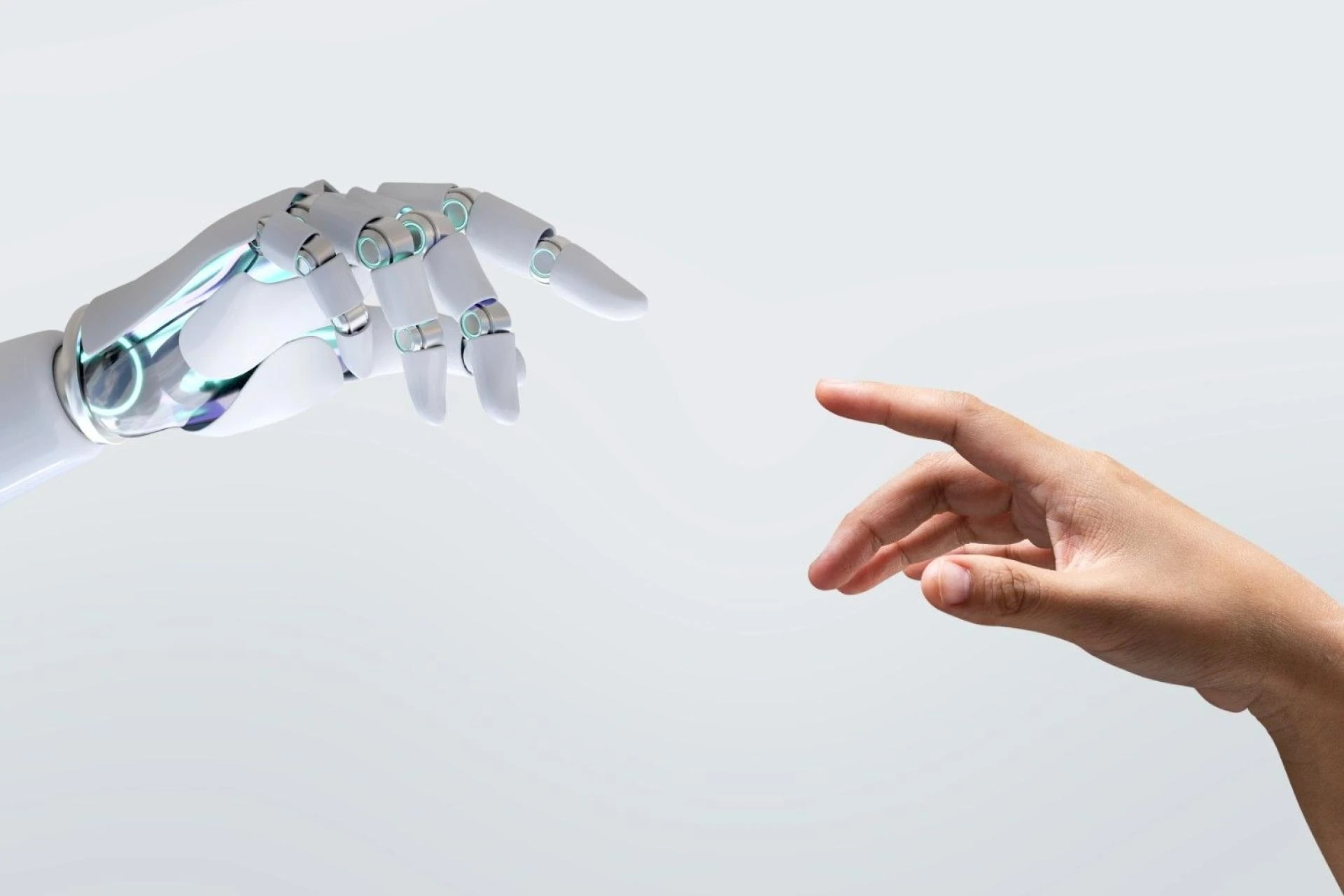

AI is a game-changer, and its influence has only grown over time. But the AI has been utilized in every aspect, from making small tasks easier to predicting new trends. It is the visual aspect that shows how AI has brought changes. AI is the common factor whether the company is a large or a small enterprise. Taking a closer look at the AI technology that is available today, we notice not only its great potential but also the din it is creating around its presence.
Artificial Intelligence (AI) in Business
AI in business means the implementation of new technologies in the form of ML, algorithms, and NLP that help make better decisions. These technologies are efficient than traditional ones for discovering patterns, changing according to the situation. And it gets better eventually without the intervention of users.
- Make use of data analytics in sales and marketing to understand customer behavior better.
- Internal and customer support processes can be automated.
- Transport and supply chain operations can be made more efficient. Compliance and financial predictions can be increased.
Real-Life Use Cases of AI in Action
Here is how AI impacts real-life industries across the verticals.
Retail: Retailers can estimate demand and customize product recommendations. And improve customer experiences with the help of ML.
Finance: The banking sector employs AI for features like financial advice automation through robo-advisors, fraud detection, and credit scoring.
Healthcare: AI speeds up the doctors’ diagnostic process while at the same time ensuring the diagnosis is correct; it does this by combining the data from MRI scans, X-rays, and patients.
Marketing: AI powers digital strategies by enhancing user engagement through chatbots, email automation, and real-time customer segmentation.
Top Ways AI Is Transforming Businesses Today
Here is how AI transforms businesses today and beyond.
Smarter and Faster Decision-Making
Businesses can now examine large data sets in seconds. Whereas human teams would need days or even weeks to do the same. AI can reveal insights that inform important business decisions through trend detection and predictive models.
AI in financial institutions for credit risk modeling and portfolio optimization. And by merchants to forecast which products would sell the best during a given season.
Increased Efficiency and Productivity
AI is one of the best features in its ability to automate various tasks. AI can perform the monotonous work that does not require any thinking. It can manage email sending, scheduling, reporting, and data checking. AI enables employees to focus on creative thinking rather than routine tasks.
Enhanced Customer Experience
AI has revolutionized the way people experience shopping in a way that people experience it as a luxury. When websites such as Netflix or Amazon offer shoppers tailored suggestions, the customers feel special. There is always a virtual assistant ready to assist, regardless of the language or time.
Natural language processing is used in automated replies that are indistinguishable from a real person. AI monitors users’ actions, likes, and feelings, thus allowing businesses to develop unique experiences.
Cost Optimization and Scalability
Sometimes, scaling up a company's operations can be a logistical nightmare due to the high costs associated with it. But AI gives us a feasible solution. By automating the allocation of resources and reducing human errors, AI has the power to cut down the overhead by a big margin.
The use of predictive AI in the supply chain can result in major savings in time, space, and money that are needed for the management of supply chains, since it can foresee delays.
Driving Innovation and New Business Models
AI is about reinventing what is possible, not merely optimizing. AI is not just restricted to a business's internal processes or customer service but has been actively applied in coming up with entirely new products and services across different sectors.
These new features open up a world of possibilities for companies to try out, innovate, and even overthrow the markets that used to be considered too resistant to any change. Firms can come up with creative solutions resulting in completely new customer experiences.
Strengthened Risk Management
AI helps in risk monitoring and prevention for cyber threats in the world. It can identify trends to identify fraud, breaches, or noncompliance.
Among the examples are:
- AI is being used by banks to identify questionable financial transaction activity.
- Businesses keep an eye on system behavior to identify cybersecurity threats
- AI-powered automation of compliance documentation in regulated industries
Predictive Analytics and Future Insights
One of the most uses of AI is predictive analytics. As it can accurately predict future behavior, market trends, and operational issues.
For instance:
- Seasonal demand is predicted by retailers.
- E-commerce platforms forecast the possibility of recurring business or consumer attrition.
- AI is used by manufacturers to predict equipment faults before they happen.
Businesses gain a competitive edge from this capacity for forward-thinking to make it proactive.
The Future of AI in Business
AI represents the next generation of intelligent collaboration rather than simple automation. Businesses are moving toward AI-powered virtual assistants that can manage complete workflows.
Emotion AI can read customer sentiment and adjust responses in real time. As adoption increases, AI will shift from being just a support tool to becoming a core part of business strategy. Early integration of AI development services can help organizations boost performance and stay ready for future changes.
Conclusion
The impact of AI on how companies operate is so profound that it even changes their core objectives. AI now bridges the gap between data and decision-making, blurring the line between automation and understanding. By adding intelligence to workflows, operations, and everyday interactions, AI is reshaping the very way businesses function.










Sign in to leave a comment.