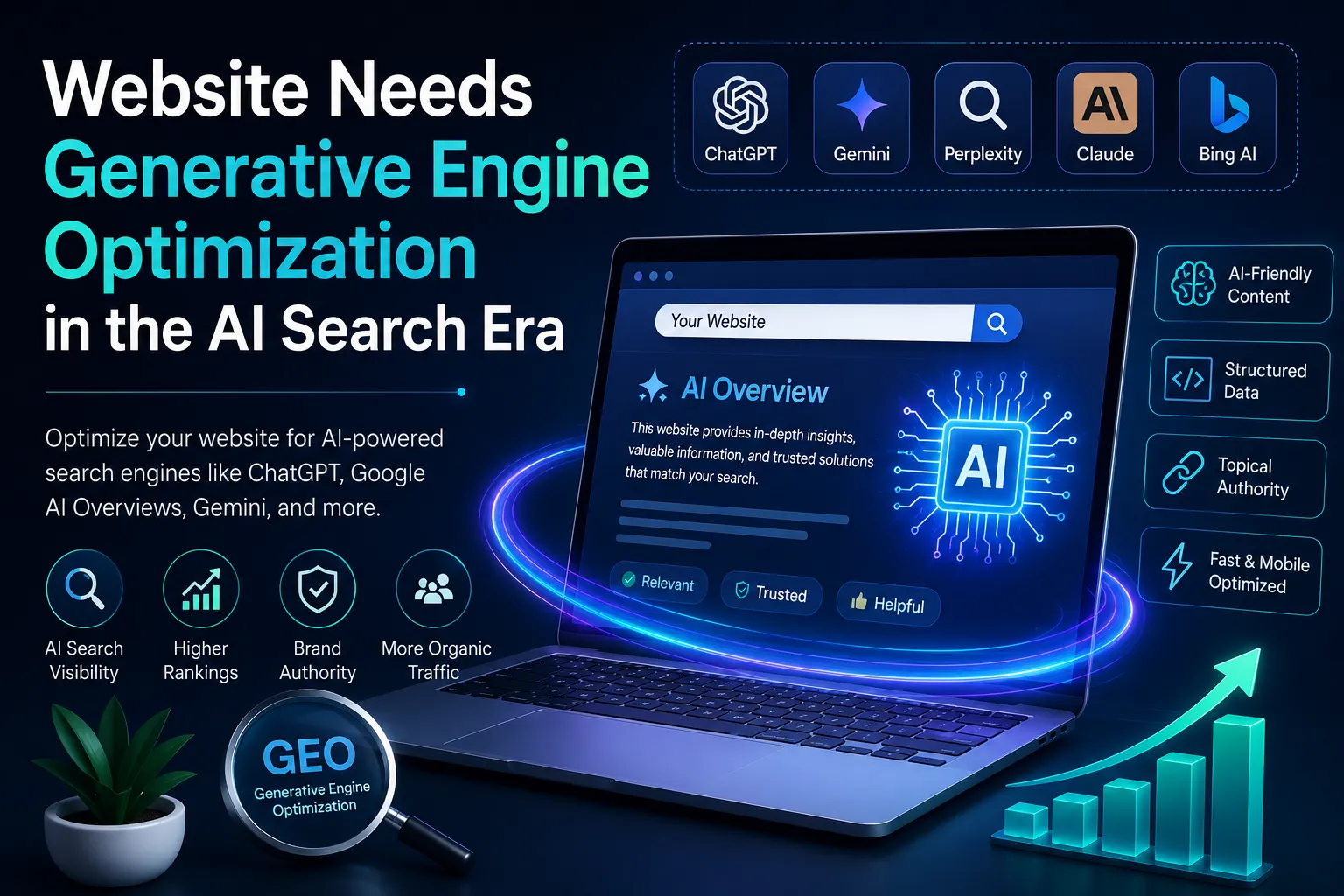

The way people search online is changing faster than ever. Instead of relying only on traditional search engines, users are increasingly turning to AI-powered platforms like ChatGPT, Google AI Overviews, Gemini, Perplexity, and Claude to get instant, conversational answers. This shift has created a new challenge—and a new opportunity—for businesses that want to remain visible online. While traditional SEO still plays a vital role, it's no longer enough on its own. Websites now need to optimize their content for AI-generated search experiences as well. That's where generative engine optimization services come in.
Generative Engine Optimization (GEO) focuses on making your content understandable, trustworthy, and valuable for AI-powered search engines. Instead of simply ranking on search result pages, GEO helps your brand become a trusted source that AI systems reference and recommend. In this guide, we'll explore why every website should invest in generative engine optimization services, how GEO differs from traditional SEO, and the strategies that can help your business stay ahead in the AI search era.
What Is Generative Engine Optimization?
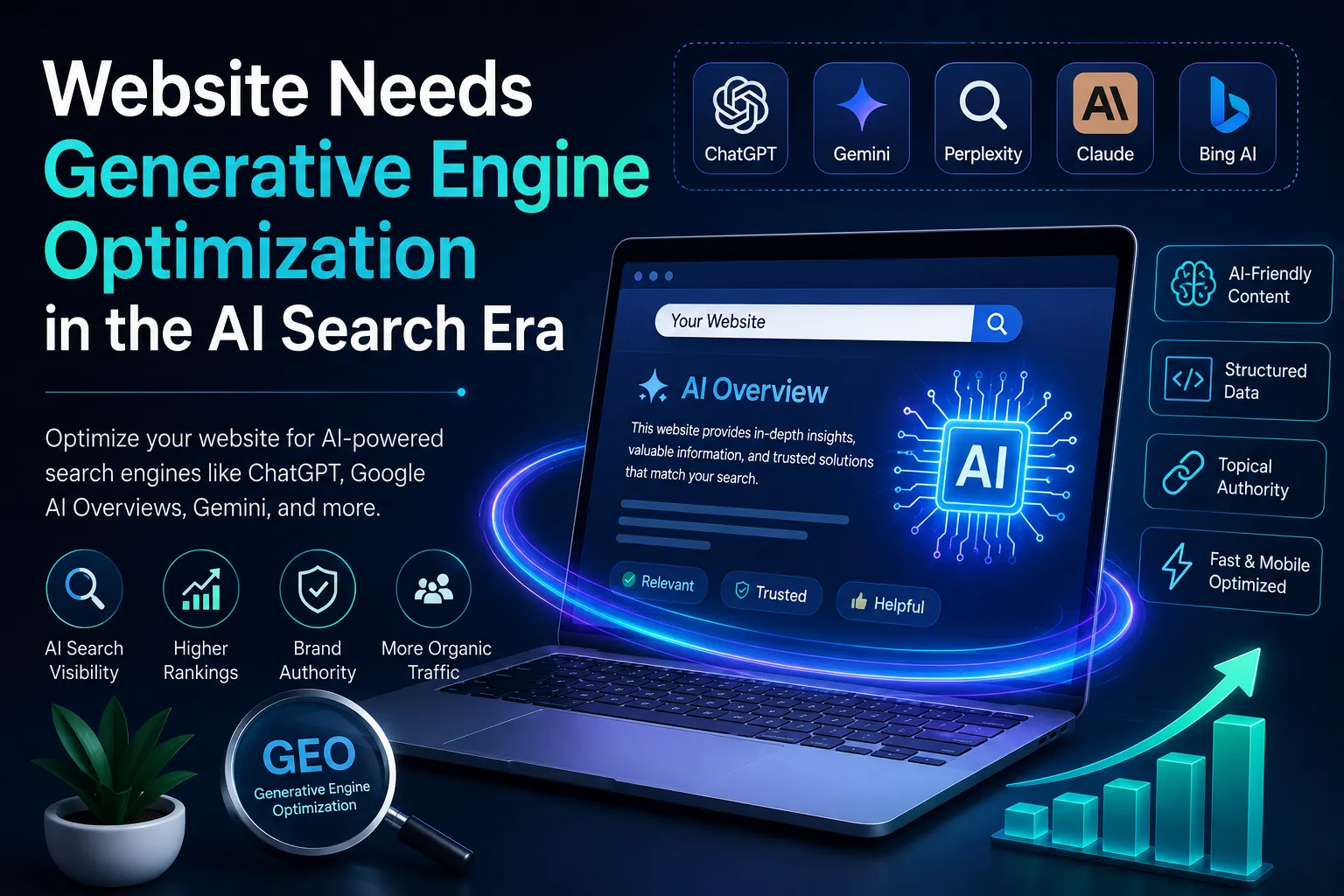
Generative Engine Optimization (GEO) is the process of optimizing website content so AI-powered search engines can easily understand, cite, summarize, and recommend it in their responses. Unlike traditional SEO, which focuses primarily on rankings in Google Search, GEO aims to improve visibility across AI-driven platforms that generate direct answers for users.
Examples of AI-powered search platforms include:
- Google AI Overviews
- ChatGPT Search
- Google Gemini
- Microsoft Copilot
- Perplexity AI
- Claude AI
The objective is simple: create authoritative, well-structured, and context-rich content that AI models consider reliable enough to reference.
Why AI Search Is Changing Digital Marketing
Search behavior has evolved dramatically. Users no longer search with short keywords like "Best SEO agency." Instead, they ask detailed questions such as, "Which SEO agency offers Generative Engine Optimization services for SaaS companies?" AI platforms analyze multiple trusted sources before generating an answer. This means websites must focus on providing complete, factual, and well-organized information instead of simply targeting keywords. Businesses that ignore AI search risk losing visibility even if they still rank well on traditional search engines.
Why Every Website Needs Generative Engine Optimization Services
1. AI Search Is Becoming the New Discovery Channel
Millions of users now rely on AI assistants for research, product recommendations, and business information. Rather than displaying ten blue links, AI generates a direct response using trusted online sources. If your website isn't optimized for AI search, your competitors may become the preferred sources instead. Professional generative engine optimization services help businesses position their content for these emerging search experiences.
2. Traditional SEO Alone Is No Longer Enough
SEO remains essential, but AI search evaluates content differently. Modern optimization now includes:
Contextual relevance
Topic authority
Content depth
Semantic relationships
Entity optimization
Trustworthiness
Source credibility
Generative optimization complements SEO instead of replacing it. Think of GEO as the next evolution of search optimization.
3. Higher Brand Visibility Across AI Platforms
AI assistants frequently recommend brands without requiring users to visit traditional search results. When your content becomes a trusted AI source, your brand gains exposure across multiple platforms. This creates opportunities for:
- Increased brand awareness
- Better authority
- Higher-quality traffic
- More qualified leads
4. Better Content Understanding
AI models don't simply scan keywords. They understand intent, relationships, topics, context, and expertise. This means content must answer user questions naturally while demonstrating genuine expertise. High-quality generative engine optimization services ensure your content is structured for maximum AI comprehension.
Key Components of Generative Engine Optimization
Create Topical Authority
Rather than publishing isolated articles, build complete content ecosystems around your expertise. For example, an SEO agency might publish guides covering AI SEO, Technical SEO, Content Optimization, EEAT, AI Overviews, and GEO strategies. The broader your topical coverage, the stronger your authority signals become.
Focus on User Intent
Every article should solve a real problem. Instead of writing solely for search engines, answer questions users genuinely ask, such as:
- How does GEO work?
- Why is AI search important?
- How can businesses optimize for ChatGPT?
- What are AI Overviews?
AI systems prioritize helpful answers over keyword-heavy pages.
Structure Content Clearly
Well-organized content helps both readers and AI systems. Best practices include:
- Descriptive headings
- Short paragraphs
- Bullet points
- FAQs
- Tables where appropriate
- Logical content flow
Structured content improves readability and increases the likelihood of AI citation.
Demonstrate Experience and Expertise
Google's EEAT principles remain highly relevant in AI search. Content should include practical insights, industry examples, original observations, updated statistics, and expert guidance. Generic, AI-generated articles without real value are less likely to earn trust.
Benefits of Generative Engine Optimization Services
Working with professionals provides significant advantages.
Improved AI Search Visibility
Experts optimize your website to increase the chances of appearing in AI-generated responses.
Stronger Content Strategy
Rather than publishing random blogs, GEO specialists create topic clusters that build authority.
Enhanced Brand Credibility
Consistent, trustworthy content strengthens your reputation with both users and AI platforms.
Better Organic Performance
Many GEO improvements—such as content quality, semantic optimization, and structured data—also support traditional SEO performance.
Future-Proof Marketing
AI search is expanding rapidly. Investing today prepares your website for tomorrow's search landscape.
Best Practices for AI Search Optimization
Write Comprehensive Content
Cover topics thoroughly rather than producing shallow articles. AI models prefer detailed resources that answer multiple related questions.
Optimize for Natural Language
People increasingly search conversationally. Instead of focusing only on exact-match keywords, include natural phrases and related terminology throughout your content.
Build Trust Signals
Strengthen credibility by including:
- Accurate information
- Author expertise
- Reliable sources
- Updated content
- Transparent business details
Trust is becoming one of the strongest ranking factors for AI search.
Use Schema Markup
Structured data helps search engines better understand your content. Common schema types include:
- Article
- FAQ
- Organization
- Product
- Local Business
Schema improves machine readability and supports richer search experiences.
Keep Content Fresh
AI models prioritize relevant and updated information. Regularly refresh statistics, examples, trends, industry insights, and best practices. Fresh content signals ongoing expertise.
Common Mistakes Businesses Make
Many websites still rely on outdated SEO practices. Avoid these common mistakes:
- Keyword stuffing
- Publishing thin content
- Ignoring EEAT principles
- Failing to update articles
- Writing only for search engines
- Covering topics without expertise
- Neglecting semantic optimization
Modern search rewards quality, relevance, and authority.
How Generative Engine Optimization Supports Traditional SEO
The good news is that GEO and SEO work together. Strong GEO practices also improve organic rankings, user engagement, time on page, content quality, internal linking, topic authority, and search relevance. Businesses don't have to choose between SEO and GEO—they need both. Together, they create a comprehensive digital visibility strategy.
The Future of Website Optimization
AI-generated search experiences will continue to evolve throughout 2026 and beyond. Businesses that invest in generative engine optimization services today will be better positioned to:
- Reach customers across AI platforms
- Build lasting authority
- Improve digital trust
- Increase organic visibility
- Adapt to changing search behavior
As AI becomes more integrated into everyday search, websites that prioritize expertise, quality, and helpful content will stand out.
Conclusion
The AI search era is reshaping how people discover information online. Traditional SEO remains a critical foundation, but it must now be complemented by strategies designed for AI-powered search experiences. Generative engine optimization services help businesses create content that AI platforms can understand, trust, and recommend. By focusing on topical authority, semantic relevance, EEAT principles, and user-first content, organizations can improve visibility across Google AI Overviews, ChatGPT, Gemini, Perplexity, and other emerging AI search engines. The future of digital marketing belongs to businesses that embrace both traditional search optimization and AI-driven discovery. Investing in GEO today is not just about staying competitive—it's about ensuring your website remains visible, credible, and valuable in the next generation of search.
Frequently Asked Questions (FAQs)
1. What are generative engine optimization services?
Generative engine optimization services help optimize website content so AI-powered search engines like ChatGPT, Google AI Overviews, Gemini, and Perplexity can understand, cite, and recommend it more effectively.
2. Is Generative Engine Optimization different from traditional SEO?
Yes. Traditional SEO focuses on improving rankings in search engine results pages, while GEO optimizes content for AI-generated answers, citations, and conversational search experiences.
3. Why is Generative Engine Optimization important in 2026?
As more users rely on AI search tools for information, GEO helps businesses maintain visibility, authority, and discoverability beyond traditional search engine rankings.
4. Can GEO improve my Google rankings?
While GEO primarily targets AI search platforms, many GEO best practices—such as creating high-quality content, building topical authority, and enhancing EEAT—also strengthen traditional SEO performance.
5. Who should invest in generative engine optimization services?
Businesses of all sizes—including eCommerce stores, SaaS companies, healthcare providers, law firms, local businesses, and digital agencies—can benefit from GEO to improve their presence in AI-powered search results.























Sign in to leave a comment.