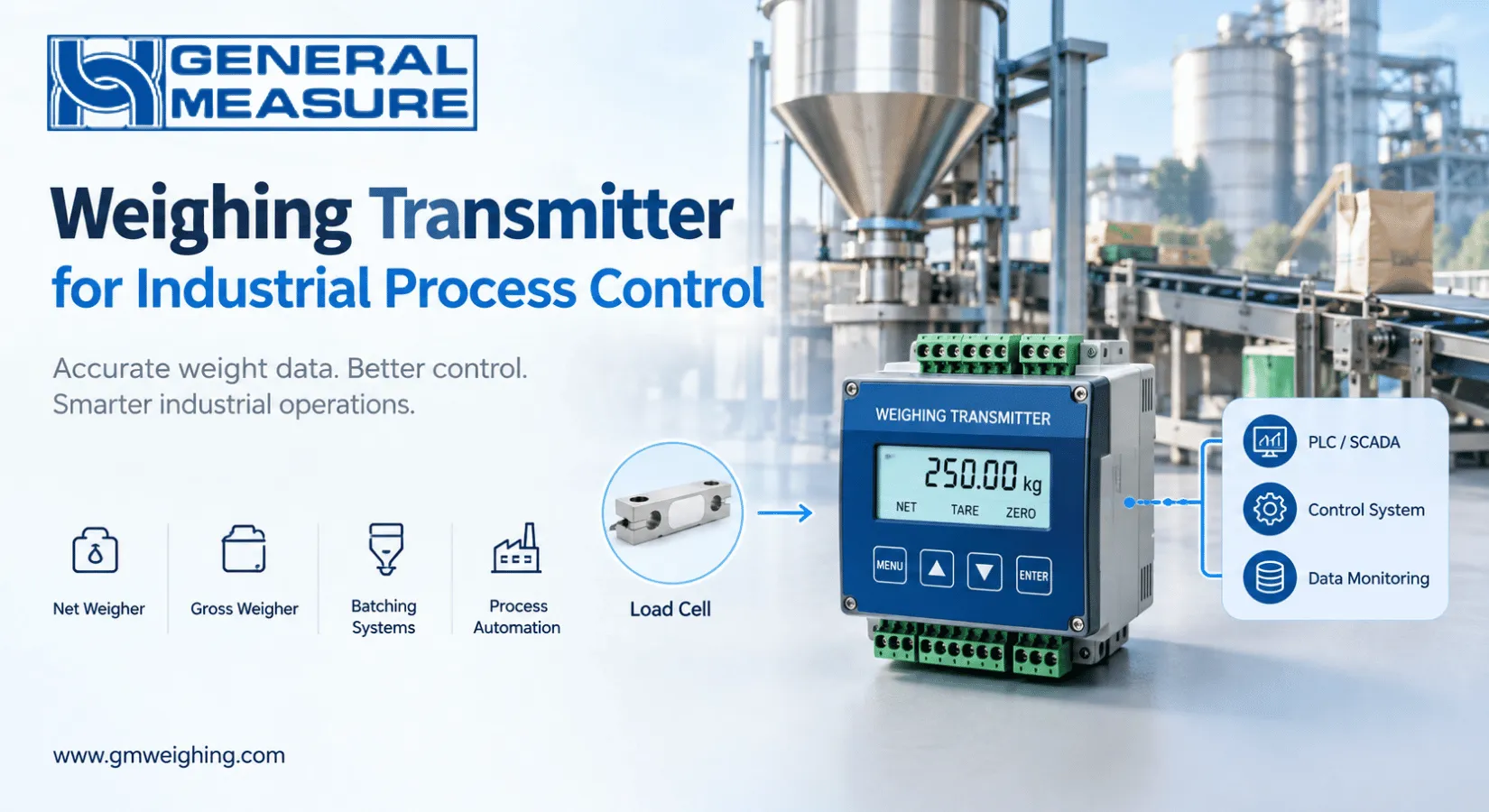

Accurate weight measurement plays an important role in modern industrial operations. Manufacturing plants, processing facilities, batching systems and material handling operations often depend on reliable weight data to maintain consistency and control production. A Weighing Transmitter helps connect weighing equipment with industrial control systems by processing weight signals and making measurement data available for monitoring and automation.
As industries move toward greater automation, dependable weight information has become increasingly valuable. Whether the application involves monitoring raw materials, controlling a process, or managing a batching operation, technologies such as a Net Weigher and Gross Weigher can provide the measurement capabilities required for different industrial processes.
What Is a Weighing Transmitter?
A Weighing Transmitter is an electronic device designed to receive signals from load cells and convert them into usable weight information. Load cells detect the force created by a material or object, while the transmitter processes that signal and communicates the resulting measurement to another device or control system.
This makes the transmitter an important part of many automated weighing applications. Instead of relying only on a local display, weight data can be transferred to PLCs, computers, monitoring systems, or other industrial equipment depending on the system configuration.
By making weight information available to connected systems, a Weighing Transmitter can help integrate weighing into a broader production process.
Why Weight Data Matters in Industrial Processes
Many production processes depend on accurate quantities of raw materials or finished products. Incorrect measurements can affect batch consistency, inventory control, packaging and overall production efficiency.
A reliable weighing system provides the information needed to monitor these quantities. In an automated environment, that information can also be used to control specific stages of production.
For example, a process may require a certain quantity of material to be added to a hopper before the next production stage begins. The weighing system can monitor the weight and provide the necessary data to the control system.
This type of integration helps transform weighing from a simple measurement task into an important part of process management.
Understanding a Net Weigher
A Net Weigher is used to determine the weight of the actual product or material while excluding the weight of the container or other tare components.
Net weight is particularly useful in applications where the product quantity needs to be measured independently of its packaging or storage container.
For example, when material is placed inside a container, the overall measured weight includes both the container and the material. By accounting for the tare weight, the weighing system can determine the net quantity of the product.
This measurement can be useful for:
- Product filling
- Batching applications
- Ingredient measurement
- Material dispensing
- Packaging processes
- Inventory monitoring
Accurate net weight information helps operators maintain better control over the quantity of material being processed.
Understanding a Gross Weigher
A Gross Weigher measures the total weight of the material together with the container, vessel, or supporting structure included in the weighing process.
Gross weight can be useful when the total load needs to be monitored. Applications may include hopper weighing, silo monitoring, container handling and other industrial processes where the combined load is relevant.
The choice between net and gross weighing depends on what the production process needs to measure. In some applications, both measurements may be relevant at different stages of operation.
Applications of Weighing Transmitters
Weighing transmitters can be incorporated into various industrial weighing systems. Their ability to communicate weight data makes them particularly useful in automated environments.
Batching Systems
Batching operations require controlled quantities of different materials. Weight information can be used to determine when the desired quantity has been reached.
Hopper and Silo Weighing
Load cells installed beneath hoppers, tanks and silos can measure the material inside them. A weighing transmitter can process this information and send the data to a connected control system.
Packaging Systems
Automated packaging equipment often relies on accurate weight information to control filling quantities. Integrating a transmitter into the system can support communication between weighing equipment and production controls.
Material Handling
Industrial facilities frequently move large quantities of raw materials. Weight monitoring can help operators track material quantities during transfer and handling operations.
Process Automation
Weight can serve as an important process variable in automated manufacturing. A transmitter can provide weight information to the control system, allowing the measurement to become part of the overall production sequence.
Benefits of Integrated Weighing Technology
Integrating weighing equipment with industrial control systems can provide several operational benefits. One important advantage is improved access to real-time weight information.
Operators can monitor the measured values while automated systems can use the information for process decisions. This can reduce the need for repeated manual measurements and help create a more consistent workflow.
Other benefits can include:
- Reliable weight data transmission
- Better process visibility
- Support for automated operations
- Improved material control
- Reduced manual intervention
- Consistent measurement monitoring
- Integration with industrial control equipment
The actual capabilities depend on the transmitter, weighing equipment and automation architecture used in the application.
Choosing the Right Weighing Solution
Every industrial weighing application has different requirements. Before selecting a Weighing Transmitter, manufacturers should consider factors such as the load cell configuration, weighing capacity, required accuracy, environmental conditions, communication requirements and control system compatibility.
It is equally important to determine whether the application requires net weight, gross weight, or both. Understanding the measurement objective helps ensure that the weighing system is configured appropriately.
A properly selected transmitter can help provide a reliable connection between the weighing hardware and the industrial automation system.
Supporting Industry Automation
The increasing adoption of automation is changing how manufacturers collect and use production data. Sensors and measurement devices are becoming increasingly connected to control systems, allowing production processes to be monitored more efficiently.
Weight is one of the most useful measurements in industries dealing with bulk materials, ingredients, packaging and material transfer. A Weighing Transmitter helps make this data available to the systems responsible for monitoring and controlling production.
As factories continue adopting digital technologies, integrated weighing solutions can contribute to more organized and data-driven operations.
Conclusion
Accurate weight information is essential for many industrial processes. A Weighing Transmitter provides a practical connection between load cells and industrial control systems, helping make weight data available for monitoring and automation.
Applications requiring product-only measurement can benefit from a Net Weigher, while processes that need total load measurement may use a Gross Weigher. Selecting the appropriate weighing approach depends on the requirements of the individual application.
With the right combination of weighing equipment, signal processing and automation, manufacturers can improve measurement visibility and establish more controlled and consistent production processes.






















Sign in to leave a comment.