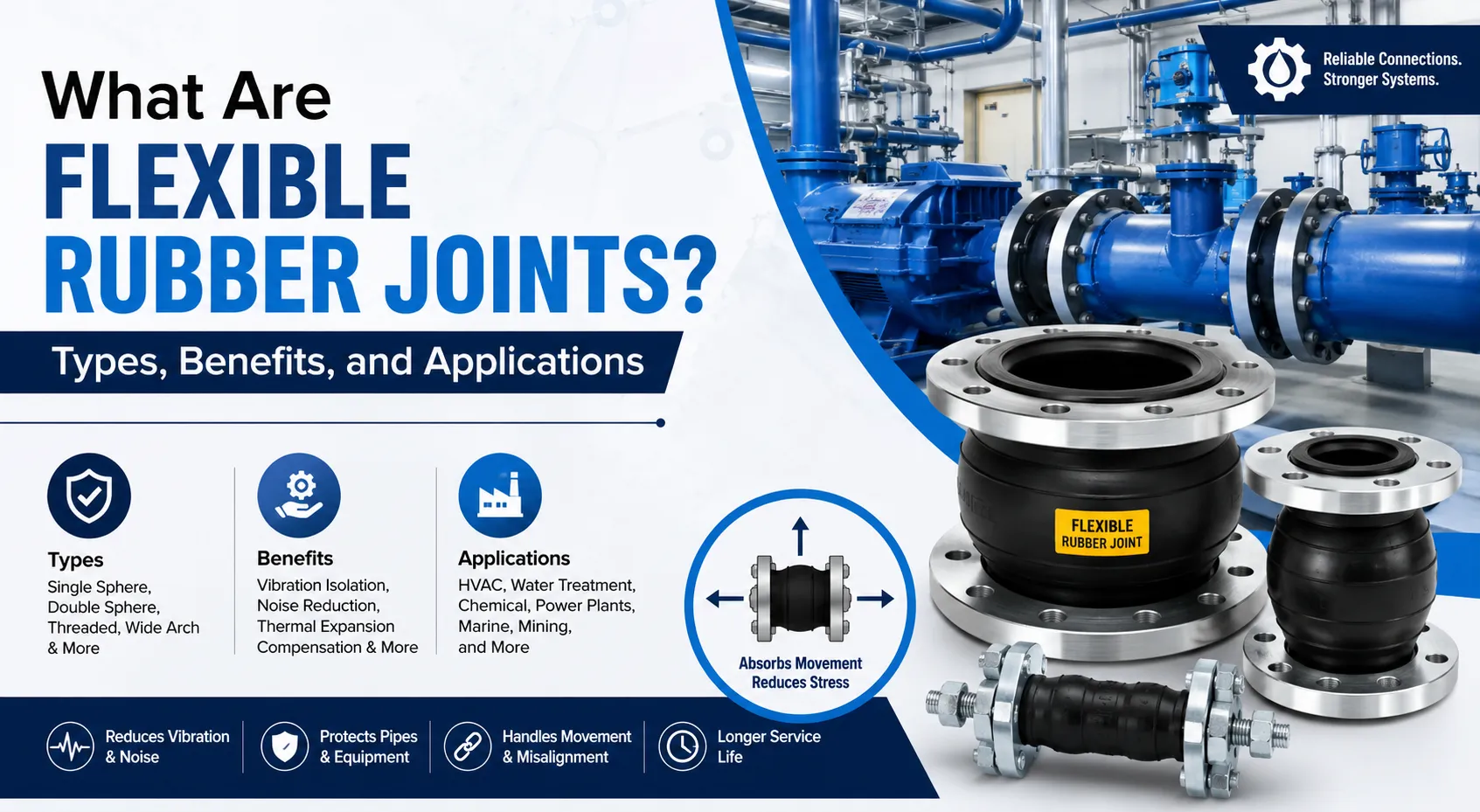

Flexible piping systems require components that can absorb movement, reduce vibration, and protect connected equipment from unnecessary stress. Flexible rubber joints are widely used for this purpose across industries such as water treatment, HVAC, chemical processing, power generation, and manufacturing. These joints help improve system performance while extending the service life of pipelines, pumps, and valves.
Whether you are designing a new piping network or upgrading an existing one, understanding the types, benefits, and applications of flexible rubber joints will help you choose the right solution for your project.
What Are Flexible Rubber Joints?
Flexible rubber joints, also known as rubber expansion joints or rubber bellows, are flexible connectors installed between sections of piping. They are manufactured using reinforced elastomers that allow controlled movement while maintaining a leak-proof seal.
These joints are designed to absorb:
- Thermal expansion and contraction
- Mechanical vibration
- Pipeline movement
- Pressure fluctuations
- Equipment misalignment
- Water hammer effects
By reducing stress on connected equipment, they improve the reliability and lifespan of the entire piping system.
How Do Flexible Rubber Joints Work?
Pipelines naturally expand, contract, and shift during operation due to changes in temperature, pressure, and equipment movement.
A rigid pipe system transfers these forces directly to pumps, valves, flanges, and other components, increasing the risk of failure.
Flexible rubber joints work by acting as a cushioning element that absorbs these movements instead of allowing them to damage the piping system.
Their elastic construction enables them to compress, extend, bend, and move laterally while maintaining proper sealing.
Main Components of Flexible Rubber Joints
Although designs vary, most rubber joints include the following components:
Inner Rubber Layer
The inner layer comes into direct contact with the flowing fluid. It is selected based on chemical compatibility.
Common materials include:
- EPDM
- NBR
- Neoprene
- Natural rubber
- Butyl rubber
Reinforcement Layer
Several layers of synthetic fabric or nylon reinforcement provide strength while maintaining flexibility.
This reinforcement enables the joint to withstand operating pressure without losing its shape.
Outer Rubber Cover
The outer cover protects the joint from:
- Weather
- UV exposure
- Abrasion
- Ozone
- Environmental damage
Metal Flanges
Flanges secure the joint to the pipeline and create a reliable connection.
Available materials include:
- Carbon steel
- Stainless steel
- Galvanized steel
Types of Flexible Rubber Joints
Choosing the correct type depends on the operating conditions and system requirements.
1. Single Sphere Rubber Joint
Single sphere joints contain one flexible arch that absorbs moderate movement.
Advantages
- Compact design
- Excellent vibration isolation
- Easy installation
- Cost-effective
Applications
- Water pipelines
- HVAC systems
- Pump connections
2. Double Sphere Rubber Joint
Double sphere joints feature two arches that provide greater flexibility than single sphere designs.
Benefits
- Higher movement capacity
- Better vibration absorption
- Reduced stress on equipment
Applications
- Industrial process lines
- Cooling systems
- Power plants
3. Threaded Rubber Joint
These joints use threaded connections instead of flanges.
Suitable for:
- Small pipelines
- Residential plumbing
- Compact installations
4. Wide Arch Rubber Joint
Wide arch joints allow significantly greater movement than standard designs.
Ideal for:
- Large pipeline displacement
- Heavy vibration
- High movement applications
5. PTFE-Lined Rubber Joint
Some aggressive chemicals can attack standard rubber materials.
PTFE-lined rubber joints provide additional chemical resistance for:
- Acid transfer
- Chemical processing
- Pharmaceutical plants
Common Rubber Materials Used
Different elastomers provide different performance characteristics.
EPDM
Suitable for:
- Hot water
- Steam
- HVAC
- Mild chemicals
NBR (Nitrile)
Best for:
- Oil
- Fuel
- Petroleum products
- Hydraulic systems
Neoprene
Offers excellent resistance against:
- Weather
- Ozone
- Moderate chemicals
- Outdoor environments
Natural Rubber
Provides excellent flexibility and abrasion resistance.
Often used for:
- Water
- Slurry
- Mining applications
Benefits of Flexible Rubber Joints
Excellent Vibration Isolation
Rotating equipment such as pumps and compressors generates continuous vibration.
Flexible rubber joints absorb these vibrations before they spread throughout the piping system.
This helps reduce:
- Equipment wear
- Pipe fatigue
- Noise levels
Compensates for Thermal Expansion
Temperature changes cause pipelines to expand and contract.
Without compensation, these movements create stress that may damage:
- Flanges
- Valves
- Welded joints
Rubber joints safely accommodate these movements.
Reduces Noise
Mechanical vibration often creates unwanted operational noise.
Flexible rubber joints significantly reduce sound transmission, making them ideal for:
- Commercial buildings
- Hospitals
- Hotels
- HVAC installations
Handles Misalignment
Perfect alignment is difficult to achieve during installation.
These joints accommodate minor:
- Angular movement
- Axial movement
- Lateral displacement
This reduces installation stress.
Protects Pumps and Equipment
Pump startups and shutdowns generate pressure surges.
Rubber joints absorb these sudden forces, protecting connected equipment from premature damage.
Prevents Water Hammer Damage
Water hammer occurs when fluid flow changes suddenly.
Flexible joints cushion these shock waves, reducing damage to the pipeline.
Easy Installation
Compared to rigid connectors, rubber joints require less installation time.
Their flexibility simplifies alignment during assembly.
Lower Maintenance Costs
Because they reduce vibration and mechanical stress, surrounding equipment experiences less wear.
This often results in:
- Fewer repairs
- Longer equipment life
- Reduced maintenance expenses
Applications of Flexible Rubber Joints
Flexible rubber joints are used across many industries.
Water Treatment Plants
Used in:
- Raw water lines
- Filter systems
- Pump discharge lines
- Chemical dosing systems
HVAC Systems
Installed in:
- Chillers
- Cooling towers
- Air handling units
- Boiler systems
They reduce vibration while allowing thermal movement.
Chemical Industry
Chemical plants require joints compatible with aggressive fluids.
Proper material selection ensures safe operation and long service life.
Power Plants
Power generation systems experience constant thermal cycling.
Flexible joints absorb expansion while protecting critical equipment.
Marine Industry
Ships experience continuous movement and vibration.
Rubber joints help maintain pipeline integrity under dynamic conditions.
Food and Beverage Industry
Used in hygienic process systems where reliable sealing and vibration isolation are important.
Mining Operations
Mining slurry pipelines often require flexible joints capable of handling abrasive materials.
Natural rubber and reinforced designs are commonly selected.
Oil and Gas Industry
Rubber joints are used in selected applications involving:
- Cooling water
- Utility services
- Pump connections
Oil-resistant materials such as NBR are typically preferred.
Factors to Consider When Selecting Flexible Rubber Joints
Choosing the correct joint requires evaluating several operating conditions.
Fluid Compatibility
Ensure the rubber material is compatible with the transported fluid.
Temperature
Different elastomers have different temperature limits.
Always verify operating temperatures before selection.
Pressure Rating
The joint must safely withstand maximum operating pressure.
Movement Requirements
Determine expected:
- Axial movement
- Lateral movement
- Angular deflection
Pipe Size
Select the correct diameter to ensure proper installation and sealing.
Environmental Conditions
Outdoor installations may require resistance to:
- UV rays
- Ozone
- Moisture
- Weather exposure
Installation Best Practices
Proper installation greatly affects service life.
Follow these recommendations:
- Avoid twisting the joint during installation.
- Ensure flange faces are aligned.
- Tighten bolts evenly.
- Do not exceed movement limits.
- Support piping correctly.
- Perform regular inspections.
- Replace worn joints promptly.
Proper installation reduces the risk of leakage and premature failure.
Common Signs That a Rubber Joint Needs Replacement
Regular inspection helps prevent unexpected downtime.
Watch for:
- Surface cracks
- Bulging
- Leakage
- Excessive vibration
- Rubber hardening
- Fabric exposure
- Corrosion around flanges
Replacing damaged joints before failure improves system reliability.
Flexible Rubber Joints vs Metal Expansion Joints
| Feature | Flexible Rubber Joints | Metal Expansion Joints |
| Flexibility | Excellent | Moderate |
| Vibration Isolation | Excellent | Limited |
| Noise Reduction | High | Low |
| Corrosion Resistance | Very Good | Depends on material |
| Chemical Compatibility | Material-specific | Excellent for many chemicals |
| Cost | Generally lower | Usually higher |
| Maintenance | Low | Moderate |
The choice depends on the application's temperature, pressure, movement, and chemical exposure.
Conclusion
Flexible rubber joints play an important role in protecting piping systems from vibration, thermal expansion, pressure surges, and misalignment. Their ability to improve system reliability while reducing maintenance makes them an essential component in industries such as water treatment, HVAC, chemical processing, power generation, mining, and manufacturing. By selecting the right material, size, and design, businesses can improve equipment life, minimize downtime, and maintain efficient pipeline performance. If you are looking for high-quality solutions, partnering with a trusted Rubber Expansion Joints (Bellows) Supplier in India can help ensure reliable products that meet your application requirements.
FAQs
1. What are flexible rubber joints used for?
Flexible rubber joints are used to absorb vibration, thermal expansion, pipeline movement, and pressure fluctuations in piping systems.
2. What materials are used to manufacture flexible rubber joints?
Common materials include EPDM, NBR, Neoprene, Natural Rubber, and Butyl Rubber, depending on the application.
3. Where are flexible rubber joints commonly installed?
They are widely used in water treatment plants, HVAC systems, chemical industries, power plants, marine systems, mining operations, and manufacturing facilities.
4. How long do flexible rubber joints last?
Service life depends on operating conditions, pressure, temperature, and maintenance, but quality joints can last for many years when properly installed.




























Sign in to leave a comment.