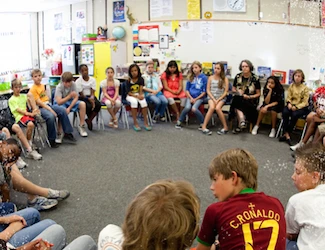

Social-emotional learning is an approach to integrating within classrooms that can change how educators approach everything from academic curriculum to students' mental and behavioral development. SEL curriculum enables the development of positive self-esteem in students; they tend to manage their emotions better, become able to achieve academic and life goals more effectively, and learn to show empathy towards the community.
Whereas researches indicate that the level of stress and anxiety has been rising in children and teens in recent decades, UNESCO MGIEP's SEL curriculum can provide them with coping mechanisms through developing social-emotional skill. These skills can help them reduce stress and anxiety, especially if educational institutes integrate SEL within classrooms from early childhood.
Many educators see SEL as an integral component of teaching students the soft skills they will need to be successful and contributing people.
SEL Integration Within Classrooms
Social and emotional learning can be taught separately from academic subjects, integrated into the learning environment alongside educational curricula, or used as a general classroom philosophy.
Students gain from continuity in SEL lesson plans by being taught parallel, yet age-appropriate, units at each level of classes. SEL teaching of young children lays a solid basis for more challenging SEL ideas in the future.
Educational institutes considering SEL implementation should first choose a thorough SEL curriculum to build self-esteem and respect for others and constantly encourage students to strive for self-improvement. UNESCO MGIEP's SEL implementation curriculum can help with this objective.
Support children's continuous social and emotional development by implementing SEL in a way appropriate from the perspective of children's overall development. Carefully plan active, targeted, and detailed teaching and learning activities must and sequenced to accomplish this objective of SEL integration.When implementing social and emotional learning programs within the classroom, a holistic approach to policy formulation and implementation calls for integration and collaboration across sectors, including education, health, community, and social services. It will ensure that the policies are coherent with SEL implementation.For learning to be used outside the classroom and across the school's everyday operations, systemic implementation is crucial. It uses a school-wide strategy incorporating SEL practices into daily operations and school culture.Additional Approach For Educators To Implement SEL Curriculum In Classroom
To get the best outcomes from teaching SEL, teachers can use the following approach to ensure consistency across all education stages.
By helping students recognize their self-concept. One of the fundamental principles of SEL in the classroom is a student's self-concept or self-awareness. How a person sees themselves is related to their self-concept. It's easy to form a person's self-concept through interactions with classmates, parents, and teachers. The foundation of the SEL curriculum in the classroom presents activities that allow students to explore their identities, beliefs, and self-perceptions. The MGIEP SEL curriculum incorporates activities into educational topics to bring up unique dialogues and exercises that let students investigate concepts of themselves.
Teach kids to control their emotions and abilities. Young students need to learn how to manage their ideas and feelings to promote positive behavior since positive thoughts and feelings can lead to positive results.
When educators integrate the SEL curriculum into the classroom, students learn how to control their:
TimeEnergy PossessionsMoneyTalents
Students will develop a sense of accountability. As a result, enhancing their self-concept and self-esteem.
Giving kids assignments with numerous components and a deadline, probing them about their emotions and responses to events, and even allowing them to manage money in the classroom are all effective ways to teach students control.
Helping students practice tactics of self-improvement. Students can concentrate on self-improvement if they know their weaknesses and learn to accept responsibility for their errors. The ability to properly adopt SEL is greatly aided by having a growth mindset or the conviction that anyone can pick up new skills.
At this stage of SEL curriculum integration in the classroom, teachers should assist students in identifying, setting, monitoring, and achieving goals. These objectives may involve learning, character development, or physical and mental wellness.
Self-improvement is interconnected with all the other SEL components since it involves students' efforts to learn the soft skills necessary for their social and emotional growth.
UNESCO MGIEP's SEL program can enable educators to create a more secure and sympathetic classroom environment that can help students by providing them with social and emotional competencies to better deal with stress and anxiety beyond their classroom. The more significant aspect is that students' acquisition of the fundamental SEL skills continues long after they graduate and enter the workforce. SEL fosters in children a sense of self-assurance, improved coping mechanisms for life's challenges, and increased empathy for others.
0

























Sign in to leave a comment.