
If you've ever bought a new car, replaced a lost plate, or just wondered why your registration looks the way it does, you've probably typed something like "what are standard number plates" into Google at some point. It's a common question, and honestly, the answer isn't as boring as it sounds. Number plates are one of those things we all see every single day but rarely think about — until we need one.
So let's break it down properly. This guide covers everything from what these plates actually are, how they're regulated, why the material and font matter more than you'd expect, and how a good number plate maker can save you a lot of hassle down the line.
What Exactly Are Standard Number Plates?
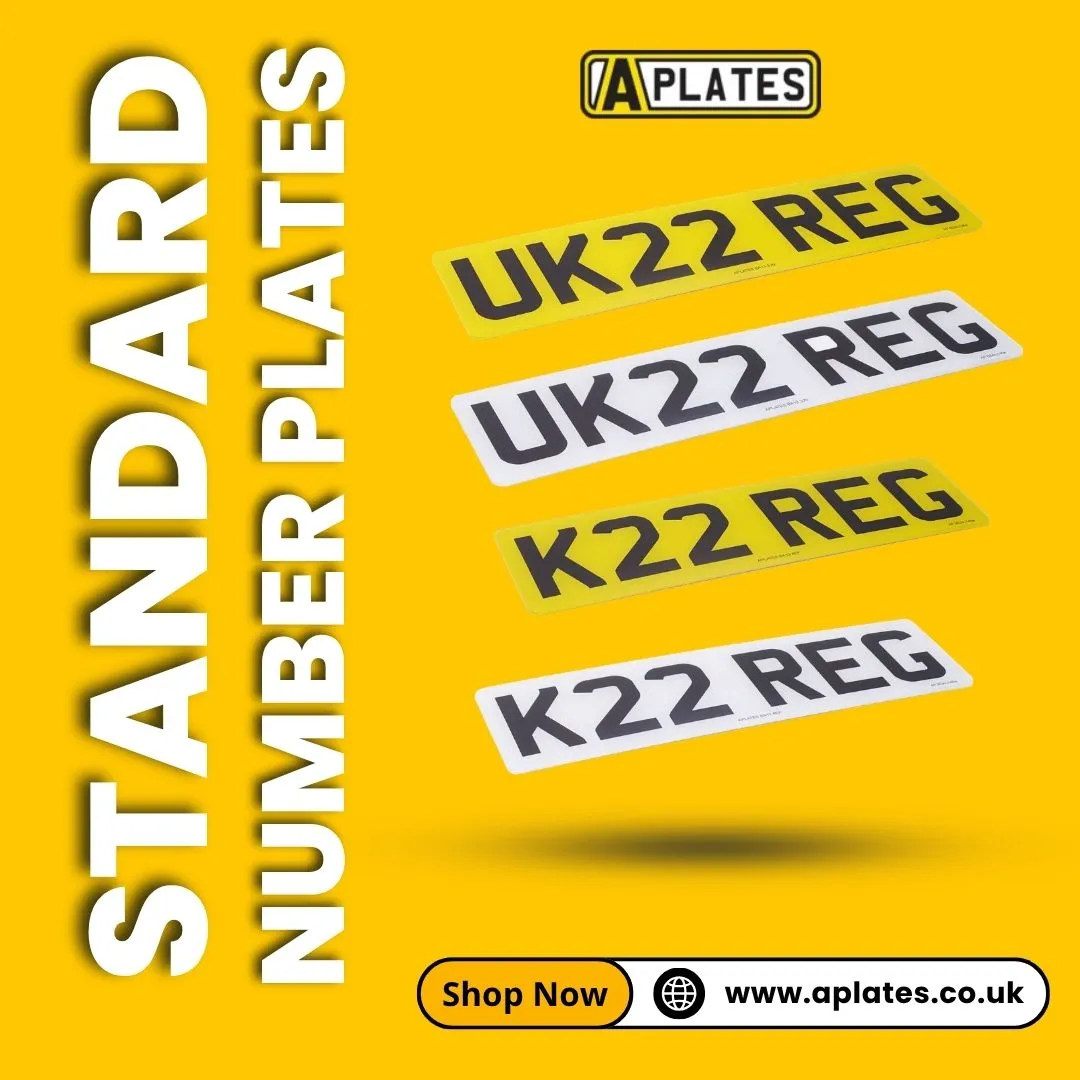
In simple terms, Standard Number Plates are the everyday, road-legal registration plates you see on most vehicles across the UK. They're not the flashy 3D or 4D styles you might spot on a showroom car — they're the classic, printed version that meets DVLA standards and does the job it's meant to do: legally identify your vehicle.
These plates are made using reflective material, a fixed font style, and specific spacing rules laid out by British Standard BS AU 145e. That might sound overly technical, but it basically means every plate needs to follow the same format so that number plate recognition cameras, police checks, and general road safety systems all work correctly.
Why Do Standard Number Plates Still Matter in 2026?
You'd think with all the fancy plate styles available now, standard ones would be old news. But that's far from true. Here's why they're still the most practical choice for most drivers:
- They're fully road-legal and DVLA-compliant, so there's zero risk of fines
- They're affordable compared to premium or acrylic 3D plates
- They work seamlessly with ANPR (Automatic Number Plate Recognition) cameras
- They're quick to produce, so you're not waiting around
- They suit literally every type of vehicle, from hatchbacks to vans
Basically, if you want something reliable that won't get you pulled over or flagged for non-compliance, standard is the way to go.
Printed vs Other Number Plate Styles: What's the Real Difference?
This is where a lot of people get confused. Printed Number Plates use a flat, screen-printed digit style — no raised lettering, no gel finish, just a clean, legal print. They're the most budget-friendly and the most commonly used option across the country.
Compare that to 4D or 3D plates, which have raised, laser-cut acrylic characters glued onto the surface. Those look sharper and more premium, sure, but they're pricier and not always necessary unless you're going for a specific look.
If your priority is legality, durability, and value for money, printed plates tick every box without the extra cost.
How Are They Made?
The process is more precise than people assume. A proper number plate maker uses:
- UV-protected reflective sheeting to prevent fading
- Laser or digital printing for sharp, consistent characters
- Standardised spacing and font sizing per DVLA rules
- Quality-checked materials that meet MOT requirements
Skipping any of these steps can lead to plates that fail inspection or, worse, get flagged by traffic cameras. That's why buying from a legitimate registered supplier actually matters.
How to Choose the Right Number Plate Maker
Not all suppliers are created equal, and this is honestly where a lot of drivers go wrong. Some cheap online sellers skip the legal verification step entirely, which can land you in legal trouble even if you didn't mean any harm.
Here's what to look for:
- DVLA registration – the supplier must be an officially registered number plate supplier
- Document verification – you should be asked to prove vehicle ownership before your plate is made
- Material compliance – reflective, weatherproof, and BS AU 145e certified
- Fast turnaround – same-day or next-day production is a good sign of a professional setup
- Clear pricing – no hidden costs for "legal" plates that should be standard anyway
This is exactly the space where a brand like Aplates fits in. As a UK-based number plate supplier, Aplates focuses on producing fully compliant, DVLA-standard plates without the confusing add-ons or inflated pricing you sometimes see elsewhere. Whether you need a quick replacement or you're setting up plates for a brand-new vehicle, the process is built to be simple and transparent from start to finish.
Common Mistakes People Make When Ordering Number Plates
Let's be honest — most people don't think too hard about number plates until something goes wrong. Here are a few mistakes worth avoiding:
Buying From Unverified Sellers
If a seller doesn't ask for proof of entitlement (like a V5C logbook or insurance document), that's a red flag. Legitimate suppliers are legally required to check this.
Ignoring Font and Spacing Rules
DIY or altered fonts might look "unique," but they're actually illegal and can result in an MOT failure or a fine of up to £1,000.
Choosing Non-Reflective Materials
Reflective plates aren't just a legal requirement — they genuinely improve visibility at night, which is a safety issue, not just a technicality.
Forgetting to Check Regional Compliance
If you're driving in Northern Ireland versus mainland UK, or exporting a vehicle, plate rules can differ slightly. Always double-check before ordering.
The Cost Factor: Are Standard Plates Really Cheaper?
Yes, generally speaking. Standard printed plates are the most cost-effective legal option available. Since there's no raised lettering, gel coating, or acrylic cutting involved, production costs stay low — and that savings gets passed on to you.
For most everyday drivers, this makes complete sense. Unless you specifically want a premium aesthetic, there's no real functional benefit to paying extra for 3D or 4D styles. The reflective properties, legal compliance, and durability are identical across the board.
How Long Do Number Plates Actually Last?
With decent materials, a standard plate can easily last 8 to 10 years without fading or cracking, especially if it's kept clean and isn't exposed to constant physical damage. UV-protected sheeting helps prevent the "yellowing" effect that cheaper, unregulated plates often develop over time.
If your plate starts looking dull, cracked, or hard to read, it's time to replace it — not just for appearance, but because unreadable plates can actually result in a fine.
Final Thoughts
At the end of the day, number plates aren't something you should overthink, but they're also not something to be careless about either. Going with Standard Number Plates gives you a legal, reliable, and budget-friendly option that works for virtually any vehicle without unnecessary extras. Pairing that with a trustworthy, DVLA-registered number plate maker — like Aplates — means you get plates that are compliant, durable, and ready quickly, without jumping through unnecessary hoops.
Whether you're replacing a worn-out plate or setting up a new vehicle, sticking with standard, printed, verified plates is really the safest and smartest route to take.
FAQs
Q1: Are standard number plates legal in the UK?
Yes, as long as they meet DVLA and BS AU 145e standards, including correct font, spacing, and reflective material.
Q2: What's the difference between standard and printed plates?
They're essentially the same — "printed" refers to the flat, screen-printed style used for standard plates, as opposed to raised 3D or 4D designs.
Q3: Do I need documents to order number plates?
Yes, legitimate suppliers require proof of vehicle ownership, such as a V5C logbook, before producing your plates.
Q4: How long do number plates typically last?
With good-quality materials, plates usually last 8–10 years before needing replacement.
Q5: Can I customise the font on my number plate?
No, altering fonts or spacing is illegal and can lead to fines or MOT failure.
































Sign in to leave a comment.