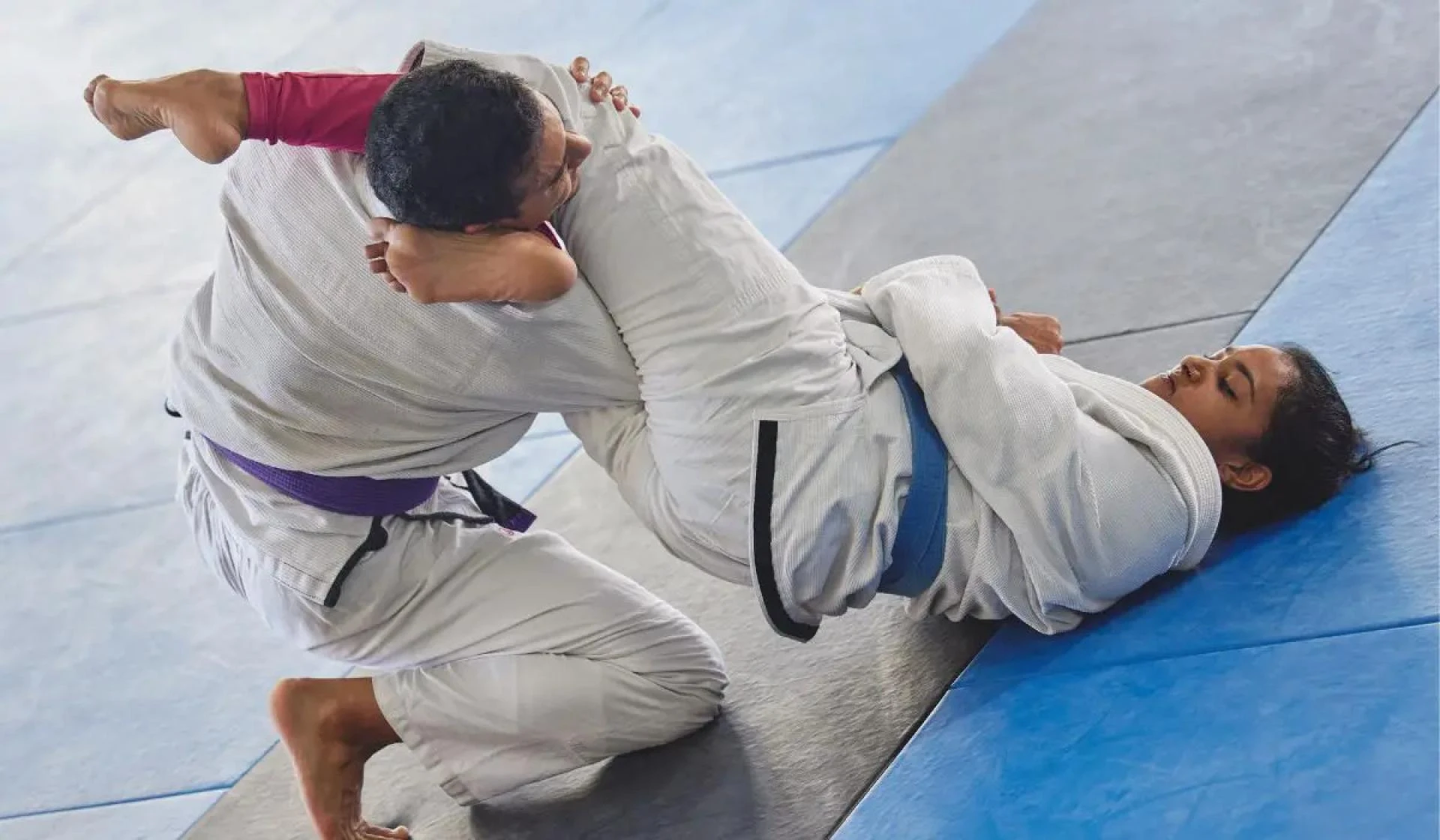

Controlling your opponent\'s movements is a vital skill in any grappling sport. Mastering dominant positions in Brazilian Jiu-Jitsu (BJJ) allows you to stay safe from attacks and set up submissions or transitions to even more powerful pins. Here are the five must-know positions to gain the upper hand in BJJ:
1. Closed Guard: The closed guard is a fundamental position where the bottom player wraps their legs around the opponent’s waist. The key is to break the opponent’s posture, making it difficult for them to stay upright. While it may seem passive, a good guard player can launch attacks like armbars, triangles, omoplatas, guillotines, and collar chokes from this position. The person inside the guard must work hard to pass, limiting their offensive options.
2. Full Mount: In the full mount, you sit on top of your opponent’s midsection or chest. This position offers numerous submission options, including joint locks and chokeholds. In mixed martial arts (MMA), it’s also a prime spot for delivering strikes. Maintaining mount requires a solid understanding of body positioning to avoid being reversed. The full mount allows for transitions to other dominant positions like side control, knee on belly, and north-south.
3. Side Control: Side control is one of the most dominant positions in BJJ. It involves pinning your opponent in a T-shape, offering excellent control and making it one of the hardest pins to escape. From side control, you can easily transition to mount, north-south, or knee on belly, and apply submissions like armlocks and chokes. Maintaining chest-to-chest connection and blocking the opponent’s hip are crucial for control.
Also Read: What Is The Difference Between Jujitsu And Brazilian Jiu-Jitsu?
4. Back Mount: The back mount is the most advantageous position in BJJ. Your opponent can\'t see your moves, giving you a significant edge. This position is ideal for executing powerful chokes like the rear naked choke and the bow and arrow choke. Key to maintaining the back mount is ensuring chest-to-back connection and securing a seatbelt grip. Controlling the opponent’s hands helps you slide in the choke. Using a body triangle is another effective option, but avoid crossing your feet to prevent leg locks.
5. Knee on Belly: The knee on belly (KOB) is a floating pin where you control your opponent with your knee. It\'s particularly crushing when executed by heavier grapplers, as you drive your weight into the opponent\'s solar plexus. This position allows for transitions to mount, side control, or north-south, and is excellent for pinning down a relentless opponent.
Mastering these five positions will significantly enhance your ability to control and dominate your opponent in Brazilian Jiu-Jitsu.









Sign in to leave a comment.