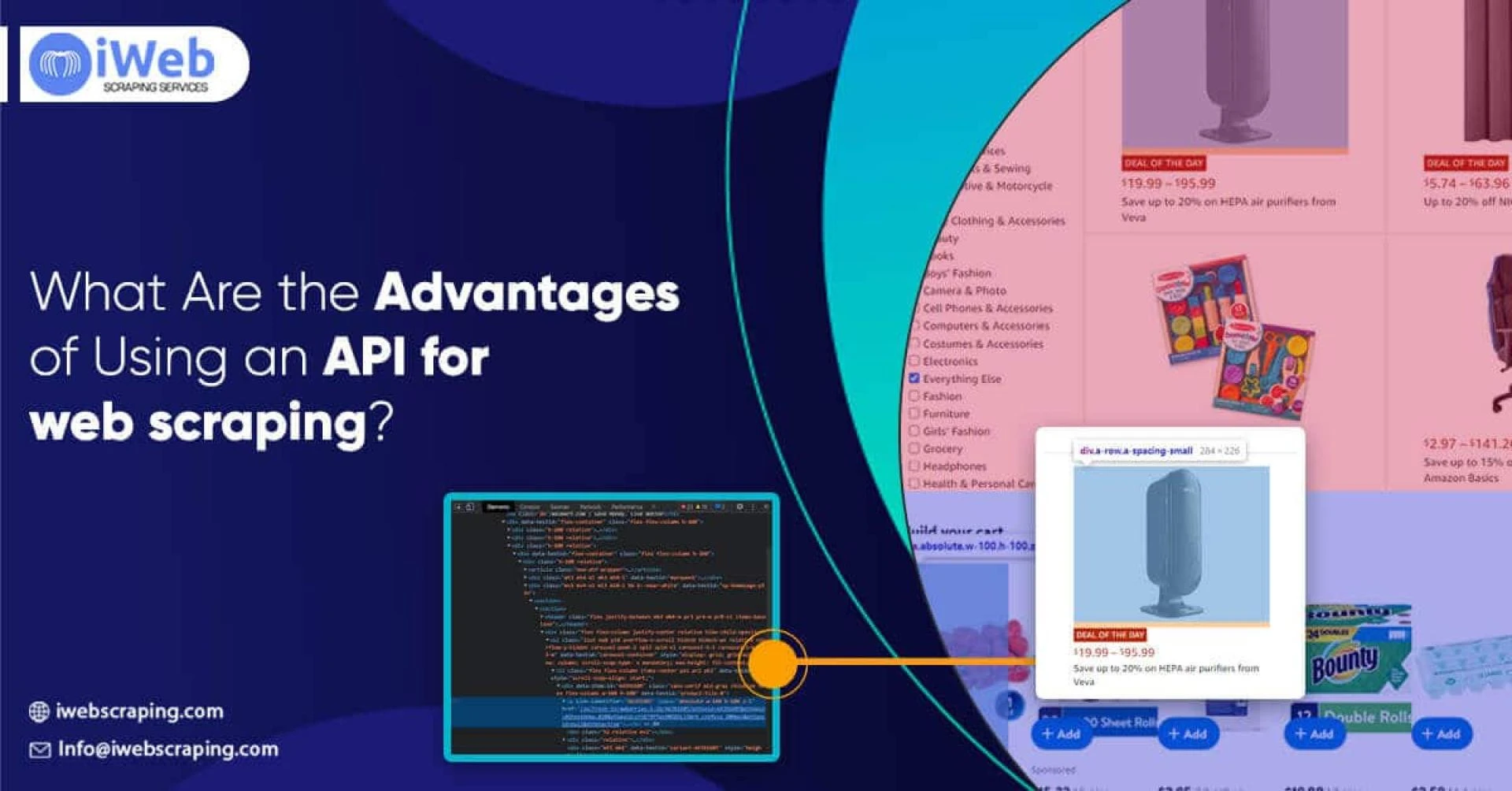

We are constantly surrounded by various forms of information from websites on the Internet. All of this data is valuable.
Data is a valuable resource that organizations, programmers, freelancers, and marketers utilize to manage their enterprises or begin critical projects that require analysis of the data. Most of the time, this leads to higher strategic decisions, product development or improvement, or simply assisting the market is continuing its natural process of development and expansion.
So how can you acquire all of this information in a method that is easy, quick, and efficient?
Web scraping, for example, is an automated procedure for collecting structured web data that is carried out by bots. Web scraping services is the process of obtaining HTML code and, with that as well, the majority of the data recorded in a database, from any public site.
Multiple tools, APIs, and frameworks are available on the market to help with web scraping. The focus of this article, however, is on APIs. As a result, you'll learn about the benefits of using an API even while web scraping to get all of the data you need for your projects or business in the following sections.
What is an API vs. Web Scraping API?
There are numerous definitions or descriptions about what an API is, and these are among the most concise and straightforward.
An Application Programming Interface (API) is a contract between two software applications that allows them to share data on agreed-upon terms. (WebScrapingAPI).
An API (Application Programming Interface) is a set of definitions that software program can use to access a system or application.
A programming interface (API) enables two apps to communicate with one another. The user's application "A" sends a request to the web platform's application "B," and "B" responds with the facts or outcome of the action requested in "A's" inquiry.
Whatever definition you use, one thing is for sure: an API provides developers with access to a large number of features, which they can subsequently employ in their applications with ease.
When it comes to online scraping, one of the most frequent ways for gathering data is an API. In this context, it serves as a solution to several issues that web scrapers face when scraping the web, such as JavaScript rendering, IP blocking, and anti-bots measures.
Let's look at an example to better grasp what a web scraping API is and how its capabilities make it feasible for any code enthusiast to extract data.
WebScrapingAPI is, as its name implies, an API that enables web scraping a quicker and efficient procedure for obtaining web data. It works in the same way that a standard API would. It links the service provider's data extraction program to anything you require.
You simply make queries to the API in question, specifying which URL to target, which proxies to utilize, and what data you wish to collect. The API will respond with a JSON-formatted file as its answer.
As previously stated, scraping the online world might provide some issues. The majority of them have the same goal: to restrict you from scraping website pages by blocking your activities.
Dynamic Websites: Use of a frameless browser to render JavaScript and access all of the page's data on dynamic websites.
IP Blocks: Rotating proxies are used to circumvent IP limitations. The API employs a different IP for each request from a pool of more than 100 million datacenter, mobile, and residential proxies spread across hundreds of ISPs and regions.
CAPTCHAs: circumvents captchas totally by automating proxies’ rotation, wait for time randomization, user-agent, browser, and device data.
Fingerprinting: Changing your perceived information regularly so that websites recognize the various requests you send as coming from distinct users. The anti-fingerprinting functions are automated, and users can set their custom headers to receive personalized results.
What are the benefits of using an API?Simple Integration: APIs simplify the process of embedding content from any website or program. These make content delivery more seamless and the customer interface more integrated.
Customization: APIs enable any client or organization to personalize the content and services they use most frequently.
Automated Process: APIs allow computers to take over tasks that would otherwise be handled by humans. APIs will be used by agencies to improve workflows and make them faster and more efficient.
Usage and Application: Because APIs will govern app components, the deployment of resources and information will be more flexible.
Multipurpose: An API can also be used to establish an abstraction layer that can be adjusted to provide customized user interfaces and can be used to distribute information and resources to new users.
Performance: When an API is used, the material that is created is automatically released and made available across all platforms. It makes it easier to exhibit and share.










Sign in to leave a comment.