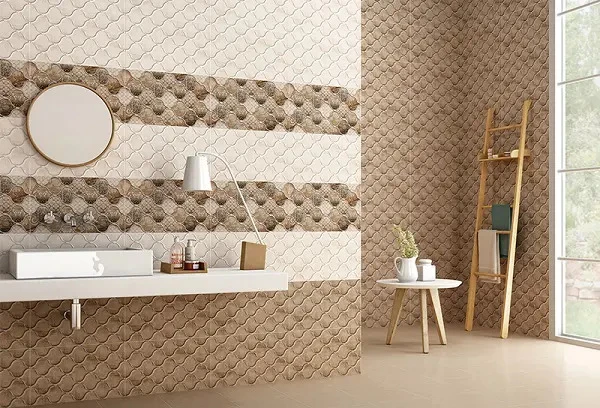

Tiles are a classic choice for bathroom floors for good reason—they're practical, easy to clean, and come in a huge range of colors, sizes, and patterns. But if you're looking for something a little different, there are plenty of other options out there. Here's a quick overview of some of the most popular alternatives to tile flooring in bathrooms.
Best floors for the bathroom
Bathroom floors have to withstand a lot of wear and tear, so it's important to choose materials that can withstand heat, humidity, and falling objects. Materials that are waterproof and mold-resistant are ideal for bathroom floors because they won't deteriorate quickly from daily showering.
When choosing a new bathroom floor, it is important to consider factors such as durability, waterproofing, and ease of cleaning. The bathroom is one of the dampest rooms in the house, so the flooring must be able to withstand moisture. It is also important that the flooring be easy to clean and maintain, as no one wants to spend a lot of time polishing or oiling their bathroom floors. Finally, the flooring should have a seamless transition between the floor and the shower area. Have a seamless transition between the floor and the shower area. This has to be taken into account when installing a shower cabin.
The floor has to be seamless so that moisture does not enter below the surface.
There are a variety of materials that can be used for bathroom floors, not just tiles. Many floor coverings are already waterproof, making them ideal for use in bathrooms. For those that are not waterproof, oils can be applied to add protection against water.
Here is an overview of common and modern floor coverings that can be used in the bathroom:
Natural stone
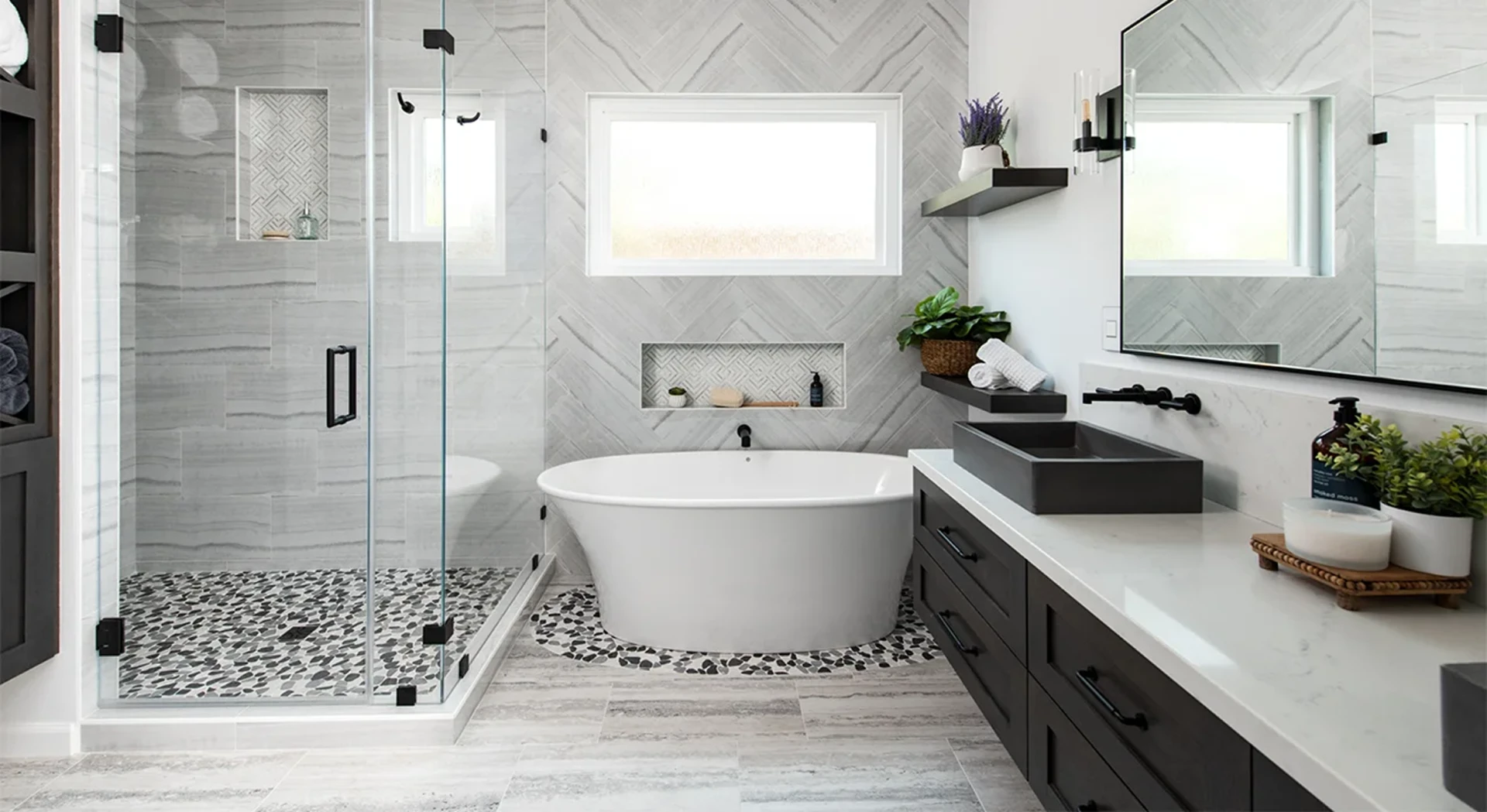
Natural stone can give your bathroom a unique, authentic touch. With many colors and types available, there are no limits when it comes to letting your creativity flow. Natural materials have an atmospheric effect that can transform your bathroom into an oasis of well-being. Lastly, natural stone can work wonderfully as a shower wall or floor.
Advantage:
Natural stones are not only beautiful; they are also very durable.
The surface of natural stones is resistant to scratches and easy to clean.
Natural stones are also elegant and extravagant and can make a room visually larger.
Natural stone is suitable for underfloor heating as it distributes heat evenly.
Disadvantages:
Natural stone, especially marble, is sensitive to alkaline cleaners and/or soap scum.
Marble is difficult to lay, so we recommend having it installed by an expert to ensure the stones fit perfectly.
Natural stone is usually very porous.
In addition to the price of the installation, the cost of natural stone is usually higher than that of tiles.
Tip: Natural stones can be easily combined in the bathroom; ceramic tiles on the wall may appear similar to stones.
Vinyl floor
Vinyl flooring is a kitchen classic that has been around for years. It's one of the most resilient and waterproof floor coverings around, making it ideal for bathrooms. Adhesive vinyl is particularly good for bathrooms as it's waterproof, so you can easily redesign your bathroom floor in just a few steps.
bathroom floors
Advantage:
Vinyl floors come in different colors, styles, and decorations, so your creative freedom is enormous if you choose vinyl flooring for your bathroom.
Vinyl is very easy to care for—with a little water and a little cleaner, your vinyl floor will look like new!
The vinyl floor reliably insulates footfall noise.
Vinyl flooring material stores heat well, so you will never be cold.
Click vinyl and adhesive vinyl are also easy to remember.
Vinyl can be placed and glued on top of tiles.
Disadvantages:
Adhesive vinyl comes in sheets that are glued side by side; as a result, water can find a gap between the adhesive edges and find its way to the floor.
Vinyl floor covering is not easy to remove.
Vinyl doesn't have a particularly high reputation for quality, but it is simple and practical.
Laminate floors
Laminate floors are one of the most popular choices for both home and commercial settings. They are easy to care for, durable, and can be quickly installed. Laminate is made up of multiple layers of paper, fiberboard, and glue that are printed to resemble wood. This construction makes laminate floors resistant to scratches, water damage, and falls. So not only will laminate floors give your kitchen or living room a beautiful finish, but they are also a great alternative to tile for bathroom floors.
bathroom floors
Advantage:
Laminate flooring is available in a wide variety of designs and colors.
As a bathroom floor covering, laminate is extravagant and rare.
You can quickly instal laminate flooring yourself.
Laminate flooring is easy to clean and does not require complicated maintenance.
Waterproof laminate is especially suitable for damp rooms, so you don't need to worry about it swelling.
Disadvantages:
Laminate floors are not waterproof unless they are moisture-proof laminates; moisture will always penetrate the material and joints.
Unlike other floors, laminate flooring is always cold.
Laminate floors do not conduct heat well, so they are not very compatible with underfloor heating.
Unlike parquet floors, laminate is noisy, so it is important to add an acoustic insulating base.
What should you pay attention to when designing bathroom floors?
There are no limits to the imagination when it comes to designing bathroom floors, as long as you take into account the advantages and disadvantages of each material. There is nothing wrong with having a wooden floor, as long as it is taken care of properly. Vinyl or concrete floors are also suitable. But the best option for a bathroom floor is natural stone.
Stone Depot India, India's largest manufacturer and supplier of stone since 1984, offers a complete range of stone from India in slabs, tiles, monuments, cobbles, flagstone, and so on.

























Sign in to leave a comment.