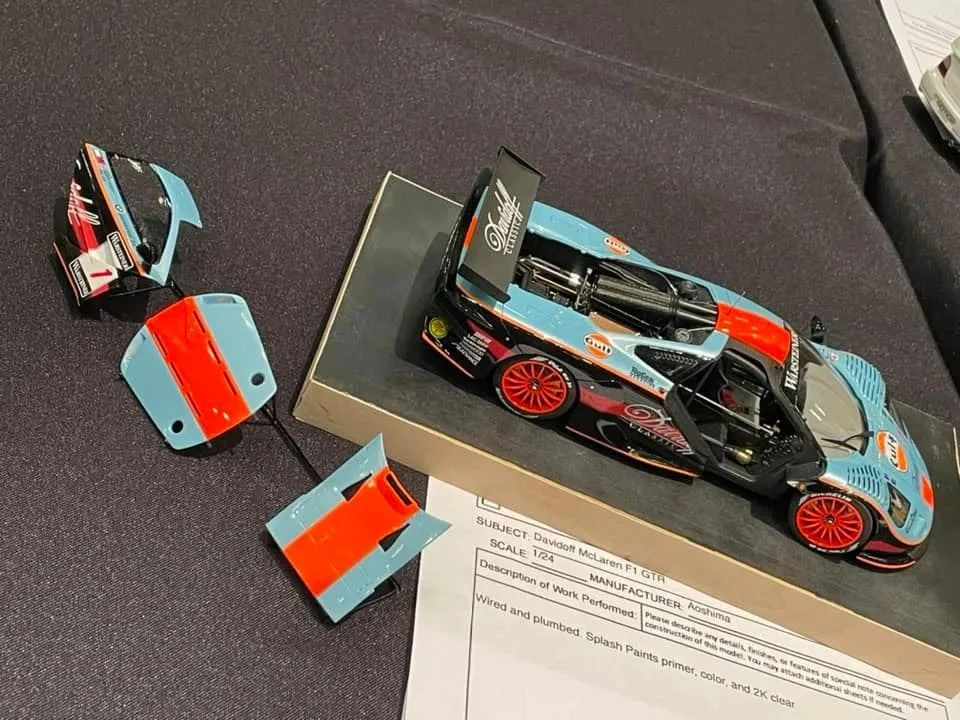

Some collectors like to assemble model cars by themselves, but they encounter difficulties when faced with the model car kit of what material to choose. You may have such questions, for example, what material is suitable for beginners to choose a model car kit, and what are the advantages and disadvantages of each material?
Don’t worry, let’s introduce 3 popular model car kit materials on the market.
The three most commonly used materials for model car components on the market are plastic, resin , and metal model car kits.
Plastic is one of the most commonly used materials for model car kits, and it’s usually ABS (acrylonitrile-butadiene-styrene) or PS (polystyrene) plastic. These plastics have good formability, strength and durability. Plastic model car kits are usually manufactured through the injection molding process, which injects molten plastic into a mold and then allows it to cool and solidify. In addition, plastic model car kits can be manufactured through computer-aided design software and 3D printing technology.
Resin model car kits are a premium, high-quality model-making material. Resin has good detail performance and high plasticity, and they are usually more detailed and realistic than plastic models. However, making resin models requires a higher level of skill and patience, as resin requires more machining and handling. Resin is a more flexible material than the zinc alloy used to make die-cast models, on resin models the closure lines are very thin, exactly mimicking reality.
Metal model car kits usually use metal materials such as zinc alloy, aluminum alloy and stainless steel. It can provide higher accuracy and detail, and it is also easier to form realistic car appearance and details. In addition, its texture and weight are closer to real cars, making the model more realistic. Metal model kits are also relatively more durable due to the strength and durability of metal. But metal-based kits are usually more expensive than plastic and resin models due to higher production costs and skill levels, which limits the need for people to buy and make these models.
The above briefly introduces the three kinds of model car kit materials, let’s take a look at their advantages and disadvantages!
Plastic Model Car Kit:
Pros: Plastic model car kits are the most widely available and affordable model car kits on the market, and they accurately recreate the look and detail of a car. Because of the high-precision process in the mold making process, the plastic model can well represent the various features of the car, such as body lines, wheels, windows and lights. And they’re easy to assemble and customize, often with a variety of parts and decals that help create a realistic model car. The plastic kit is also lightweight and durable for easy handling and transportation.
Cons: Plastic model car kits can sometimes have noticeable mold lines or injection marks that require extra work to remove. Also, they may not be as detailed or realistic as resin or metal kits.
Resin Model Car Kit:
Pros: Resin model car kits are often more detailed and accurate than plastic kits, with more precise lines and curves. They are also often produced in smaller limited editions, making them even rarer and more collectible. Resin kits can be easily modified and customized, and often include unique parts or accessories.
Cons: Resin model car kits are harder to work with than plastic ones. They require special tools and techniques to cut and sand, and the material is brittle and prone to cracking. Resin kits are also generally more expensive than plastic kits.
Metal Model Car Kit:
Pros: Metal model car kits are often very detailed and realistic, with a weight and weight very close to the real car. They are often produced in limited editions and are highly collectible. Metal kits can be painted and customized to create a one-of-a-kind model car.
Cons: Metal model car kits can be more difficult to assemble, requiring specialized tools and techniques. The weight of metal makes it harder to handle and transport. They are also generally more expensive than plastic or resin kits.
It would appear that beginners may prefer plastic kits for their ease of assembly and affordability, while more experienced modelers may appreciate the more detail and customization options offered by resin and metal kits. So in the end, you can decide what material kit to choose according to your own preferences and needs.







Sign in to leave a comment.