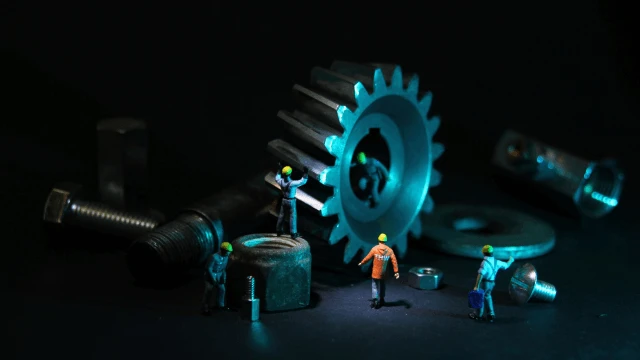

In the fast-paced world of business and management, maintaining manufacturing process reliability and equipment reliability is crucial for the success of any organization. A structured approach to maintenance and reliability is essential to achieve these objectives. This is where the "Five Pillars of Maintenance and Reliability" concept comes into play. These pillars provide a comprehensive framework that helps organizations build a strong foundation for effective maintenance practices, ensuring optimal equipment performance and operational excellence.
I. Organization and Leadership
The first pillar, Organization, and Leadership, forms the bedrock of an effective maintenance and reliability program. This pillar focuses on establishing a culture of excellence where everyone understands the importance of maintenance and reliability in achieving business goals. Strong leadership is key in setting the vision, mission, and values that prioritize maintenance as a strategic function. Leaders must ensure that the necessary financial and human resources are allocated to support maintenance initiatives. Clear communication and collaboration between different departments are essential for seamless maintenance operations.
In the realm of maintenance and reliability, a strong foundation begins with effective Organization and Leadership. This pillar plays a pivotal role in shaping an organization's culture and fostering a deep-rooted commitment to maintenance as a strategic function. Strong leadership sets the tone for the entire workforce, emphasizing the importance of reliability and its critical role in achieving business objectives.
At the heart of Organization and Leadership lies a clear vision and mission that places maintenance at the forefront of the organization's priorities. Leaders must recognize that maintenance is not just a cost center but a value-adding function that directly impacts productivity, product quality, and customer satisfaction. By embracing this mindset, leaders can rally the workforce behind a shared purpose, driving a culture of maintenance excellence.
II. Work Management
Work Management is the second pillar, which deals with the structured and efficient execution of maintenance activities. It involves proper planning, scheduling, and coordination of maintenance tasks to minimize downtime and maximize productivity. Work orders are systematically created and assigned, detailing the scope of work, required resources, and estimated time for completion. A well-defined work management process ensures that maintenance activities are carried out safely and efficiently, reducing the risk of errors and accidents. It also includes documentation and record-keeping to track maintenance history and identify recurring issues for continuous improvement.
The work management process begins with creating detailed work orders that outline the scope of maintenance activities, required resources, and estimated time for completion. These work orders are then assigned to qualified maintenance technicians based on their expertise and availability. Proper planning and scheduling ensure that maintenance tasks are executed efficiently, minimizing disruptions to production processes.
Effective work management also involves modern technology and software solutions to streamline the process. Computerized Maintenance Management Systems (CMMS) provide a centralized platform for work order management, asset tracking, and documentation. This digitization improves data accuracy and enables real-time monitoring and reporting of maintenance activities.
III. Manufacturing Process Reliability
The third pillar, Manufacturing Process Reliability, focuses on enhancing the reliability and performance of the manufacturing processes. This involves identifying critical assets and systems directly impacting production and product quality. Reliability engineering principles are applied to analyze failure modes, assess risks, and implement strategies to prevent breakdowns. The goal is to ensure the manufacturing processes operate smoothly, with minimal unplanned downtime and disruptions. Organizations can enhance operational efficiency by optimizing process reliability and consistently meeting customer demands.
Manufacturing Process Reliability is a critical pillar in maintenance and reliability management for industrial organizations. It ensures manufacturing processes' smooth and consistent functioning to achieve optimal production and product quality. Reliability engineering principles play a key role in this aspect, identifying and mitigating potential failures and risks that could disrupt production.
By analyzing failure modes, reliability engineers can develop strategies to prevent and manage equipment breakdowns, reducing unplanned downtime and minimizing the impact on productivity. They also conduct reliability assessments and risk analyses to prioritize assets and systems based on their criticality to production.
IV. Equipment Reliability
The fourth pillar, Equipment Reliability, is centered on the health and performance of individual assets within the organization. This pillar emphasizes proactive maintenance practices, such as preventive maintenance and condition monitoring, to detect potential issues before they escalate into major failures. Regular inspections, maintenance routines, and equipment health assessments are conducted to keep assets in peak condition. Reliability-centered maintenance (RCM) techniques are often used to identify the most appropriate maintenance strategies based on asset criticality and performance history. Organizations prioritizing equipment reliability can extend asset life cycles, reduce maintenance costs, and improve overall equipment effectiveness (OEE).
Equipment reliability plays a pivotal role in the smooth functioning of any organization. When it comes to manufacturing processes or industrial operations, the performance and dependability of equipment are critical to meeting production targets and ensuring product quality. Without reliable equipment, unplanned downtime and costly breakdowns can wreak havoc on production schedules, leading to lost revenue and increased maintenance expenses.
V. Business and Management
The fifth and final pillar, Business and Management, ties all the other pillars together. It involves aligning maintenance and reliability strategies with overall business objectives and key performance indicators (KPIs). The success of maintenance efforts is measured not only by asset performance but also by their impact on the organization's bottom line. Key metrics such as mean time between failures (MTBF), mean time to repair (MTTR), and overall equipment effectiveness (OEE) are used to assess the effectiveness of maintenance practices. Furthermore, this pillar emphasizes continuous improvement, where data-driven insights optimize maintenance strategies and drive continuous efficiency gains.
By analyzing these KPIs, maintenance teams can gain valuable insights into the performance of assets, the frequency and duration of downtime, and the impact of maintenance activities on production and operational efficiency. This data-driven approach empowers organizations to make informed decisions about resource allocation, equipment replacement, and maintenance prioritization.
Conclusion
In conclusion, the Five Pillars of Maintenance and Reliability provide a comprehensive framework for organizations to achieve manufacturing process reliability and equipment reliability while ensuring efficient work management and strong leadership. By prioritizing these pillars, businesses can create a culture of excellence that values maintenance as a strategic function. Proactive maintenance practices, data-driven decision-making, and a focus on overall business objectives contribute to improved equipment performance, reduced downtime, and increased operational efficiency. Implementing these pillars not only enhances maintenance and reliability but also strengthens the foundation for sustainable growth and success in the competitive landscape of the modern industry.










Sign in to leave a comment.