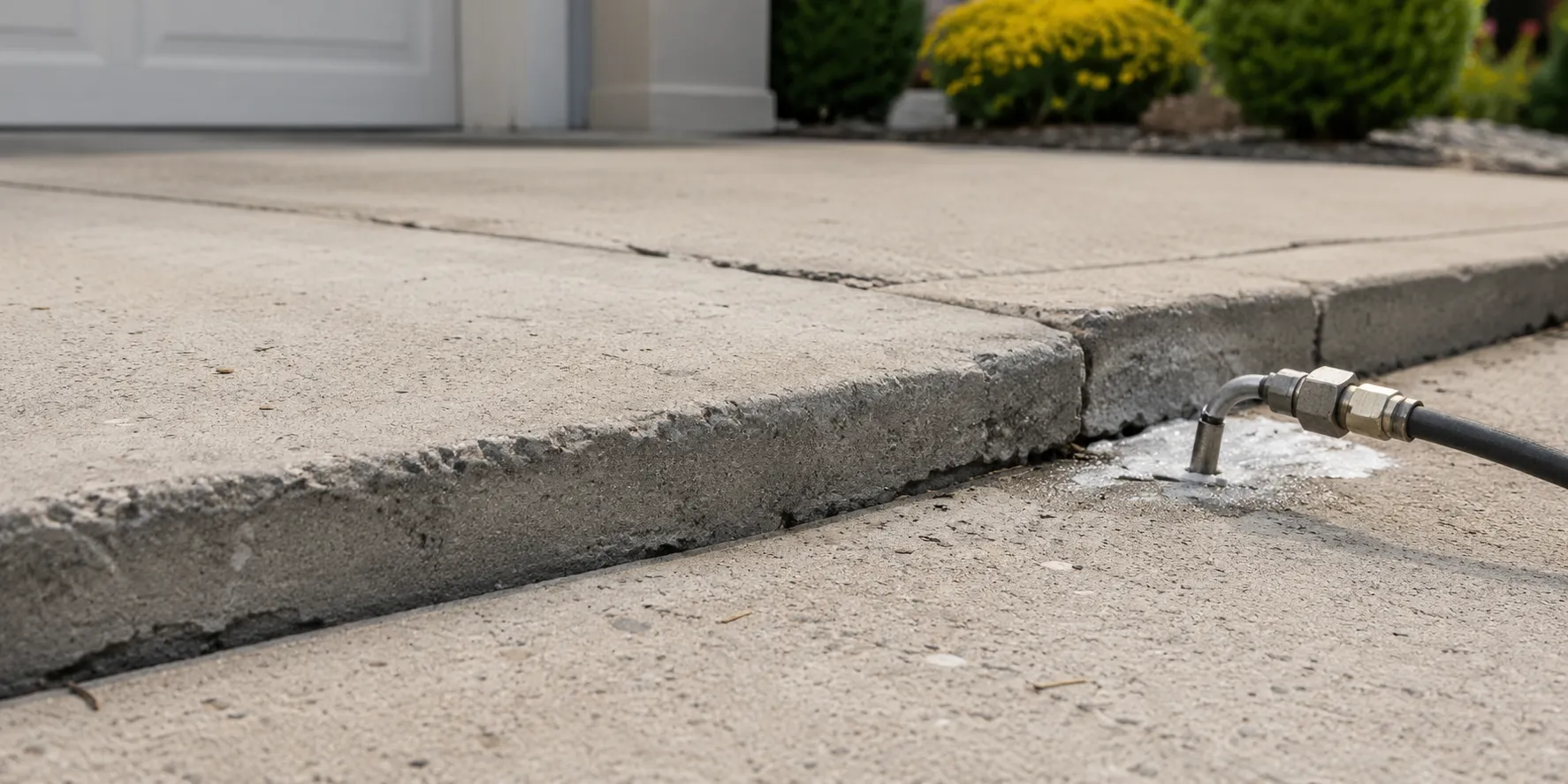

If you have a sunken driveway, a wobbly patio slab, or a sidewalk that has turned into a tripping hazard, you have probably heard someone mention slabjacking as the fix. It sounds simple enough. A crew shows up, pumps material under your concrete, and the slab rises back into place. But anyone who has actually gone through the process knows it is not always that clean. Slabjacking works well when it is done right, and it can cause real headaches when it is not.
So what actually goes wrong? Let's walk through the problems homeowners run into most often and what separates a rushed slabjacking company from one that gets it right the first time.
What Slabjacking Actually Involves
Slabjacking, sometimes called mudjacking or concrete leveling, lifts sunken concrete by injecting filler material underneath it. The material fills the empty space left by eroded or compacted soil, then raises the slab back to grade. It costs less than tearing out concrete and pouring new slabs, which is why so many homeowners in Pennsylvania choose it for driveways, patios, and pool decks. The process sounds simple, but the results depend heavily on who is doing the work.
Common Problems Homeowners Run Into
Here are the issues that come up again and again with slabjacking projects, especially when the job is handled by an inexperienced crew.
- Uneven lifting. If the material is not injected in the right pattern, one section of the slab rises faster than another. This can leave the concrete tilted in a new direction instead of level.
- Cracking during the lift. Older or already damaged concrete can crack further under the pressure of the lifting process if the crew moves too fast or uses too much material at once.
- Temporary results. Traditional mud-based fill can settle again over time, especially if the underlying soil problem was never addressed. Homeowners end up calling the same slabjacking company back within a year or two.
- Wrong material for the soil type. Pennsylvania soil varies a lot from one county to the next. A mixture that works in sandy soil might not hold up in clay-heavy ground, and using the wrong approach leads to repeat sinking.
- Drainage issues left untouched. Sinking concrete is often a symptom of water pooling or draining poorly around the foundation. If that root cause is ignored, the slab will likely sink again no matter how well it was lifted.
- Hiring based on price alone. Some slabjacking contractors offer rock-bottom quotes by cutting corners on material or skipping steps like proper hole patching. The savings up front often turn into bigger repair bills later.
- Messy job sites. Traditional mudjacking involves pumping wet slurry through large holes, which can leave a muddy mess in the yard or driveway that takes days to clean up.
- Poor communication. Homeowners are sometimes left guessing about timelines, drying times, or when the area is safe to use again.
Why the Contractor You Choose Matters So Much
Slabjacking is part science and part experience. Two crews can use similar equipment and get very different results depending on how well they read the soil conditions, how carefully they control the lift, and how much attention they pay to the finish work.
This is where working with an established slabjacking company makes a real difference. A team that has handled hundreds of driveways, sidewalks, and patios across Pennsylvania knows how to judge lift rates by feel, not guesswork. They also know which situations call for polyurethane foam instead of traditional mud-based fill, since foam cures faster, requires smaller holes, and holds up better against future settling.
Tips for Avoiding a Bad Slabjacking Experience
A few practical tips can help you avoid the common pitfalls listed above and steer you toward slabjacking contractors who actually stand behind their work.
- Ask how long the crew has been doing this type of work, not just concrete work in general.
- Find out what material they use and why they chose it for your specific slab.
- Request a written estimate before any work begins.
- Ask what happens if the slab settles again within a certain time frame.
- Check whether they address drainage as part of the repair, not just the lifting itself.
These questions separate professional slabjacking contractors from a crew that just wants to get in and out quickly.
Why Homeowners in Pennsylvania Choose Lift It Pro
At Lift It Pro, we built our business around solving the problems that give slabjacking a bad reputation. We serve homeowners across York, Harrisburg, Lancaster, Hanover, and Gettysburg, and our motto says it plainly: don't replace it; lift it.
Rather than relying only on traditional mud-based methods, we use polyurethane foam injection for many projects because it cures quickly, requires smaller holes, and creates a firmer, longer-lasting result. Our team evaluates the soil and drainage conditions around your property before recommending a fix, so you are not just paying to lift a slab that will sink again next year.
As a slabjacking company that has worked on driveways, patios, sidewalks, pool decks, and commercial concrete throughout south central Pennsylvania, we understand how much local soil conditions matter. That local knowledge, paired with careful technique, is what keeps our results holding up over time.
Final Thoughts
Slabjacking is a smart, budget-friendly way to fix sunken concrete, but the outcome depends entirely on the crew doing the work. Uneven lifting, cracking, drainage problems, and short-lived repairs are common complaints, and almost all of them trace back to rushed work or the wrong slabjacking contractors for the job.
If you are dealing with a sunken driveway, patio, or walkway anywhere in south central Pennsylvania, Lift It Pro is ready to help. Book your free quote today at liftitpro.com and find out how a properly done slabjacking job can save your concrete without the mess or the guesswork.























Sign in to leave a comment.