
In late 2019 and early 2020, a new virus from the family of coronaviruses had been traced from Wuhan, China. This virus started generating headlines because of its striking transmission rate.
The virus is now spread to all continents. This coronavirus is now officially called severe acute respiratory syndrome coronavirus 2 (SARS-CoV-2) and the disease caused by this virus is COVID-19 (Coronavirus disease 2019).
The virus is responsible for causing more than 100 million infections worldwide. COVID-19 impacts different people differently, depending upon their age, immunity, and exposure to disease, etc. Most of the people will get mild to moderate disease impact and can get recover without being admitted to hospital.
Symptoms of Coronavirus Disease
Signs and symptoms of COVID-19 may appear from 2 to 14 days after getting infected. On average it 5 to 6 days for the symptoms to show after infection.
Here is a detailed piece of information on the symptoms of coronavirus including most common to rare and severe symptoms.
Common Symptoms
The most common symptoms of COVID-19 are
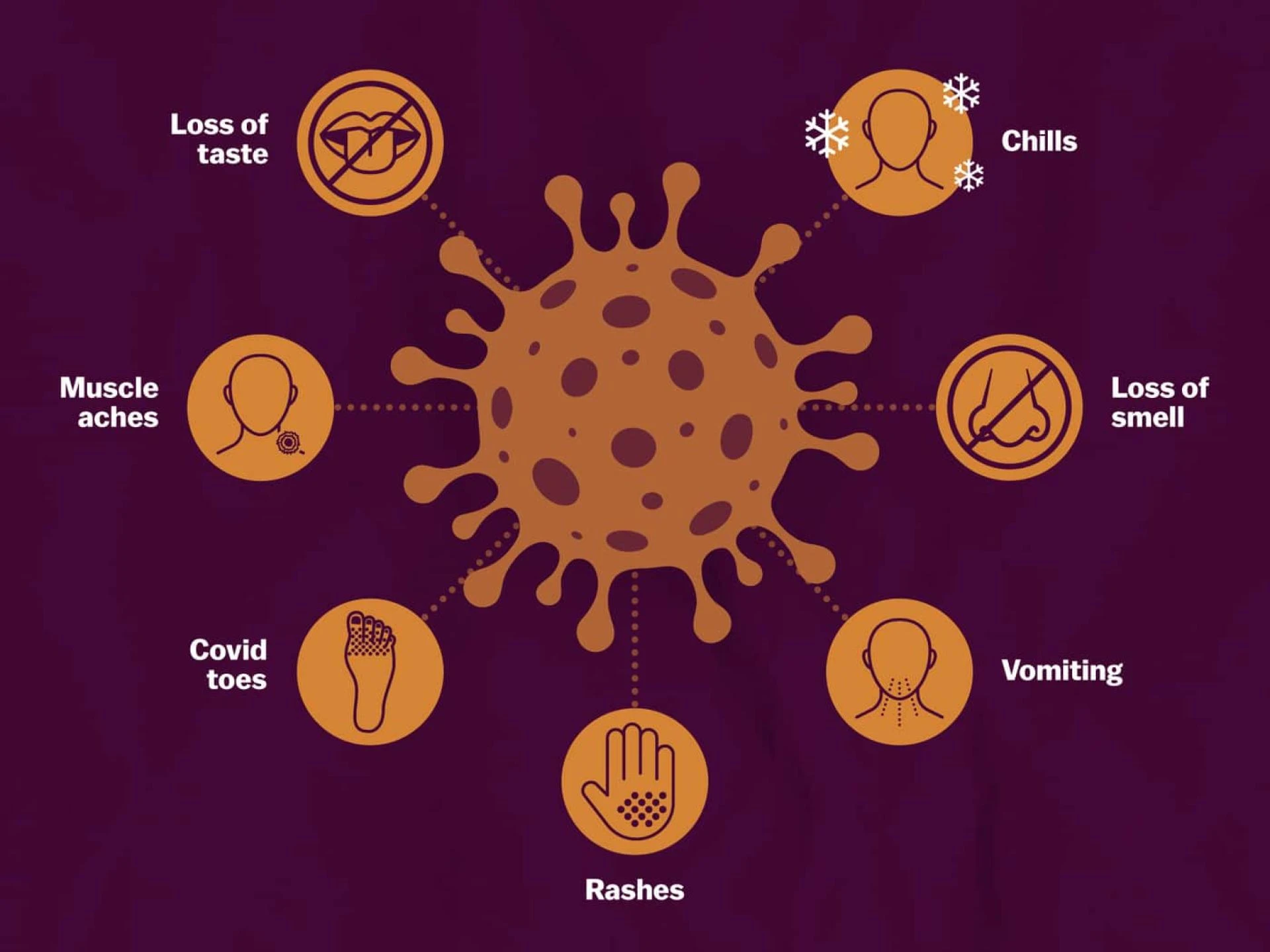
FeverTirednessCoughLoss of smellLoss of tasteLess common Symptoms
Less common symptoms of this disease include:
Sore throatMuscles aches and painsHeadacheChillsRash on skinRed eyes (conjunctivitis)Nausea VomitingDiarrheaSevere Symptoms
Some very severe but less common symptoms of Covid-19 are:
CongestionShortness of breath/ difficult breathingLoss of speechLoss of mobilityEvery COVID-19 patient does not necessarily have above all symptoms. A person may have all, some, or none of the above-mentioned symptoms.
What to do if someone has symptoms?
If you feel the symptom of coronavirus or you have been in close contact with an infected person, you should do the following things:
Get a PCR test done immediately, by the lab which collects samples from home so, you don’t need to go there physically.Self-isolate yourself at home. Stay at home and do not have visitors, until you get the PCR results.Check whether your family member needs PCR or self-isolation.People with serious symptoms should seek medical help immediately. However, COVID-19 patients who have mild symptoms and are otherwise healthy should stay at home and manage their disease.How long should you self-isolate?
As per the recent CDC recommendations, if you have been infected by the coronavirus, you should remain self-isolated until you met all of the three requirements mentioned below.
10 days have passed since your symptoms first appeared.You do not have a fever for 24 hours, without taking any fever-lowering medication.Your COVID-19 symptoms have improved.How to prevent COVID-19 disease?
To prevent COVID-19 disease, firstly you should have information about how Coronavirus transmits.
Transmission of Coronavirus
All coronaviruses are zoonotic. This means they developed in animals and then transmit to humans.
At first, the virus only infects the persons who are in close contact with the infected animals. However, once the virus developed in humans, it can transfer from human to human as well via respiratory droplets.
Respiratory droplets are the wet stuff that moves through the air during exhaling, cough, sneeze, or even just talk. The viral material remains in the droplets and can be breathed into the respiratory tract leading to infection.
It is also a possibility that someone can get the infection by touching his face, eyes, nose after touching a surface that has the virus on it. However, the transmission of the virus through close contact with COVID-19 Infected people is more common.
Prevention from Coronavirus
Follow these precautionary measures to prevent infection and slow down the transmission of the coronavirus.
Get vaccinated as soon as possible, choose these top 4 covid vaccines for best results.Maintain at least a 1-meter distance from others, even they seem healthy.Wear a properly fitted mask when outside.Prefer open and ventilated overcrowded or closed places. Keep windows and doors open if indoors.Avoid the crowd and large gatherings.Do not touch your face frequently as it will lessen the spread of the virus through your hands.Avoid handshaking, instead, greet each other with other friendly gestures.Frequently clean the surfaces which are used more i.e. mobile phones, doorknobs, and countertops etc.Regularly wash your hands with soap and water. If water is not available use an alcohol-based hand rub. Use sanitizers with at least 60 percent alcohol in them.Cover your face while coughing and sneezing.Exercise, eat healthily, drink plenty of water and get enough sleep to strengthen your immune system.If you get infected, self-isolate yourself until fully recovered.The coronavirus 2019 seems scary when we daily hear the news about deaths, quarantine, and travel bans, etc. However, the first and foremost thing to deal with coronavirus is not to panic at all.
Following simple social distancing, parameters can help you protect yourself from being exposed to the virus. If you get infected, stay calm and follow your physician’s instructions. Not only you can quickly recover this way but can also prevent it from being transmitted.











Sign in to leave a comment.