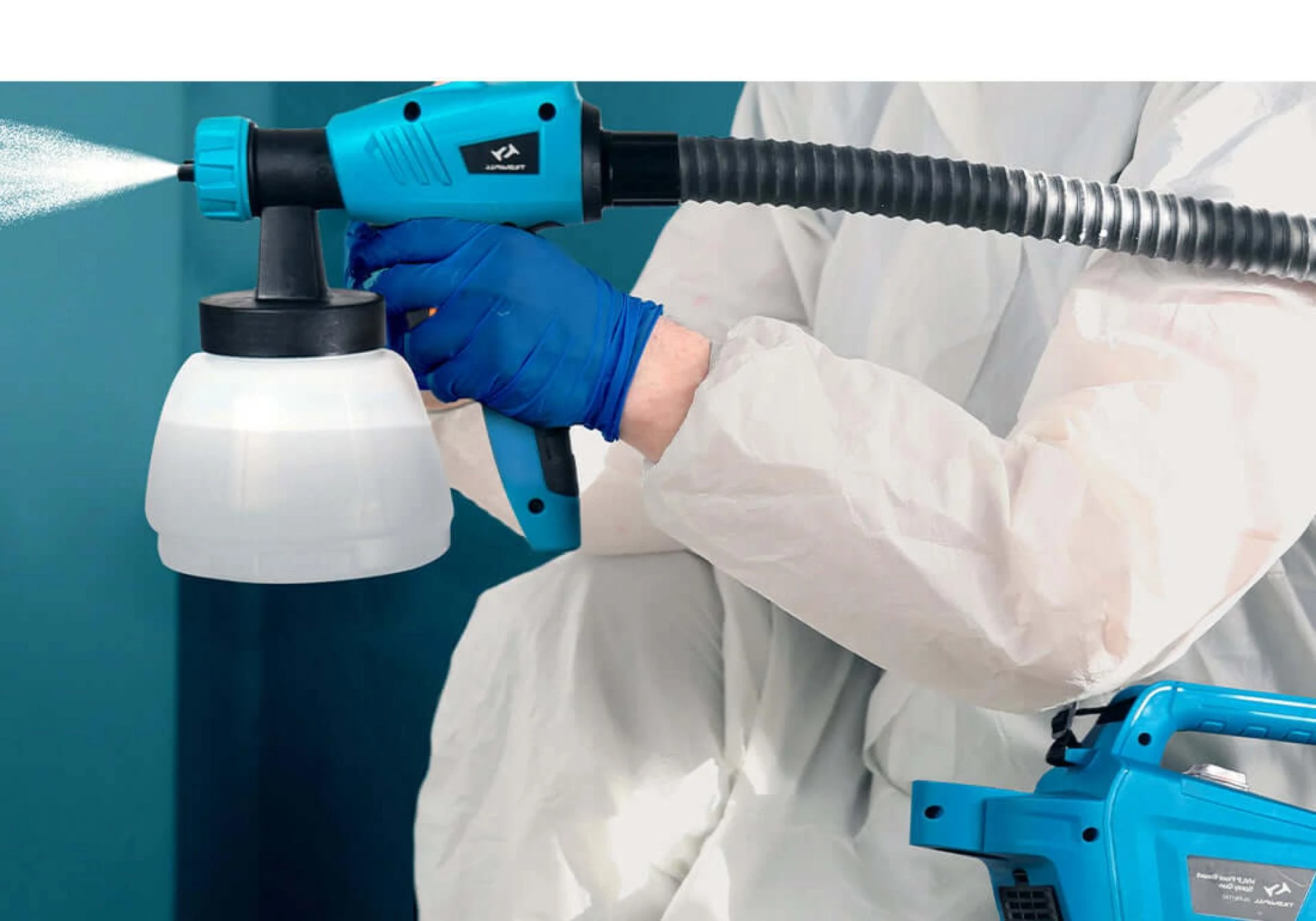

Paint spray guns are essential tools for many professionals and DIY enthusiasts who want a smooth and professional finish on their projects. Several types of paint spray guns are available, each with unique features and benefits. This article will explore the different types of paint spray guns available and their uses.
Conventional Spray Guns
Conventional spray guns are the most common type of paint spray gun, and they use compressed air to atomize paint particles and spray them onto surfaces. These guns have a paint cup attached to the bottom, which holds the paint and feeds it into the gun’s nozzle. The nozzle can be adjusted to control the spray pattern and flow rate.
Conventional spray guns are suitable for various paints and coatings, including solvent-based and water-based paints. They are commonly used for automotive painting, furniture refinishing, and large surface areas such as walls and ceilings.
HVLP Spray Guns
HVLP (High Volume, Low Pressure) spray guns are similar to conventional spray guns, but they use less air pressure to atomize the paint particles, resulting in less overspray and waste. This makes them a more efficient and eco-friendly option than conventional spray guns.
HVLP spray guns are ideal for painting furniture, cabinets, and other small or intricate projects. They are also suitable for painting larger surfaces, such as walls and ceilings, but may require more time and effort due to their lower pressure.
Airless Spray Guns
Airless spray guns use a hydraulic pump to pressurize the paint and force it through a small nozzle at the front of the gun. This creates a fine mist of paint particles that can be sprayed onto surfaces without compressed air.
Airless spray guns are best suited for large surface areas like walls, roofs, and fences. They are also suitable for painting metal surfaces, such as machinery and equipment. They can handle various paints and coatings, including thick and viscous materials, making them versatile.
LVLP Spray Guns
LVLP (Low Volume Low Pressure) spray guns are similar to HVLP spray guns but operate at lower pressure and use less air volume. This results in even less overspray and waste than HVLP spray guns, making them the most efficient and eco-friendly option.
LVLP spray guns are best suited for small or intricate projects like furniture refinishing and touch-up painting. They are also suitable for automotive painting but may require more time and effort due to their lower pressure.
Gravity Feed Spray Guns
Gravity feed spray guns are a type of spray gun where the paint cup is located above the nozzle, allowing gravity to feed the paint into the gun. This design allows for a more even and consistent paint flow, reducing the risk of drips and runs.
Gravity-feed spray guns are best suited for small or intricate projects like model painting, touch-up painting, and detail work. Due to their smaller paint cups, they are also suitable for automotive painting and furniture refinishing but may require more time and effort.
Pressure Feed Spray Guns
Pressure-feed spray guns use a pressurized paint cup or tank to feed the paint into the gun’s nozzle. This design allows for a more consistent paint flow and can handle thicker and more dense paints and coatings.
Pressure feed spray guns are best suited for large surface areas, such as walls, roofs, and fences, and for painting machinery and equipment. They are also suitable for automotive painting but may require more time and effort due to their larger size and weight.
Conclusion
Choosing the right type of paint spray gun for your project can make a significant difference in the final results. Conventional spray guns are the most common and versatile type, suitable for various paints and coatings. HVLP and LVLP spray guns are more efficient and eco-friendly, while airless and pressure-feed spray guns are best suited for large surface areas and thicker paints and coatings. Gravity-feed spray guns are ideal for small or intricate projects and offer a more consistent paint flow. By understanding the different types of paint spray guns and their uses, you can choose the right tool for your project and achieve the professional-looking finish you desire.








Sign in to leave a comment.