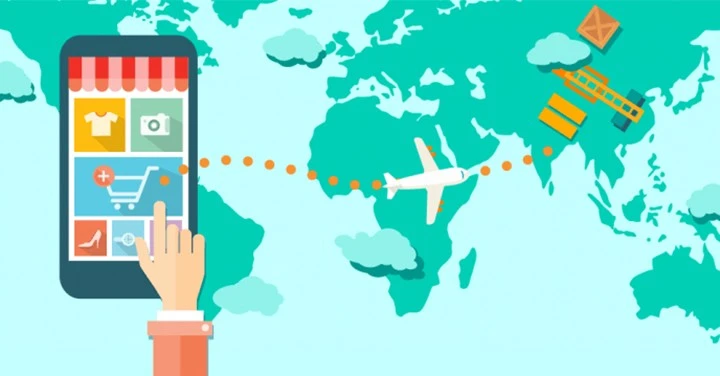

What are cross-border payments?
It is a transaction between a payer and payee where both the parties are based in different countries. In recent years, cross-border payment has become very important for various e-commerce businesses that operate globally. This is required to perform their day-to-day operations. With its help, the transactions can be made from any corner of the globe in the most safe and secure manner. In most cases, cross-border payments tend to be more expensive than domestic payments and may take longer as well.
In this digital era, consumers always look for fast and convenient services for a better experience. A few years back, cross-border payments like Mastercard cross-border payments often did not meet their requirements as these payments were laborious, expensive, and time-consuming. However, the cross-border payment industry has been witnessing tremendous development, owing to technological innovations. Mentioned-below are a few future predictions that can completely revolutionize this sector:
Real-time cross-border payments
Cross-border payments will be instant in the coming future. Various elements have influenced this factor like the 24/7 central bank settlement and real-time domestic payments. Owing to technological innovations, better policies, and common standards, the industry is expected to make cross-border payments much faster. As more banks start adopting real-time processing instead of batch processing, the speed of these transactions will gradually keep increasing. Also, banks will be bound to adopt real-time cross-border payments as customers start demanding faster payment methods and the entire market starts shifting towards real-time transactions. This is not the only factor that will boost the demand for real-time transactions. This type of payment is more transparent and banks will get a better insight into the transactions.
Moving to real-time payment processing means that banks have to extend interbank processing hours as the payment processing is no longer limited to office hours. Gradually, the 24/7 processing of transactions will become the norm.
Everyone’s needs can be met using cross-border payments
The value of any payment system strictly depends on how widely it has been adopted by people. People need to accept its value and make more and more transactions. Two factors determine this. Firstly, there should be a universal standard followed by every institution to track international payments. Besides that, complete transparency should be maintained at all levels in terms of any fees, remittance, and Foreign Exchange information to enhance the experience of the customers. Secondly, the payer should be confirmed that the amount has been credited to the payee’s account for all transactions. This confirmation upon payment completion helps to maintain true end-to-end visibility regarding all transactions.
An open and a smart choice
To ensure proper flow to everyone and everywhere, it is crucial to maintain transparency in the cross-border payment system. Hence, it is important to create an ecosystem where all banks can differentiate themselves by using technologies like application programming interfaces (APIs) to layer their products and services so that their offerings can easily be determined.
This type of environment will allow Fintechs and other players to create and add more value using their new innovative payment systems. It is only possible by adopting modern, and global standards.
Cross-border payments have a secured future
Once there are common, modern, and open standards, the banking community will be in a position to take up the challenges coming shortly. This will have a huge impact on fraud and compliance. On one hand, cybercriminals are expected to attack, they are expected to get much smarter and their procedures more sophisticated. On the other hand, strict regulations will be followed and cross-border transactions will be monitored even more closely. In the future, more advanced tools will be developed, better control levels will be used, and information will be more transparent to meet the demands. Modern advanced technologies like machine learning and artificial intelligence, along with better use of the data, will help in reducing the false positive number and enhancing screening algorithms in areas like sanction screening.










Sign in to leave a comment.