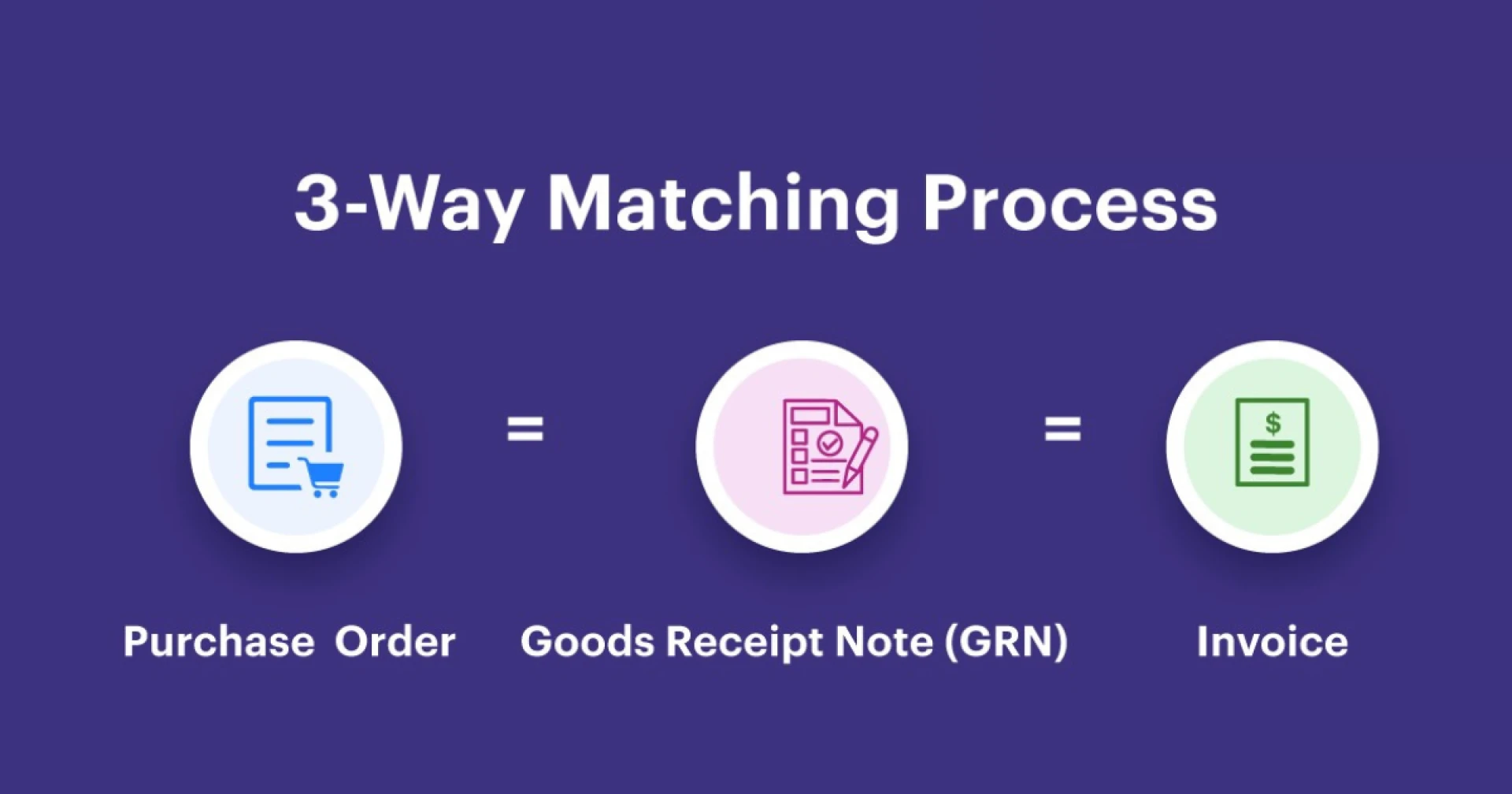

The accounts payable process relies heavily on accuracy, openness, and efficiency. The 3-way matching process is a common strategy used by corporations to accomplish these features. This process guarantees that vendor payments are accurate and in accordance with the purchase order, goods receipt, and invoice. But what is involved in 3-way matching, and why is it important? Let's understand it.
Understanding 3-Way Matching
3-way matching is a method in accounts payable that verifies and matches three important documents before making payment to a vendor. It consists of three documents:
- Purchase Order (PO): When a corporation places an order with a supplier, this document is prepared to outline the goods or services needed, quantities, agreed prices, and delivery terms.
- Goods Receipt Note (GRN): The GRN confirms the delivery of goods or services. It provides assurance that the item ordered has been received and meets the stipulated quantity and conditions.
- Invoice: An invoice is a document issued by a supplier requesting payment for goods or services delivered. It includes the total amount payable, a detailed list of goods/services, and other important payment information.
The 3-way matching process compares all three documents to ensure consistency and avoid errors or fraud. Only when all three documents match will the accounts payable department process the payment.
The Process of 3-Way Matching
The steps involved in 3-Way Matching are as follows:
Step 1: Matching Purchase Order with Invoice
The accounts payable team initially determines whether the invoice information, such as the quantity of items and negotiated prices, matches the purchase order. Any pricing or quantity inconsistencies must be identified and corrected before proceeding.
Step 2: Matching Goods Receipt with Invoice
Next, the accounts payable team compares the invoice with the goods receipt note. This step confirms that the products stated on the invoice have been received and are in the correct quantity and condition.
Step 3: Verifying the Purchase Order, Goods Receipt, and Invoice
Finally, all three documents – the purchase order, the goods receipt and the invoice – are compared to ensure that all details are consistent. If any of the three papers do not match, the payment will be postponed until the problem is fixed.
Why Is 3-Way Matching Important?
- Prevents Overpayments or Underpayments: By cross-referencing purchase orders, product receipts, and invoices, 3-way matching guarantees that companies only pay for what they have purchased and received, avoiding costly mistakes.
- Reduces Fraud Risk: This method serves as a precaution against false invoices, as any discrepancies between the papers will be exposed and will have to be corrected before payment is given.
- Improves Financial Accuracy: 3-way matching guarantees that accounts payable data is accurate, which is essential for efficient financial reporting and reconciliation.
- Enhances Vendor Relationships: Payments made on time and accurately help maintain positive vendor relationships, which contributes to long-term business success.
Challenges of 3-Way Matching
While 3-Way Matching is a highly effective method, it can come with its own set of challenges:
- Time-Consuming: The manual process of matching all three documents can be labor-intensive, especially for companies with a large volume of transactions.
- Human Error: Mistakes in manual matching or data entry can lead to delays or incorrect payments.
- Discrepancies: Sometimes, discrepancies between the documents are unavoidable, and resolving them can require additional communication with suppliers, which may delay payment processing.
Best Practices for Implementing 3-Way Matching
To make the most of the 3-Way Matching process, businesses can adopt the following best practices:
- Automate the Process: Using an automated accounts payable system can significantly reduce the time and effort required for 3-Way Matching, minimizing the risk of human error and speeding up the process.
- Establish Clear Guidelines: Set clear policies and guidelines for resolving discrepancies between the documents to ensure consistency in the matching process.
- Train the Accounts Payable Team: Ensure that the accounts payable team is well-trained on the 3-Way Matching process to handle issues efficiently and accurately.
- Use Technology for Document Management: Digitizing documents can make it easier to manage and retrieve purchase orders, receipts, and invoices, making the matching process quicker and more efficient.
Conclusion
3-way matching is a critical step in accounts payable that ensures firms only pay for what they purchased and received. Comparing purchase orders, goods receipts and bills improves financial accuracy, avoids fraud and increases trust with suppliers. While it can be time-consuming, organizations can make the process more efficient by leveraging technology, implementing best practices and properly training their employees. By doing so, they can streamline operations while maintaining financial integrity.
























Sign in to leave a comment.