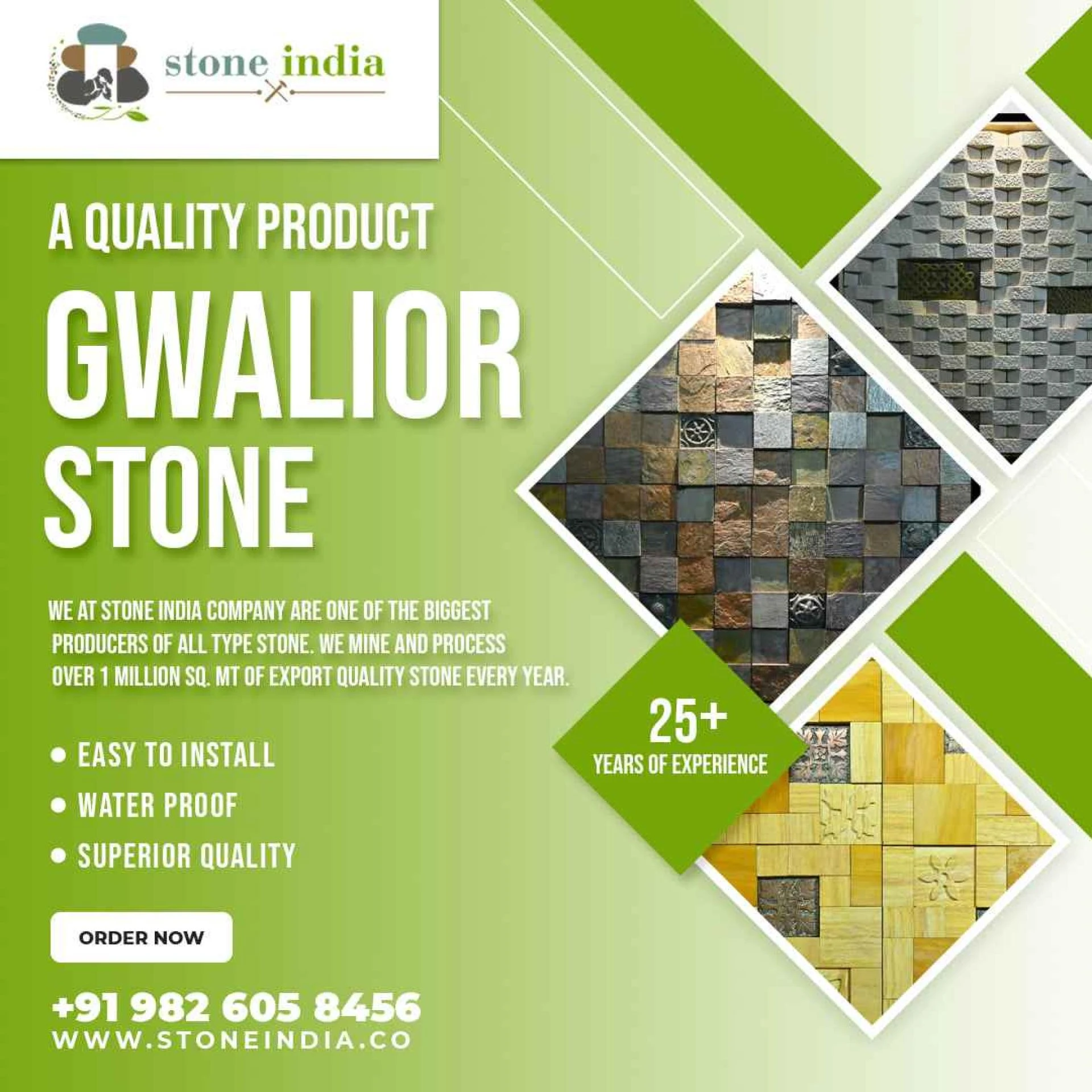
Gwalior stone is a highly rare and precious sandstone since it is found in a few sandstone quarries in India. It is predominantly charcoal in hue, with ochre yellow tones, and creates a classic, rich pavement. This sandstone is widely used in big landscape projects, and it is also the ideal external cladding for seaside buildings.
An Introduction to Gwalior Stone
This sandstone has a distinct appearance; it was quarried in the Gwalior area of Madhya Pradesh, a state in northern India. Gwalior sandstone comes in a variety of sizes and diameters.
When naturally split, the Gwalior sandstone divides itself into thicker slabs, necessitating more slab calibration than other Riven Indian sandstones. Also, more breakages occur during calibrating, particularly on sandstone, resulting in a considerably greater cost and pricing of the sandstone than others.
Gwalior Stone Paving
Gwalior sandstone paving slabs are manually split, which means they have a naturally riven surface, and despite the name, they are not genuinely black. Unlike the Kota black paving slabs, which are more grey when dry but a magnificent black when wet, the Gwalior sandstone paving slabs seem light grey when dry and a deeper charcoal grey when wet. The description from many Gwalior Stone Manufacturers in India suggests that you may see some tones of red and brown.
Cobbles of Gwalior sandstone are also a popular choice for driveways since deeper colors of natural stones are liked and picked over lighter equivalents across the world. People also utilize these slabs with riven finishes in wall cladding. Large slabs are used indoors as highlighting walls.
Benefits of Gwalior Stone
The Stone Has a Strong Surface: This stone is very strong and durable. You can use this stone in your outdoor space.
Resistant to Weather Conditions: This sandstone is best for an outdoor space as it can withstand environmental conditions like rain.
Easy to Maintain: The Gwalior stone is good for busy people. Users can easily clean and maintain this sandstone.
Attractive Color Hues: This natural stone features dark colors that offer your home and office a beautiful look.
The Stone Has Multiple Use: You can use the Sandstone for multiple applications such as wall cladding, paving, flooring, etc.
Non-Slip, Rough Surface: This sandstone has a rough, non-slip surface that provides a good grip. This feature makes this sandstone a safe choice for pathways and pool areas.
The Stone is Available at Low Prices: Many Suppliers of Gwalior Stone offer them at affordable prices in the Indian market as compared to other natural stones.
The Stone is Resistant to Heat: This stone is heat resistant and stays cool underfoot. You can comfortably walk on these natural stones even during hot summer days.
Mining of Gwalior stone
This black-colored sandstone is mostly produced in Madhya Pradesh\'s Gwalior area from sandstone mines. Several natural stone quarries dot the terrain and provide a variety of Indian sandstones, notably Gwalior stone. It\'s worth mentioning that these stone processing factories are located near quarries, which results in cost savings that are passed on to B2B tile buyers all around the world. Multiple advanced machines and tools are used to prepare the stone in different ways, making it appropriate for both indoor and outdoor use.
Processing of Gwalior stone
The second stage of Gwalior sandstone production involves cutting the raw blocks into standard and custom-sized slabs. The slab\'s dimensions are governed by the type of stone used. The two most prevalent types of slabs are gangsaw and cutter. Tiles, on the other hand, may be produced on demand.
Sandstone is further treated with unique blades and gear that convert blocks into slabs of varying sizes. Sandstone producers and exporters may now save money and time while improving quality owing to recent advances in the natural stone processing industry.
This amount of processing is done to get the sandstone as near to flawless as possible before it is utilized. Another advantage of this procedure is that it facilitates slab shipping.
Uses of Gwalior Stone
Used in Paving and Patios:
Gwalior sandstone can be used for paving, walkways, and patios. This stone has a strong surface that makes it ideal for pedestrian traffic. Also, this stone’s hues enhance the beauty of outdoor spaces and make them look appealing.
Used in Wall Cladding:
You can make your home or office space look attractive using wall cladding of natural sandstones. Make sure to use natural stone for the interior and exterior walls of your home or office. It can also offer your walls protection against natural environmental conditions.
Used on Floors:
A Gwalior stone has a hard surface that makes it perfect for flooring in home and office spaces. This stone can sustain heavy use and its beautiful hues make it the best for flooring. You can use this natural stone in hallways, walkways, living rooms, etc.
Used on poolsides:
This natural stone is the best for poolside use because it features a non-slippery surface with a good grip. Its rough surface provides a safe and attractive appearance for pool surrounds.
Used in Gardens:
This sandstone is suitable for use in gardens around walks and fountains. It may make your garden more beautiful and inviting.
Conclusion
Gwalior Stone has a unique visual appearance because of its greyish color tone. Also, the adaptability of this sandstone makes it ideal for modern construction. Stone India is your one-stop shop if you want to buy high-quality sandstone. We offer a variety of natural sandstones that meet your specifications and at affordable prices.










Sign in to leave a comment.