
Introduction
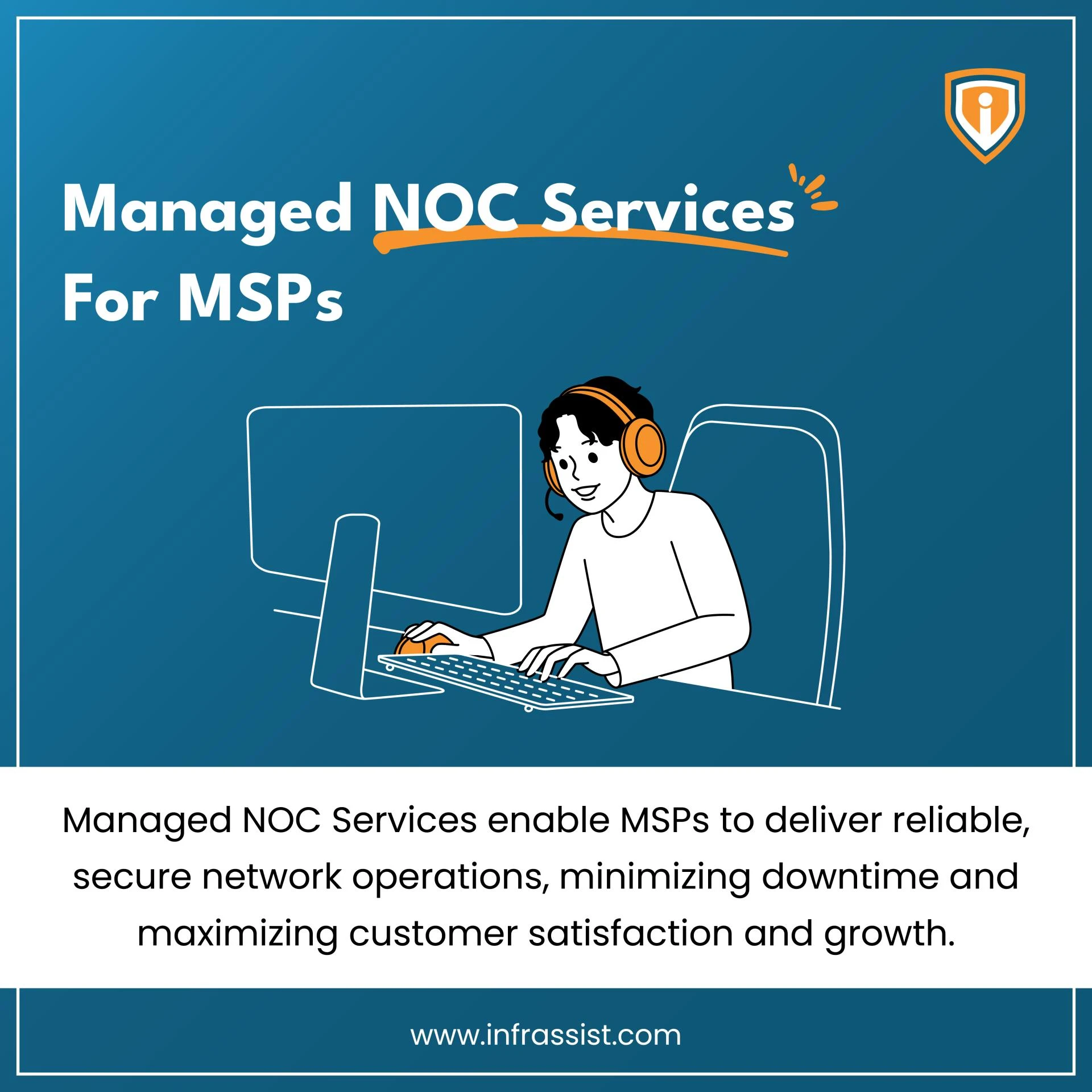
In today’s always-connected world, keeping your IT infrastructure running smoothly is critical to business success. Whether you’re an enterprise managing thousands of endpoints or an MSP supporting multiple clients, seamless network operations are non-negotiable.
This is where NOC Services (Network Operations Center Services) step in — offering proactive monitoring, maintenance, and troubleshooting to ensure maximum uptime and performance. In this article, we’ll break down what a NOC is, how it works, and why it’s becoming a must-have, especially for businesses in the USA.
What is a NOC?
A Network Operations Center, commonly referred to as a NOC (pronounced “knock”), is a centralized location from which IT professionals monitor, manage, and maintain network and infrastructure performance. Think of it as a mission control center for your IT environment. It operates 24/7, with teams of skilled technicians ensuring that systems are up and running, potential issues are addressed quickly, and performance metrics are consistently monitored.
The goal of a NOC is to ensure that your network is always functioning at peak performance, with minimal downtime or disruption.
In-house vs. Outsourced NOCs
When it comes to setting up a NOC, businesses typically have two options: building their own in-house or outsourcing it to a specialized provider.
In-house NOC:
- Requires a significant investment in infrastructure, tools, and talent.
- Offers direct control over operations and data.
- May be best suited for large enterprises with ample IT budgets and complex environments.
Outsourced NOC:
- More cost-effective, especially for small to mid-sized businesses and MSPs.
- Provides access to skilled experts without needing to hire full-time staff.
- Scales easily with your business growth.
- Delivers 24/7 Noc monitoring without the high cost of staffing night shifts.
Importance of Outsourced NOC Support for Infrassist
For companies like Infrassist, which deliver managed IT services, outsourced NOC support is a game changer. Here’s why:
- Focus on Core Services: Outsourcing the NOC allows internal teams to focus on client engagement, strategy, and other high-value tasks.
- Cost Savings: Instead of building a 24/7 monitoring team from scratch, Infrassist can leverage external expertise at a fraction of the cost.
- Access to Skilled Technicians: Partnering with NOC experts ensures that the systems are monitored by certified professionals with real-world experience.
- Scalability: As the client base grows, the outsourced NOC can scale alongside it — no need to constantly expand internal resources.
Functions of a NOC for MSPs
Managed Service Providers (MSPs) heavily rely on NOC support to deliver consistent service to their clients. Here are some critical functions a NOC handles for MSPs:
- 24/7 System Monitoring: Tracks performance and health of servers, networks, and endpoints.
- Alert Management: Analyzes and categorizes alerts to prioritize and resolve critical issues faster.
- Patch Management: Ensures all systems are up-to-date with the latest security and software updates.
- Backup and Disaster Recovery: Monitors data backup routines and supports recovery operations when needed.
- Incident Response: Quickly acts upon any system failures or breaches to minimize downtime.
- Reporting and Documentation: Maintains detailed logs and reports for compliance and performance reviews.
NOC vs. SOC
While a NOC focuses on maintaining IT operations, a Security Operations Center (SOC) is dedicated to cybersecurity. Though they sound similar, their goals are quite different.
Feature: Primary Focus, Goal, Staff Skills, Tools Used
NOC : Network and system uptime, Performance & reliability, Network engineers, technicians, Network monitoring software
SOC : Cybersecurity threats, Detection & incident response, Security analysts, researchers, SIEM, IDS/IPS, threat intel
In some setups, NOC and SOC teams collaborate closely, especially when performance issues are caused by security threats.
Key Functions of a Network Operations Center (NOC)
Below are the essential roles a modern NOC performs to support businesses and MSPs alike:
a. Infrastructure Monitoring
Constant monitoring of network devices, servers, routers, and switches to detect issues before they escalate.
b. Incident Management
Swift response to alerts, from minor glitches to critical system failures.
c. Performance Optimization
Analyzing trends and optimizing system performance based on real-time and historical data.
d. Software Updates & Patch Deployment
Keeping systems secure and updated without disrupting end users.
e. Log Analysis
Reviewing system logs to uncover root causes of issues and prevent future incidents.
f. Ticket Management
Tracking and resolving support tickets efficiently, with proper prioritization.
g. Compliance Support
Helping businesses meet industry-specific compliance standards through thorough documentation and control.
Conclusion
A Network Operations Center (NOC) is no longer a luxury — it’s a necessity for businesses aiming to stay competitive in today’s digital-first environment. Whether you’re a small MSP or a growing enterprise, leveraging professional NOC services ensures your systems remain reliable, secure, and scalable.
From real-time monitoring to performance optimization, the NOC acts as the silent force behind your IT success. And with the growing trend of outsourcing in the USA, businesses can now access top-tier support without the burden of internal overhead.
So, whether you’re exploring your first NOC or looking to upgrade existing support, make sure you choose a solution that fits your needs — because your network deserves nothing less than the best.
Frequently Asked Questions (FAQ)
Q1: Do I really need a NOC if I’m a small business?
Yes. Even small businesses benefit from NOC services for MSPs, especially when they need 24/7 system uptime without investing heavily in internal teams.
Q2: Is outsourcing my NOC secure?
Absolutely, as long as you partner with a reputable provider. Always check for certifications, data handling policies, and client reviews.
Q3: How much does outsourced NOC support cost?
Costs vary depending on the scope and size of your infrastructure. Most providers offer flexible plans that can fit different budgets.
Q4: Can a NOC help during a cyberattack?
While the NOC focuses on network health, it often works in tandem with a SOC (Security Operations Center) during cyber incidents to maintain continuity.
Q5: What industries typically use NOC services?
MSPs, financial institutions, healthcare providers, e-commerce businesses, and virtually any company relying on digital infrastructure.






















Sign in to leave a comment.