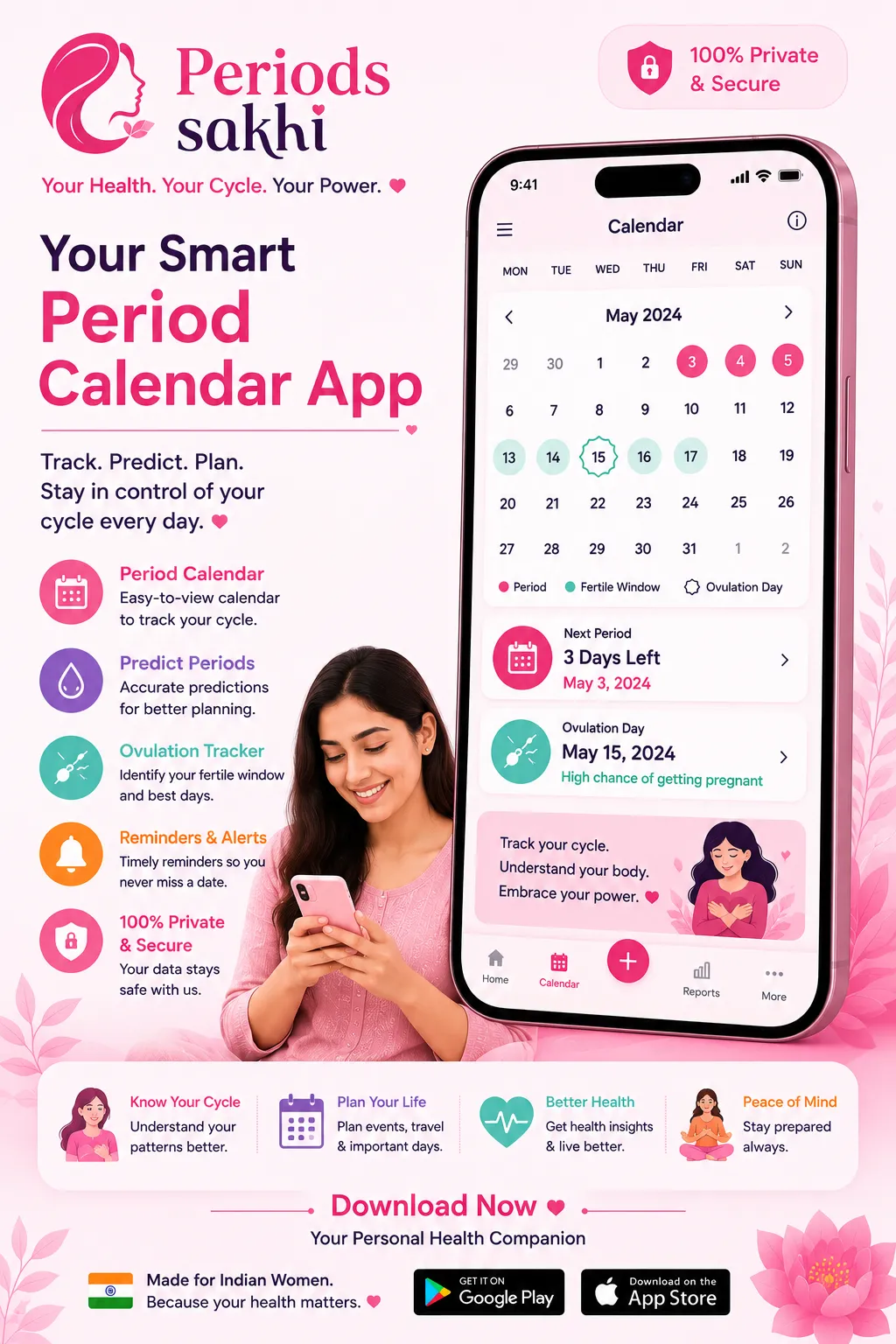

In today's digital age, managing personal health has become easier than ever. One of the most popular health tools among women is the Period Calendar App. Whether you're tracking your menstrual cycle, planning a pregnancy, monitoring symptoms, or simply staying prepared for your next period, a period calendar app can provide valuable insights into your reproductive health.
Millions of women worldwide now rely on period tracking applications to understand their bodies better and make informed health decisions. Modern apps offer much more than simple date tracking. They provide cycle predictions, ovulation estimates, symptom monitoring, fertility tracking, reminders, and personalized health insights. Many popular apps now support tracking irregular periods, moods, symptoms, fertility windows, and birth control schedules.
In this comprehensive guide, we'll explore what a Period Calendar App is, how it works, its benefits, key features, limitations, and why it has become an essential wellness tool for modern women.
What Is a Period Calendar App?
A Period Calendar App is a digital health application designed to help users track and monitor their menstrual cycles. It records information about periods, symptoms, fertility, ovulation, and overall reproductive health.
Unlike traditional paper calendars, modern period calendar apps use algorithms and historical cycle data to predict future menstrual events.
Most apps allow users to record:
- Period start and end dates
- Cycle length
- Flow intensity
- Ovulation information
- Fertility windows
- PMS symptoms
- Mood changes
- Sleep patterns
- Physical activity
- Medication reminders
As users continue logging data, the app becomes more personalized and often improves prediction accuracy over time.
Why Are Period Calendar Apps So Popular?
Women's health awareness has increased significantly over the past decade. At the same time, smartphone adoption has made health-tracking tools more accessible.
A Period Calendar App provides:
- Convenience
- Privacy
- Health awareness
- Personalized tracking
- Better planning
Many women appreciate having all their cycle information available in one secure location rather than relying on memory or handwritten notes.
Research involving millions of self-tracked menstrual cycles has shown that app-based cycle tracking can provide valuable insights into menstrual health, cycle variability, and symptom patterns.
How Does a Period Calendar App Work?
A Period Calendar App works by collecting cycle-related information and analyzing patterns over time.
Step 1: Initial Setup
When users first install the app, they typically enter:
- Age
- Last period date
- Average cycle length
- Average period duration
This information serves as the foundation for future predictions.
Step 2: Daily Tracking
Users can record daily information such as:
- Menstrual flow
- Symptoms
- Mood
- Energy levels
- Weight
- Sleep quality
- Sexual activity
- Basal body temperature
The more consistently users track data, the more personalized the app becomes. Many modern period tracking apps support extensive symptom, mood, and health tracking options.
Step 3: Pattern Recognition
The app analyzes historical cycle data to identify recurring trends.
For example, it may recognize:
- Average cycle length
- Ovulation timing
- Common PMS symptoms
- Mood fluctuations
Advanced applications increasingly use machine learning and predictive analytics to improve forecasting.
Step 4: Predictions and Insights
Based on collected information, the app predicts:
- Next period dates
- Ovulation windows
- Fertile days
- PMS phases
Users receive reminders and health insights based on their unique cycle patterns.
Key Features of a Period Calendar App
Period Prediction
The primary feature of any Period Calendar App is predicting upcoming periods.
This helps users:
- Prepare in advance
- Plan travel
- Schedule activities
- Reduce uncertainty
Apps become increasingly accurate as more cycle data is entered.
Ovulation Tracking
Many users rely on a Period Calendar App to estimate ovulation.
Ovulation tracking can help:
- Understand fertility
- Plan pregnancy
- Monitor reproductive health
Most apps estimate fertile windows based on historical cycle data and user inputs.
Symptom Monitoring
Hormonal fluctuations can affect both physical and emotional well-being.
Common symptoms tracked include:
- Cramps
- Headaches
- Fatigue
- Acne
- Bloating
- Breast tenderness
Tracking symptoms helps users identify patterns and discuss concerns with healthcare professionals when necessary.
Mood Tracking
Mental and emotional changes often accompany different phases of the menstrual cycle.
Many apps allow users to track:
- Anxiety
- Irritability
- Happiness
- Stress
- Motivation
Over time, users can better understand how hormonal changes affect their mood.
Fertility Awareness
For women trying to conceive, fertility tracking is particularly valuable.
Features may include:
- Fertility calendars
- Ovulation estimates
- Fertile window predictions
- Basal body temperature logs
These tools help users better understand reproductive timing.
Benefits of Using a Period Calendar App
Better Understanding of Your Body
A Period Calendar App helps users become more aware of:
- Cycle patterns
- Hormonal changes
- Fertility timing
- Symptom trends
This knowledge promotes proactive health management.
Improved Planning
Knowing when a period is likely to occur helps users:
- Prepare supplies
- Plan important events
- Reduce surprises
Fertility Support
Women planning pregnancy often use tracking apps to identify fertile windows and ovulation estimates.
Health Monitoring
Cycle irregularities can sometimes indicate underlying health issues.
Tracking can help identify:
- Missed periods
- Unusually long cycles
- Frequent spotting
- Significant cycle changes
Better Healthcare Discussions
Many apps generate reports that users can share with healthcare providers.
Documented cycle information often improves medical consultations and diagnosis discussions.
Are Period Calendar Apps Accurate?
One of the most common questions about a Period Calendar App is accuracy.
The answer depends on several factors:
Regular Cycles
Users with consistent cycles often receive more accurate predictions.
Consistent Tracking
Prediction accuracy improves when users:
- Log periods regularly
- Track symptoms consistently
- Update cycle information accurately
Biological Variability
Factors that can affect predictions include:
- Stress
- Illness
- Travel
- Sleep changes
- Hormonal conditions
Because ovulation and menstrual cycles naturally vary, predictions should be viewed as estimates rather than guarantees.
Studies have shown that some fertility and period prediction apps vary considerably in accuracy, particularly for ovulation prediction. Experts recommend using app predictions as helpful guidance rather than a substitute for professional medical advice.
Privacy and Security Considerations
Menstrual health data is highly personal.
When selecting a Period Calendar App, consider:
- Data encryption
- Password protection
- Biometric authentication
- Privacy policies
- Data deletion options
Several modern apps now emphasize privacy-focused designs, anonymous usage, encrypted backups, and user-controlled data management.
Before downloading any app, carefully review its privacy policy and understand how your information will be stored and used.
Common Misconceptions About Period Calendar Apps
Myth 1: They Predict Ovulation Perfectly
Reality: Ovulation estimates are based on algorithms and historical data. Actual ovulation may vary.
Myth 2: They Replace Medical Advice
Reality: Apps are educational tools and should not replace healthcare professionals.
Myth 3: They Only Help Women Trying to Conceive
Reality: Period tracking benefits anyone interested in understanding their menstrual health.
Myth 4: They Only Track Period Dates
Reality: Modern apps often track dozens of symptoms, moods, fertility indicators, and health metrics.
The Future of Period Calendar Apps
Technology continues to transform women's health.
Future innovations may include:
- AI-powered health predictions
- Wearable device integration
- Hormone monitoring
- Personalized wellness coaching
- Advanced symptom analysis
Researchers are actively studying how AI-based menstrual tracking systems influence health awareness and personalized health management.
Additionally, health tracking ecosystems are expanding to include fertility, pregnancy, perimenopause, and overall wellness monitoring.
Tips for Getting the Most Out of a Period Calendar App
To maximize benefits:
- Track consistently.
- Record symptoms regularly.
- Update cycle information accurately.
- Review monthly insights.
- Monitor long-term trends.
- Protect your privacy settings.
- Consult healthcare providers when necessary.
The quality of predictions largely depends on the quality and consistency of the information entered.
Why PeriodSakhi Supports Menstrual Health Awareness
At PeriodSakhi, empowering women through health education and awareness is a core mission. Understanding menstrual health is an important step toward overall wellness, and a Period Calendar App can be a valuable tool for tracking cycles, recognizing patterns, and staying informed about reproductive health.
When combined with reliable health information and professional medical guidance, period tracking can help women make more confident decisions about their bodies and well-being.
Conclusion
A Period Calendar App is much more than a simple digital calendar. It is a comprehensive health companion that helps women track menstrual cycles, monitor symptoms, understand fertility patterns, and gain valuable insights into their reproductive health.
By consistently logging cycle information and paying attention to health trends, users can improve their understanding of their bodies, plan more effectively, and identify changes that may require medical attention. While no app can predict biological events with complete certainty, modern period calendar apps provide valuable support for menstrual health awareness and wellness management.
As digital health technology continues to evolve, Period Calendar Apps will likely become even more sophisticated, personalized, and useful for women at every stage of life.




























Sign in to leave a comment.