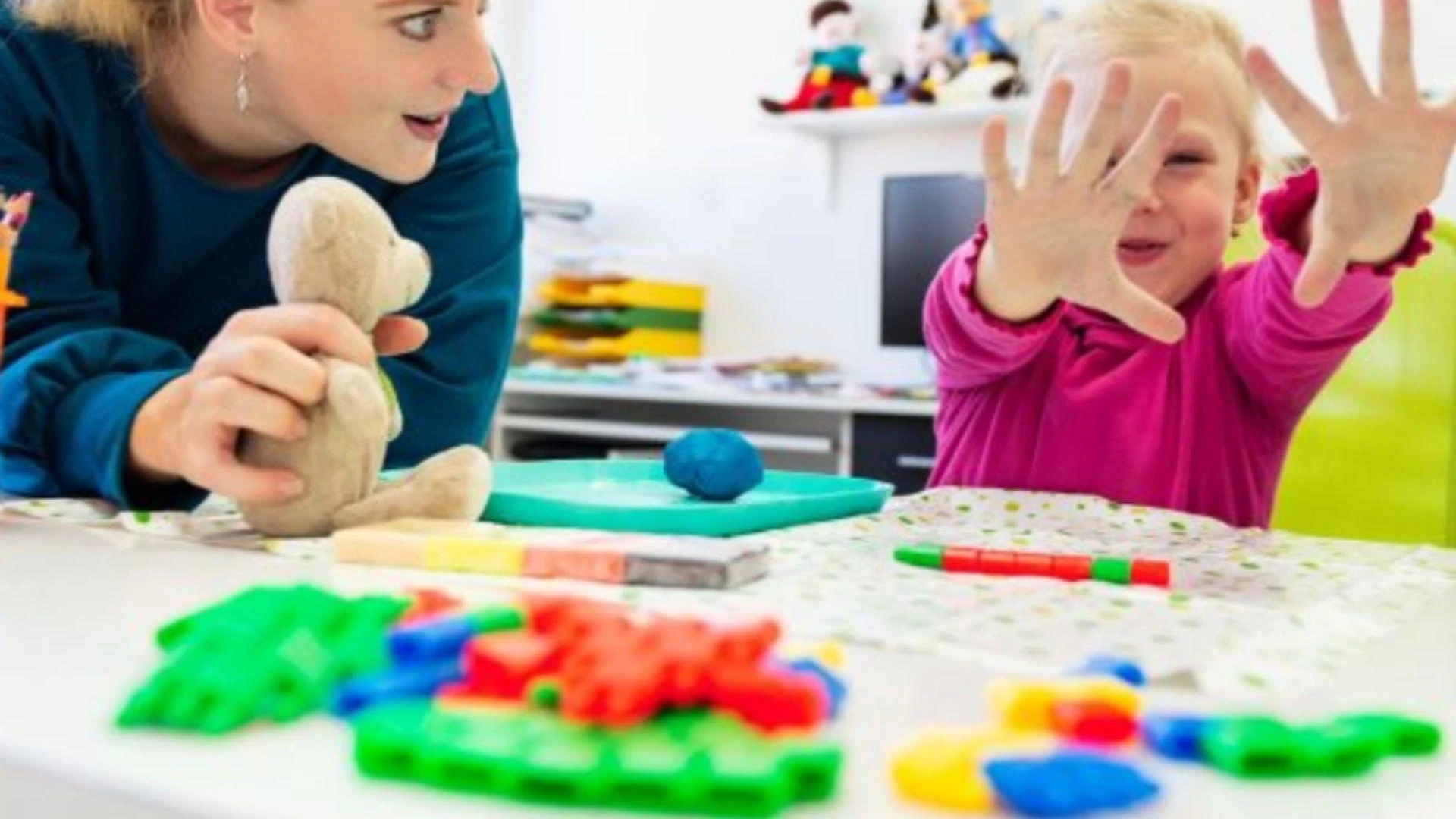

Positive Behaviour Support (PBS) is the name we use to describe the strategy utilised to deliver intense personalised treatments to individual children who exhibit problematic behaviour. We also refer to program-wide PBS deployment (PW-PBS) or program-wide Pyramid Model adoption. This technique is being extended to classrooms and activities through PW-PBS.
Behaviour changes when the stimulus and reward in the environment are changed, and the person is taught to develop deficient skill areas. This allows kids to be included in the general education environment in schools.
PBS addresses three areas of deficit skills: effective communication, interpersonal skills, and self-management abilities. Positive behaviour therapist support through re-directive therapy is highly beneficial in the parent–child connection. Re-directive therapy enables healthy interaction between children and parents when other treatment strategies have failed.
Centre for positive behaviour support works well in schools since it is essentially a teaching method.
The process of positive behaviour support begins with goal identification, followed by functional behaviour evaluation (FBA). FBAs explicitly define behaviours, identify the circumstances (events, times, and situations) that forecast when and when not the behaviour will occur, and the repercussions that maintain the behaviour. The FBA involves a behaviour hypothesis and information for a baseline. This informs the design, implementation, and monitoring of the support plan.
Positive behaviour support is rapidly being recognized as a practical, desired, and beneficial method. Teachers and parents, for example, require tactics that they are willing and able to employ so this influence the child's rights to engage in school and community activities.
What exactly is PBS?
PBS offers a process based on the values and empirical study to analyse and resolve problem behaviour in adults or children. It provides a method for developing a clear understanding as to why the kid engages in problem conduct as well as techniques for preventing problematic behaviours and teaching the child new abilities. Positive behaviour support is a comprehensive approach that takes into account all of the factors that influence a child and his or her conduct. It can be used to manage a variety of problem behaviours, including violence, tantrums, and property destruction, as well as social withdrawal.
The History of PBS
There were significant advancements in the design and administration of therapies for challenging behaviour in the early 1980s. These advancements were fueled by research on new approaches to behaviour change and cultural shifts regarding the use of harsh and degrading treatment with vulnerable people. Positive behavioural support was a non-aversive technology that arose in the late 1980s and early 1990s to address the problematic behaviours of people with severe impairments (PBS). This technique incorporated functional evaluation, antecedent manipulations, instructional strategies, and adjustments in reinforcement contingencies, with the goal of achieving lifestyle changes as a result of intervention.
Evolution
PBS has made great advances in its application with varied communities, as well as with people and then within programs and systems, over the previous three decades. Today, the term PBS refers to the application of a wide approach to providing the assistance needed to attain fundamental lifestyle goals while eliminating difficult behavior that may obstruct those goals. Individuals, institutions and school systems (i.e., school-wide PBS), and early childhood programs can all benefit from PBS (i.e., program-wide PBS).
0




















Sign in to leave a comment.