
Starting a business involves dozens of decisions, but few carry as much long-term weight as choosing the right legal structure. For entrepreneurs, freelancers scaling up, and small teams with serious ambitions, the private limited company consistently stands out as one of the most practical and protective choices available. Yet many founders stumble into the decision without fully understanding what it means or how it actually functions day to day. This article breaks down exactly what a private limited company is, how it works, what the private limited company registration process looks like, and why the benefits of private limited company structures have made this format the default choice for millions of businesses worldwide.
What Exactly Is a Private Limited Company
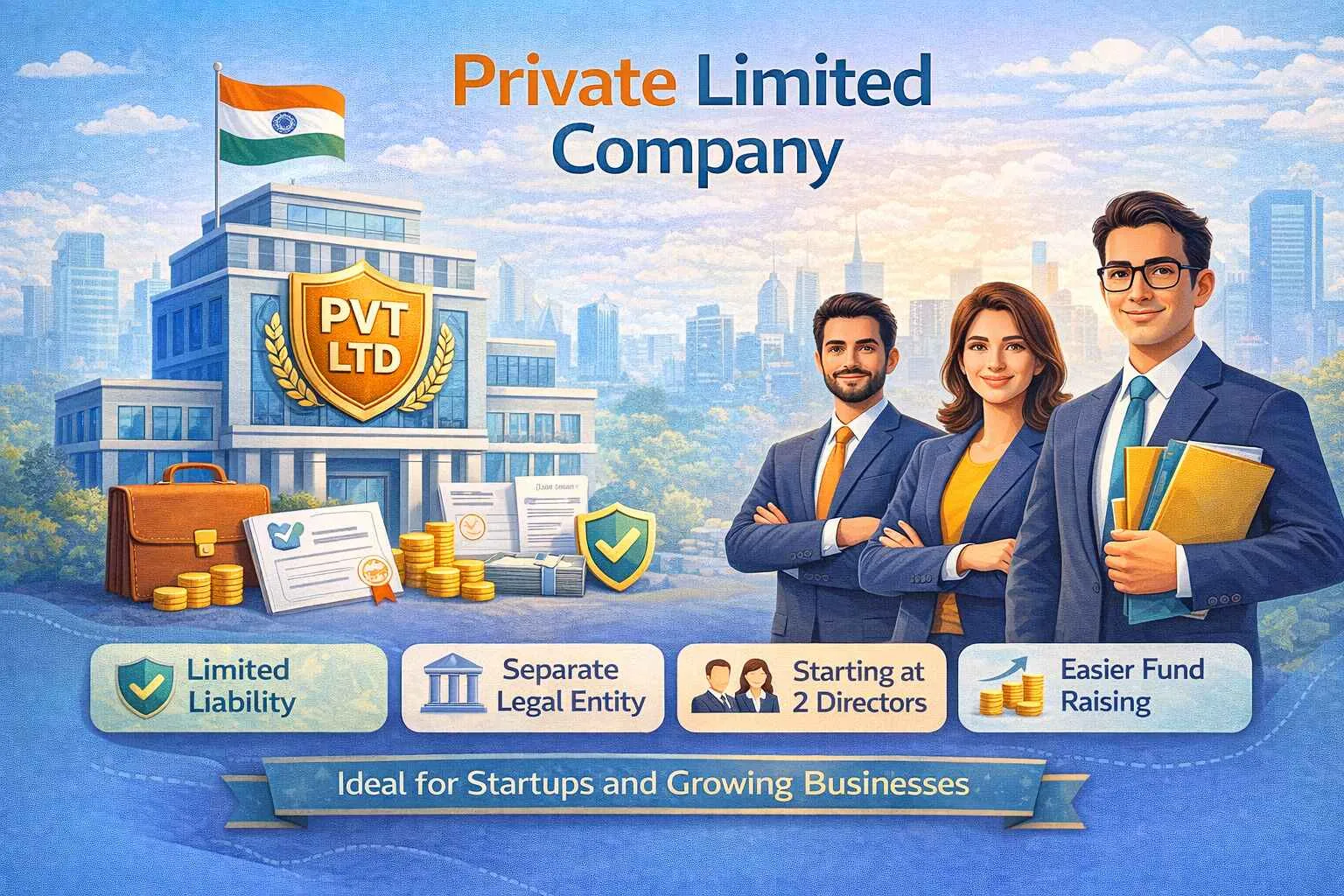
A private limited company is a distinct legal entity separate from the people who own or run it. The word "limited" refers to limited liability, meaning the personal finances of shareholders are protected if the business runs into debt or legal trouble. If the company owes money, creditors can only chase the company's assets, not the personal bank accounts or homes of its owners. The word "private" means the company's shares are not listed on any public stock exchange. Ownership is restricted to a defined group of shareholders typically founders, investors, and key team members and shares cannot be freely sold to the general public without internal consent. This combination of legal separation, limited liability, and controlled ownership makes the private limited company one of the most versatile and widely used business structures across India, the UK, and most common-law jurisdictions globally.
How a Private Limited Company Is Structured
At its core, a private limited company has two key groups: directors and shareholders. Directors manage the day-to-day operations and are responsible for compliance and decision-making. Shareholders own portions of the company through shares and benefit from any profits distributed as dividends. In many small companies, the same people wear both hats founder-directors who also hold shares. But as a private limited company grows, these roles often separate. Investors come in as shareholders without necessarily taking on operational roles. Senior employees might become directors without owning equity. The company also has a registered office a formal address for official correspondence and must maintain statutory records including a register of directors, a register of members (shareholders), and minutes of board meetings. The private limited company files its accounts and annual returns with the relevant authority, such as the Registrar of Companies in India or Companies House in the UK. This creates a layer of transparency and accountability that builds trust with clients, banks, and partners.
The Private Limited Company Registration Process
Understanding the private limited company registration process is often the first practical hurdle for new founders. The process has become significantly more streamlined in recent years, particularly in India where the Ministry of Corporate Affairs digitised most of it. Here's a general overview of how the private limited company registration process unfolds. Choosing a company name is the first step. The name must be unique, not already registered, and must end with "Private Limited" or "Pvt. Ltd." Proposed names are checked against the existing company database. Obtaining Digital Signature Certificates (DSC) comes next. Since the private limited company registration process is largely online, all proposed directors must have valid digital signatures to sign the forms electronically. Applying for Director Identification Numbers (DIN) follows. Every director of a private limited company must have a DIN a unique identifier issued by the Ministry of Corporate Affairs. Drafting the Memorandum and Articles of Association is the foundational legal step. The Memorandum of Association (MoA) defines the company's objectives, while the Articles of Association (AoA) lay out the internal rules governing how the private limited company will operate. Filing with the Registrar of Companies (ROC) completes the private limited company registration process. Once documents are submitted and the registration fee is paid, the ROC reviews the application. If everything is in order, a Certificate of Incorporation is issued and the private limited company legally comes into existence. The entire private limited company registration process can typically be completed within seven to fifteen working days when documents are in order, though timelines vary.
Benefits of Private Limited Company That Actually Matter
People often read generic lists of advantages without understanding which benefits of private limited company structures genuinely make a difference in practice. Let's go beyond the basics. Limited liability protection is the most consequential benefit. When you operate as a sole proprietor or in a general partnership, your personal assets are fair game if the business fails. A private limited company creates a legal wall between personal and business finances. This isn't just a legal technicality it's peace of mind that allows founders to take calculated risks without gambling their savings. Credibility and trust comes with the territory. Clients, vendors, and financial institutions take a private limited company more seriously than an individual trading under their own name. Banks are more willing to extend credit. Corporate clients are more comfortable signing long-term contracts. The structure signals that you're building something real and durable. Access to investment is another significant entry in the benefits of private limited company column. Angel investors and venture capital firms almost exclusively invest in private limited company structures. The ability to issue shares, create different share classes, and define equity precisely makes a private limited company the vehicle of choice for raising growth capital. A sole proprietorship or partnership simply cannot offer this. Perpetual succession means the private limited company continues to exist regardless of changes in ownership or management. If a founder exits, retires, or passes away, the company lives on. This stability is valuable not just for internal continuity but also for clients who rely on the business long term. Separate legal identity allows the private limited company to own property, enter contracts, sue, and be sued in its own name. The company can sign a ten-year office lease. It can protect intellectual property under its own registration. It can hold bank accounts and accumulate assets entirely independent of its owners. Tax efficiency often becomes one of the most appreciated benefits of private limited company registration once founders start consulting their accountants. Corporate tax rates are generally lower than personal income tax rates at higher income brackets. Expenses can be deducted from the company's taxable income more broadly than in personal tax filings. Dividend distribution allows for flexible profit extraction.
How a Private Limited Company Operates Day to Day
Knowing the structure is one thing; understanding the operating rhythm is another. A private limited company runs on a mix of statutory obligations and internal governance. Directors hold board meetings to make key decisions approving financial statements, authorizing significant contracts, and directing strategy. These meetings must be minuted and maintained as part of the company's statutory records. Annual General Meetings (AGMs) bring shareholders together to review accounts and approve dividends. Every private limited company must file an annual return with the Registrar of Companies, detailing its directors, shareholders, and registered office. Financial statements must be prepared in accordance with applicable accounting standards and audited by a qualified chartered accountant if the company meets the threshold for mandatory audit. Compliance isn't optional, and falling behind on filings attracts penalties. But for most well-run companies, these obligations become routine once a reliable accountant or company secretary is in place.
Common Misconceptions About Private Limited Companies
A few myths persist around the private limited company structure, and they're worth addressing directly. "It's too complex for a small business." The private limited company registration process is considerably simpler than it was a decade ago. Online portals, professional support services, and standardised forms mean even a two-person startup can complete registration without significant difficulty. The ongoing compliance burden is manageable with basic professional support. "You need significant capital to start." In India, for example, there is no minimum paid-up capital requirement for a private limited company. You can incorporate with a nominal share capital and scale it as the business grows. "It's only for tech startups." The benefits of private limited company registration apply equally to design studios, logistics businesses, consultancies, retail brands, and manufacturing units. Any business that plans to grow, hire, or raise investment can benefit from the structure.
When You Should Consider Registering a Private Limited Company
The private limited company structure isn't always the right fit from day one, but there are clear signals that it's time. If you're planning to raise money from investors, a private limited company is essentially non-negotiable. If you're signing contracts with large corporate clients who require vendor registration in a formal business entity, a private limited company makes that straightforward. If you're building a team and want to offer equity as part of compensation, the structure supports that elegantly. Freelancers and solo operators often delay the decision, but if income is growing and liability exposure increases even modestly the benefits of private limited company protection start to outweigh the administrative overhead quickly.
Conclusion
The private limited company is not just a legal formality. It is a foundational decision that shapes how a business is perceived, how it grows, and how its owners are protected. Understanding the private limited company registration process demystifies what can initially seem like a bureaucratic maze, and taking the time to work through it properly pays dividends — literally and figuratively. The benefits of private limited company structures go beyond liability protection; they create the conditions for credibility, capital, continuity, and long-term scale. Whether you're a first-time founder or a growing business formalising operations, registering a private limited company is a meaningful investment in the business you're building. The structure exists to serve the entrepreneur, and when used intentionally, it does exactly that.



























Sign in to leave a comment.