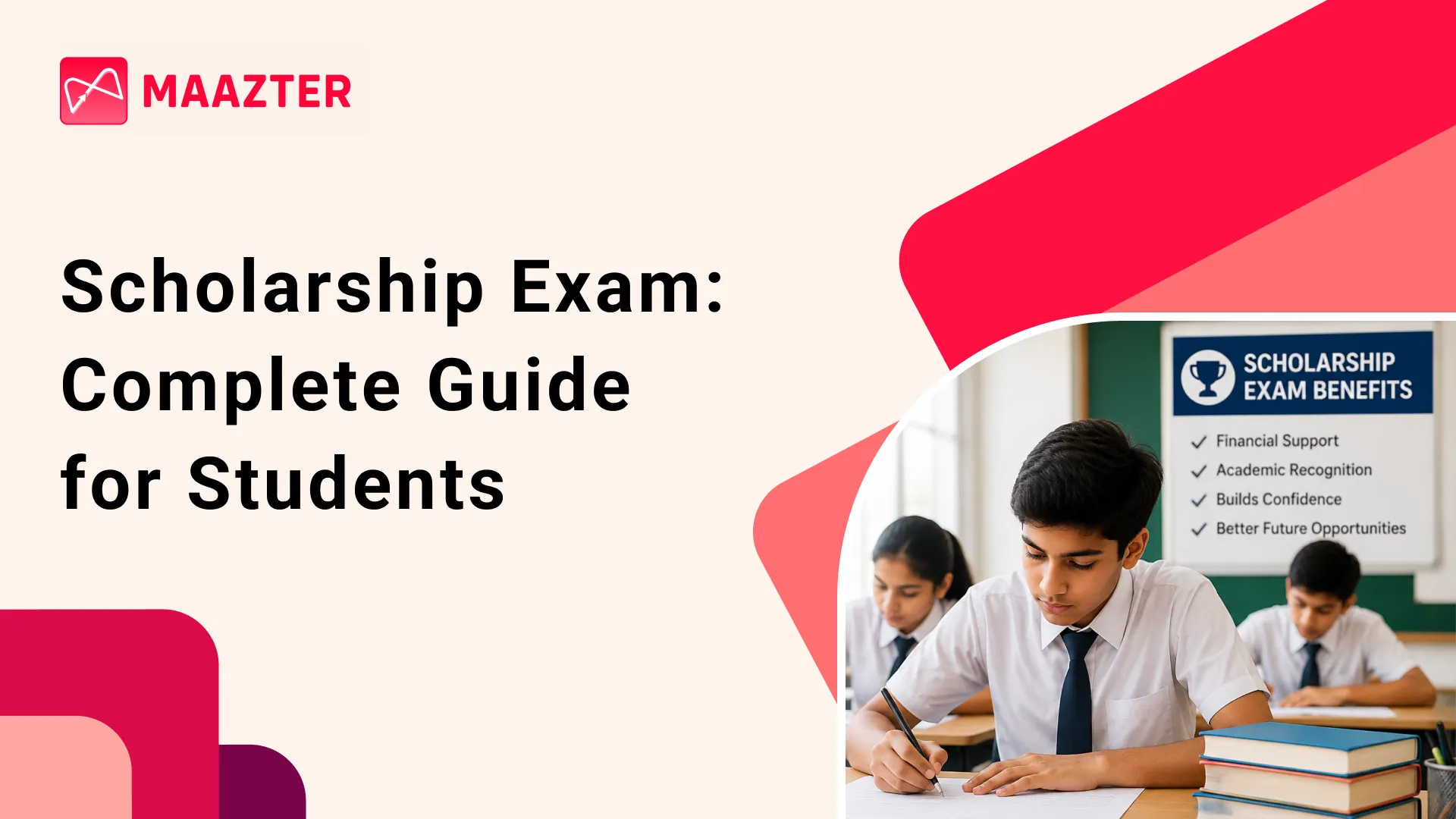

Scholarship Exam Guide for Students
Every year, thousands of school students sit for a scholarship exam, often without fully understanding what it measures or why it matters. Parents hear the term from a school circular, students see a poster in the corridor, and everyone assumes it is "just another test." In reality, it is far more purposeful than that. This guide breaks down what this kind of assessment actually is, who can take one, how it works, and how students can prepare for it with confidence.
Understanding the Scholarship Exam Basics
A scholarship exam is a competitive examination designed to evaluate a student's academic performance, reasoning ability, and problem-solving skills beyond regular classroom testing. Unlike a school term test, it compares students across a wider group, often at the district, state, or national level, to identify genuine student talent. Schools encourage participation because it gives young learners a realistic sense of where they stand outside their own classroom.
For many families, this is also the first structured exposure to a competitive examination format, with timed sections, objective questions, and standardized scoring. That experience alone builds useful exam temperament long before board exams arrive.
Meaning and purpose of scholarship tests
At its core, this kind of test exists to recognize ability rather than just memory. It typically covers subjects like mathematics, science, language, and general reasoning, structured to test understanding rather than rote learning. The purpose is twofold: reward strong academic performance and open doors to further learning support.
Such examinations are usually designed by education specialists who understand age-appropriate difficulty levels. This ensures a Class 5 student and a Class 9 student face questions suited to their stage of learning, not an identical paper. The goal is fair, meaningful evaluation, not unnecessary pressure.
Why students participate in examinations
Students participate for reasons beyond the possibility of winning a scholarship. It is a low-stakes way to test preparation habits, discover weak areas, and build familiarity with exam-day conditions. Many students report feeling more confident about later, higher-stakes exams after this kind of practice.
Teachers also encourage participation because it reveals patterns across a classroom - which students grasp concepts quickly, which need more support, and which show strong reasoning ability even if their regular test scores are average. This makes early participation genuinely useful, not just a formality schools tick off each year.
How talent identification supports students
Talent identification is one of the most valuable outcomes of any well-designed academic assessment like this. A student who consistently scores well may be quietly capable but under-recognized in a large classroom. Structured testing brings that ability to the surface.
- Highlights strengths a regular report card might not show
- Encourages students to take academic goals seriously
- Gives teachers data to guide extra support or advanced learning
Builds early confidence in problem-solving skills
This kind of recognition often motivates students to engage more actively with their studies, simply because their effort is being noticed and measured fairly.
Eligibility Rules and Exam Process
Before registering, students and parents naturally want to know who qualifies and what the process looks like. Eligibility criteria vary by exam, but most competitive examinations for school students follow a similar broad structure based on class, age, and school enrollment.
Regional programs, such as the Tamilnadu Talent Search Exam, typically open registration through participating schools rather than individual applications, making the process straightforward for families. Students usually register through their school, receive a hall ticket, and appear for this kind of exam on a fixed date, with results announced within a set timeframe afterward.
Common eligibility requirements for students
Eligibility requirements generally focus on keeping the assessment fair and relevant to a student's current academic stage. While exact rules differ between exams, common eligibility factors include:
- Enrollment in a recognized school for the relevant class
- A minimum or maximum age limit tied to the grade level
- Registration through the school or an authorized center
Sometimes, a minimum academic performance requirement in prior assessments
Because these criteria differ from one program to another, including the Tamilnadu Talent Search Exam and similar state-level initiatives, students should always confirm exact conditions directly with the organizing body or their school before assuming eligibility.
Subjects and skills commonly assessed
Most scholarship exams assess a mix of core academic subjects and broader thinking skills. Mathematics and science sections test conceptual clarity, while language sections check comprehension and vocabulary. Reasoning sections evaluate logical thinking independent of textbook content.
This combination matters because it does not reward memorization alone. A student strong in applying concepts to new problems, even with an average vocabulary, can still perform well. That balance is intentional, it reflects real academic potential rather than just how well a student can recall a textbook chapter.
Real Benefits and Smart Preparation
Beyond the obvious appeal of winning a scholarship, this kind of exam offers benefits that extend well into a student's broader academic journey. It builds exam discipline, sharpens problem-solving skills, and often boosts a student's confidence heading into school-level assessments.
Participating in a talent search exam also introduces students to structured, time-bound testing early, which reduces exam anxiety later when board exams or entrance tests carry higher stakes. For educators, these results offer useful, comparative insight into a classroom's overall strengths.
Benefits go beyond financial support
While financial assistance is often the headline benefit, the non-monetary gains matter just as much for long-term growth. Recognition through such an examination can shape how a student sees their own academic ability.
Students who perform well often experience:
- Increased motivation to maintain consistent study habits
- Greater willingness to attempt harder problems without fear of failure
- A clearer sense of personal academic strengths
Encouragement from teachers and parents to pursue further learning
These outcomes support a student's overall educational journey, not just their performance on one particular day.
Simple preparation strategies for students
Effective exam preparation does not require expensive coaching or last-minute cramming. Simple, consistent habits work far better than short bursts of intense studying before an important academic test. A steady routine helps students absorb concepts rather than memorize them temporarily.
Useful preparation habits include reviewing school syllabus topics regularly, practicing previous years' question patterns to understand the examination pattern, working on time management with mock tests, and strengthening reasoning ability through puzzles or logic-based exercises. None of this requires drastic changes - just regular, focused effort in the weeks leading up to exam day.
Maazter and Structured Scholarship Opportunities
As more schools look for structured, reliable ways to identify student potential, organized talent-search initiatives have become a useful bridge between classroom learning and broader scholarship opportunities. These programs give schools a consistent framework to spot promising students early and support their academic growth with proper guidance.
One such initiative, the Maazter Scholarship Exam, follows this approach by combining structured assessment with study materials, helping schools to identify potential talents. Programs like the Maazter Scholarship Exam aim to complement classroom teaching rather than replace it, giving students another avenue to demonstrate ability and access educational support.
Choosing suitable scholarship opportunities wisely
With multiple options available, students and parents should choose their next academic opportunity based on genuine fit rather than reputation alone. Consider the subjects covered, the age or class relevance, and whether the exam's difficulty matches the student's current learning stage.
It also helps to check whether the organizing body offers transparent eligibility criteria, clear result timelines, and credible academic backing. A well-matched exam builds confidence; a poorly matched one can create unnecessary stress. Schools and parents are best placed to make this judgment together, based on what genuinely benefits the student rather than external pressure to participate.
A scholarship exam offers far more than the possibility of financial assistance - it helps students discover their strengths, builds exam-ready reasoning ability, and encourages a healthier relationship with academic performance. Whether through a regional program or a structured initiative, these exams give school students a genuine opportunity to be recognized for their talent and effort.
Schools and educators looking to explore structured digital learning and assessment solutions can book a demo with Maazter to see how organized talent-search programs can support their students' academic journey.


























Sign in to leave a comment.