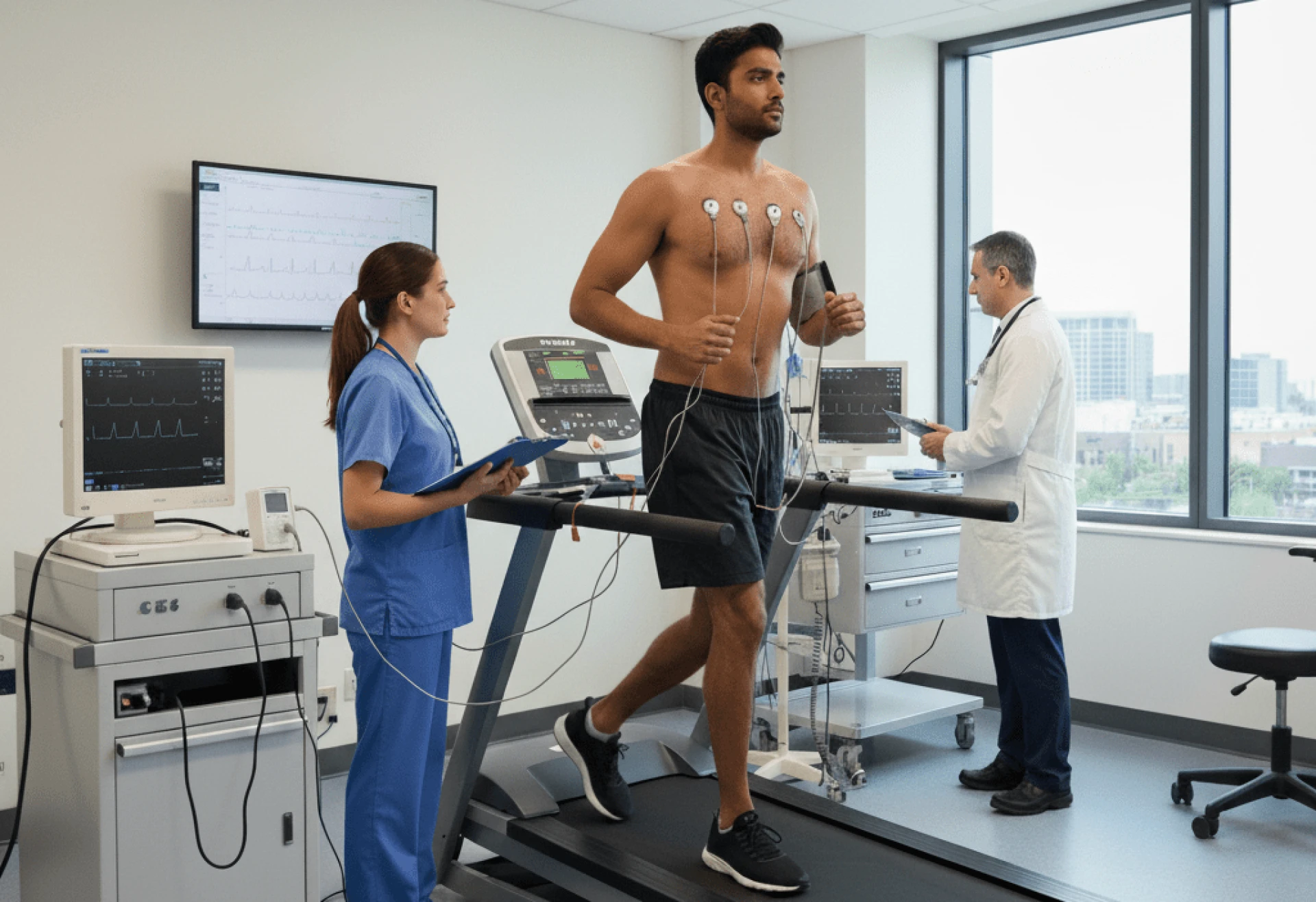

A Treadmill Test (also known as a TMT) is a diagnostic procedure used to assess how well your heart functions during physical activity. It helps doctors determine whether your heart receives enough blood and oxygen when it’s working harder. Unlike a resting electrocardiogram test, which measures your heart’s rhythm at rest, a Treadmill Test evaluates how your heart performs under stress, offering deeper insights into your cardiovascular health.
Why Is a Treadmill Test Done?
The Treadmill Test is commonly recommended for individuals who experience chest pain, shortness of breath, or unexplained fatigue during exertion. It is also used to detect coronary artery disease, monitor treatment effectiveness, or evaluate fitness levels before starting a new exercise routine.
While a Treadmill Test focuses on your heart’s response to exercise, it is often complemented by an echocardiogram test or electrocardiogram test for a comprehensive heart assessment. Together, these tests provide a clearer picture of your cardiac performance and help in identifying potential blockages or irregular heart rhythms.
How Is a Treadmill Test Performed?
The Treadmill Test procedure is simple and non-invasive. You’ll be asked to walk on a treadmill that gradually increases in speed and incline. Throughout the test, electrodes attached to your chest record your heart’s electrical activity through an electrocardiogram test. Blood pressure and pulse are also continuously monitored.
If you experience any discomfort, dizziness, or chest pain, the test is immediately stopped. The results are then analyzed to identify whether your heart’s oxygen supply is adequate during exertion. Sometimes, doctors may also recommend an echocardiogram test after the TMT to visualize how your heart muscles function under stress.
Benefits of a Treadmill Test
The Treadmill Test offers numerous benefits for both preventive and diagnostic care:
- Early Detection of Heart Disease: It helps identify blockages in the coronary arteries before symptoms become severe.
- Evaluates Exercise Tolerance: Provides a measure of how your heart and lungs respond to physical activity.
- Monitors Treatment Progress: Assists doctors in assessing the effectiveness of medications or procedures.
- Supports Safe Exercise Planning: For athletes or individuals beginning a fitness program, the test helps set safe exercise limits.
By combining the Treadmill Test with an echocardiogram test or electrocardiogram test, healthcare professionals can create a complete cardiovascular profile tailored to your needs.
Preparing for a Treadmill Test
Before undergoing a Treadmill Test, your doctor may ask you to:
- Avoid eating heavy meals for 2–3 hours before the test.
- Wear comfortable clothes and walking shoes.
- Skip caffeine and smoking on the test day.
- Inform your doctor about any medications you are taking.
Proper preparation ensures accurate and safe results during the Treadmill Test procedure.
Interpreting Treadmill Test Results
After the Treadmill Test, the data collected from the electrocardiogram test and echocardiogram test are reviewed to check for abnormalities. A normal result means your heart functions well during physical activity, while an abnormal one may indicate reduced blood flow or possible blockages. Based on these findings, your cardiologist may suggest further tests or lifestyle changes to improve heart health.
Final Thoughts
The Treadmill Test is one of the most reliable ways to understand your heart’s performance and detect potential issues early. When combined with an echocardiogram test or electrocardiogram test, it provides a comprehensive evaluation of your cardiac health.
If you’re experiencing chest discomfort or planning to begin a new workout routine, consider scheduling a Treadmill Test at Ayushman Heart & Wellness — a trusted name in advanced cardiac diagnostics and preventive heart care. Regular testing and timely consultation can help you maintain a healthy, strong heart for life.





Sign in to leave a comment.