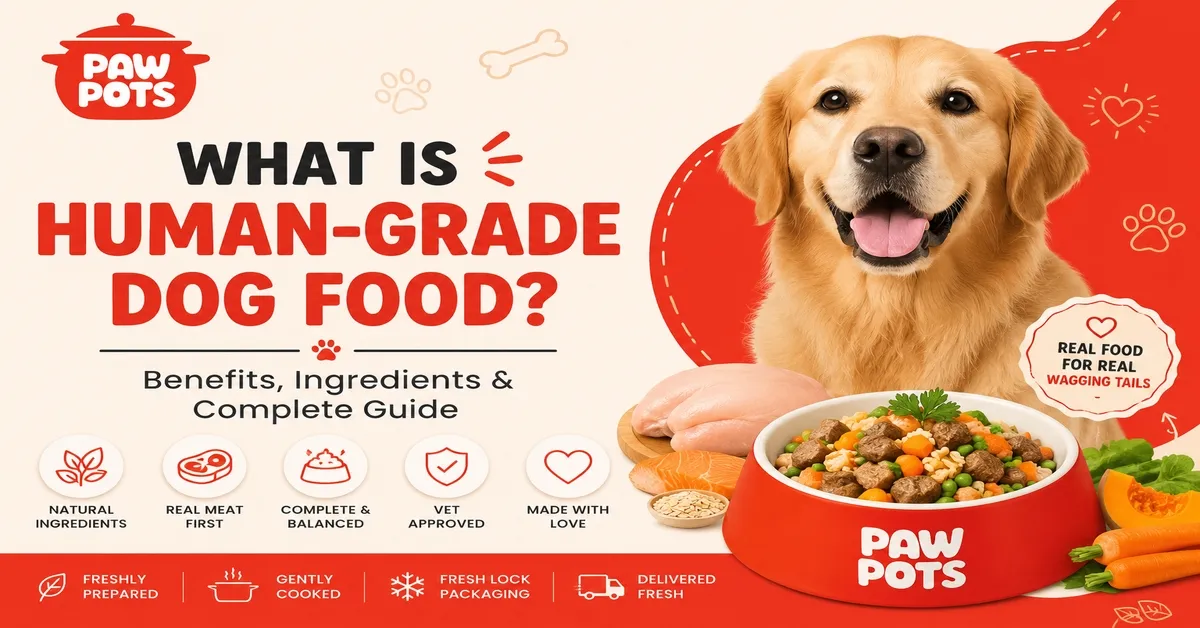

As more pet parents become conscious about what goes into their dog's bowl, human-grade dog food has emerged as one of the fastest-growing trends in pet nutrition. Instead of relying on heavily processed ingredients and artificial additives, many owners are choosing meals made with real, wholesome ingredients prepared under food safety standards similar to those used for human food.
But what exactly does human-grade mean? Is it simply a marketing term, or does it offer genuine nutritional advantages for your dog?
This complete guide explains everything you need to know about human-grade dog food, its ingredients, health benefits, and how to choose the right option for your four-legged companion.
What Is Human-Grade Dog Food?
Human-grade dog food refers to pet food made entirely from ingredients that are safe and legally suitable for human consumption. More importantly, these ingredients are processed, cooked, packaged, and stored in facilities that follow food safety standards comparable to those used for preparing human meals.
Unlike many conventional pet foods that may include rendered meals, by-products, or lower-quality ingredients, human-grade recipes focus on fresh, recognizable foods such as real meat, vegetables, healthy grains, and nutritious oils.
It's important to understand that not every premium dog food is human-grade. A product can contain quality ingredients while still being manufactured under pet-feed standards. Genuine human-grade food meets stricter production and ingredient requirements.
What Ingredients Are Commonly Found in Human-Grade Dog Food?
One of the easiest ways to identify quality dog food is by reading the ingredient list.
Human-grade meals typically include:
- Fresh chicken, turkey, beef, lamb, or fish as the primary protein source
- Nutrient-rich vegetables like carrots, spinach, pumpkin, peas, and sweet potatoes
- Healthy carbohydrates such as brown rice, oats, or quinoa
- Beneficial fats from fish oil or flaxseed
- Natural herbs and vitamins for balanced nutrition
- Essential minerals that support bones, muscles, and immune health
These recipes are generally free from unnecessary fillers, artificial preservatives, synthetic colors, and flavor enhancers commonly found in lower-quality processed foods.
Benefits of Human-Grade Dog Food
1. Improved Digestion
Fresh ingredients are often easier for dogs to digest compared to highly processed kibble. Better digestibility means nutrients are absorbed more efficiently while reducing digestive discomfort.
Many pet owners notice:
- Firmer stools
- Less bloating
- Reduced gas
- Better overall digestive health
2. Better Skin and Coat Health
Healthy fats, Omega-3 fatty acids, and quality proteins contribute to healthier skin and a shinier coat.
Dogs eating balanced fresh meals often experience:
- Reduced dry skin
- Less excessive shedding
- Improved coat texture
- Better skin hydration
3. Increased Energy Levels
Dogs thrive on nutrient-dense food rather than empty calories.
High-quality protein, natural carbohydrates, and balanced fats provide long-lasting energy that supports:
- Daily exercise
- Mental alertness
- Active play
- Healthy muscle maintenance
4. Stronger Immune System
Whole foods naturally contain antioxidants, vitamins, and minerals that help support the immune system.
A nutritious diet may help your dog better maintain overall wellness while supporting normal body functions throughout different life stages.
5. Healthy Weight Management
Many processed foods contain excess fillers that increase calories without adding meaningful nutrition.
Human-grade meals are usually portion-controlled and nutritionally balanced, making it easier to maintain an ideal body weight while preserving lean muscle mass.
Is Human-Grade Dog Food Suitable for Every Dog?
In most cases, yes.
Healthy puppies, adult dogs, and senior dogs can all benefit from fresh, balanced nutrition when meals are formulated to meet their specific life stage and nutritional requirements.
Dogs with food sensitivities or sensitive stomachs may also benefit from limited-ingredient human-grade recipes because they often avoid unnecessary artificial additives and lower-quality fillers.
However, any major dietary transition should be introduced gradually over several days to allow the digestive system to adapt comfortably.
Human-Grade vs Traditional Dog Food
| Human-Grade Dog Food | Traditional Processed Dog Food |
| Fresh whole ingredients | Often highly processed |
| Real meat as primary ingredient | May include meat meals or by-products |
| Minimal processing | Extensive heat processing |
| No artificial colors or flavors | May contain preservatives and additives |
| Better moisture content | Usually dry and low in moisture |
| Highly digestible | Digestibility varies by product |
While both types can meet nutritional requirements when properly formulated, ingredient quality and processing methods can significantly influence digestibility and overall food quality.
How to Choose High-Quality Human-Grade Dog Food
When selecting fresh dog food, look for products that provide:
- Clearly identified meat sources
- Complete and balanced nutrition
- Transparent ingredient lists
- Fresh vegetables and natural ingredients
- Recipes developed with veterinary nutrition guidance
- Safe food preparation standards
- Appropriate portions based on your dog's age, breed, activity level, and weight
Avoid products that rely heavily on vague ingredient names, excessive fillers, or artificial additives.
Why Fresh Human-Grade Meals Are Becoming More Popular
Today's pet owners increasingly view dogs as family members, leading many to seek healthier feeding options.
Fresh human-grade meals combine convenience with quality nutrition, offering balanced recipes prepared from real ingredients instead of heavily processed alternatives.
Companies like PawPots reflect this growing movement by preparing fresh, human-grade meals using real meat, vegetables, healthy oils, and balanced recipes designed with veterinary nutritional guidance. Their approach focuses on providing complete meals made with recognizable ingredients while maintaining food quality and freshness throughout preparation and delivery.
Final Thoughts
Human-grade dog food is more than just a premium trend—it represents a thoughtful approach to canine nutrition centered around real ingredients, balanced recipes, and high food safety standards.
Whether your goal is supporting healthy digestion, maintaining an ideal weight, improving coat condition, or simply providing wholesome meals, choosing high-quality human-grade food can be an important step toward your dog's overall well-being.
As always, the best diet is one that is complete, balanced, appropriate for your dog's individual needs, and prepared using high-quality ingredients. By understanding what human-grade dog food truly means, pet owners can make informed decisions that contribute to healthier, happier lives for their canine companions.





















Sign in to leave a comment.