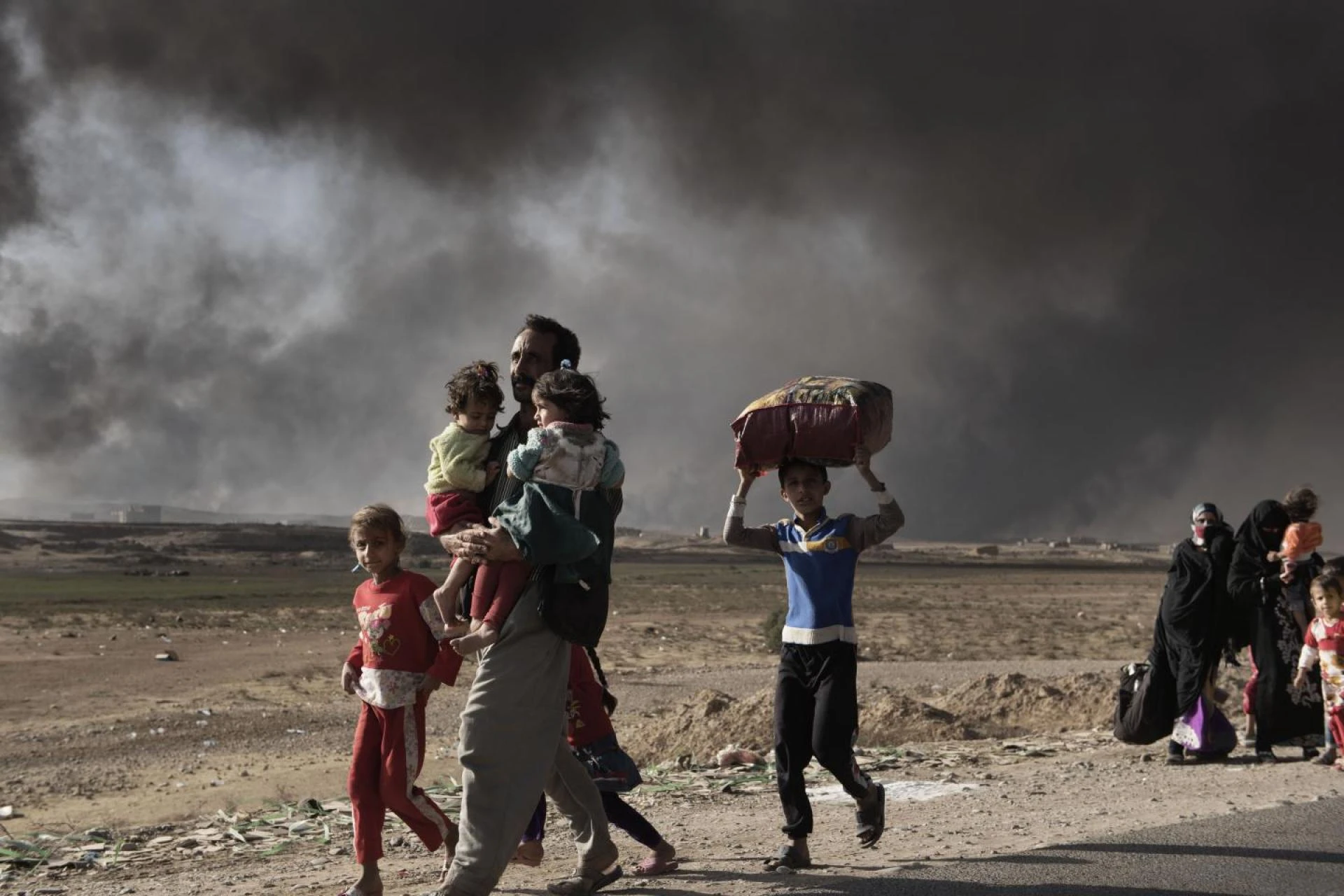

When we think of humanitarian aid or humanitarian assistance, we generally imagine all that set of actions that NGOs, governments or United Nations agencies carry out to attend to the population in danger when disasters or humanitarian crises occur. Crises that are triggered by the so-called natural disasters, armed conflicts, epidemics, famines, droughts... These are actions that focus on saving lives through the provision of drinking water, construction of latrines, delivery of food and hygiene packages basic or emergency healthcare. All this is what we also call humanitarian response to emergencies.
Actually, first of all we carry out preparation actions in all the territories where we work against the risks generated by natural disasters or armed conflicts. We act to mitigate or prevent damage before it occurs through the risk management work approach.
An example to understand what humanitarian aid is
For example, let's think about the tsunami that devastated Southeast Asia in 2004, compared to the tsunami that in 2011 flooded the coasts of Japan. Both tsunamis were nearly the same magnitude on their scale; that of 2004 reached 9.1 and that of 2011 in Japan to 9. However, the fatalities in the first reached more than 270,000 people compared to that of Japan, which reached the figure of 18,000 deaths (which are not few). . Much of this enormous difference in fatalities is due to prior risk management, education and awareness of the population regarding probable phenomena in those parts of the planet, their rapid evacuation capacity and their prepared infrastructures.
Unlike what happened in Japan, the tsunami in Southeast Asia hit areas where people in situations of vulnerability and risk lived (and do live). They live in buildings in poor condition, they lack regulations regarding building in risk areas, they do not have evacuation plans for early warnings, they do not have a population trained in these situations, they do not have sufficient basic services to attend to the population under normal conditions.
A risk management job can mitigate disasters
We can talk about activities as simple as collecting grains in the face of possible shortages, building rainwater tanks, training the population in emergency plans and response to areas with seismic risk, or preventing the construction of buildings in risk areas such as mountain slopes (avoid landslides), dry water courses or very close to the coastline.
We have talked about risk preparation or management, as well as assistance or humanitarian aid, but there is another phase that is also essential for organizations like ours: rehabilitation or reconstruction. Once the spotlights of the journalists' cameras leave the emergency area and they start looking for other news, the population remains that was very vulnerable and poor before the disaster or humanitarian crisis and that, after it, has been left behind. in even worse condition. That is when it becomes more necessary than ever to continue by the side of these communities. Rehabilitation or reconstruction are measures aimed at ensuring the functioning of the essential services of a society, such as livelihoods, health and education systems, infrastructure, so that they can continue with their lives with basic systems.











Sign in to leave a comment.