

When choosing insulation for a home or commercial property, it is important to understand how different materials control heat flow and air movement. Insulation spray is a popular option because it can expand into gaps, create a continuous insulating layer and help reduce unwanted air leakage. Unlike some conventional materials that are fitted between framing members, spray-applied insulation can form a more seamless barrier when correctly installed.
For Australian properties, insulation needs to suit the building design, climate and area being insulated. Spray foam technology can be used across a range of applications, including walls, roofs, ceilings and floors. But what exactly is insulation spray, how does it work, and when is it the right choice?
What Is Insulation Spray?
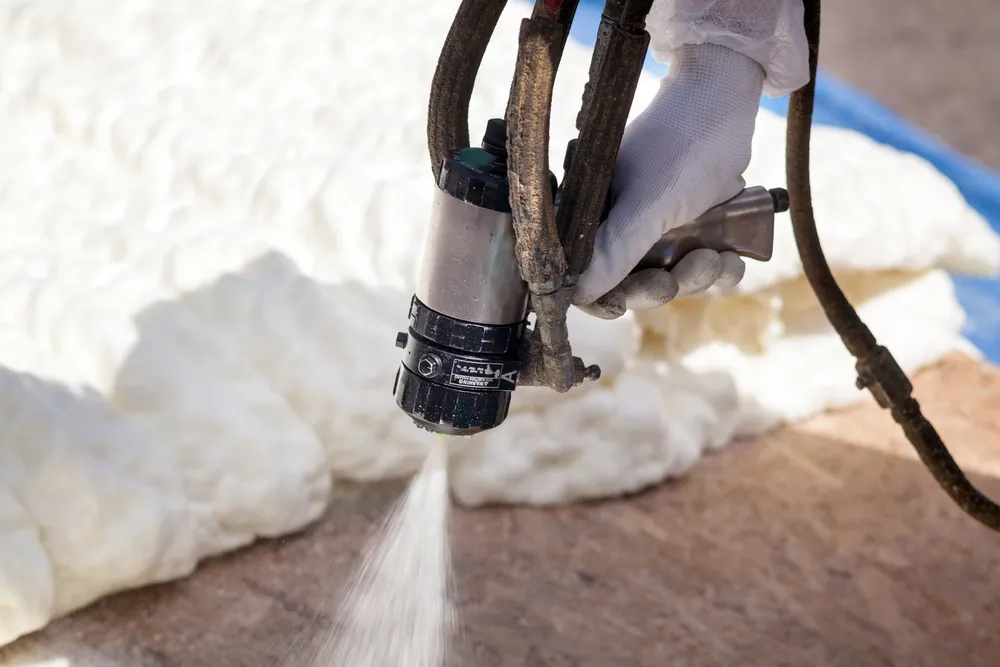
Insulation spray is a spray-applied insulating material designed to improve a building's thermal performance and reduce unwanted air movement. One of the most common types is polyurethane spray foam, which is created by combining chemical components that react and expand when applied to a surface.
The expanding foam fills cavities, gaps and irregular areas, allowing it to form a relatively continuous layer over the application area. Depending on the formulation, spray foam can have different densities, expansion characteristics and performance properties.
Spray-applied polyurethane foam is generally available in two main forms: open-cell and closed-cell foam. Each has different characteristics and may be appropriate for different building applications.
How Does Spray Foam Insulation Work?
Spray foam insulation works by creating a layer between the conditioned interior of a building and the surrounding environment. When applied, the foam expands and adheres to the substrate, helping fill small openings and irregular spaces that can otherwise allow air to move through the building envelope.
This combination of insulation and air sealing is one of the key differences between spray-applied foam and some traditional insulation materials. A properly installed foam layer can reduce uncontrolled air movement while also slowing the transfer of heat.
The actual performance depends on factors such as foam type, thickness, installation quality, substrate condition and the location where it is applied. Professional assessment and installation are therefore important when selecting a spray foam system.
For property owners who want to understand the material in greater detail, our guide to Spray Foam Insulation Foam explains the terminology, characteristics and common applications in more depth.
Where Can Insulation Spray Be Applied?
One of the advantages of spray-applied insulation is its versatility. It can be used in various parts of residential and commercial buildings, provided the selected product and installation method are suitable for the application.
Common areas include:
- Roofs and ceilings, where insulation can help reduce heat transfer through the building envelope.
- Walls and wall cavities, where foam can fill spaces around framing and other irregular areas.
- Floors and subfloor areas, where suitable insulation can help improve thermal comfort and reduce unwanted air movement.
It may also be considered for renovation projects, extensions and other building situations where conventional insulation can be difficult to install effectively.
The appropriate application depends on the building structure, access, substrate and performance requirements. A professional insulation contractor can assess these factors before recommending a suitable system.
What Are the Benefits of Insulation Spray?
Insulation spray can provide several benefits when the material and installation method are appropriate for the property. Its ability to expand and adhere to surfaces allows it to cover areas that may be difficult to insulate using rigid or pre-cut materials.
Key benefits include:
Improved air sealing: Spray foam can fill gaps and openings, helping reduce unwanted air leakage through parts of the building envelope.
Thermal insulation: The foam layer slows heat transfer, which can contribute to a more stable indoor temperature.
Flexible application: Because the material expands after application, it can conform to irregular surfaces, joints and difficult-to-reach spaces.
Energy efficiency: By improving thermal performance and reducing uncontrolled air movement, spray-applied insulation may help reduce the demand placed on heating and cooling systems.
Long-term performance: When correctly selected and professionally installed for the intended application, spray foam can provide durable insulating performance.
These benefits make spray-applied polyurethane foam a practical consideration for both new construction and selected retrofit projects.
Is Open-Cell or Closed-Cell Foam Better?
Neither open-cell nor closed-cell foam is universally better. The appropriate option depends on the location, building requirements and performance objectives.
Open-cell foam has a more flexible, lower-density structure and expands significantly after application. It can be useful where filling larger cavities and achieving air-sealing benefits are important.
Closed-cell foam has a denser structure and generally provides higher insulation performance per unit of thickness. It can also provide greater resistance to moisture movement than open-cell formulations.
The choice should therefore be based on the specific application rather than simply choosing the foam with the highest specification. Factors such as available space, moisture exposure, substrate and required thermal performance should all be considered.
How Does Insulation Spray Compare With Traditional Batts?
Traditional insulation batts are manufactured in pre-sized sections and are commonly installed between framing members. They can provide effective thermal insulation when correctly selected and fitted, but their performance can be affected by gaps, compression, poor fitting or areas that are difficult to access.
Spray-applied foam takes a different approach. Instead of placing pre-cut pieces into a cavity, the material is applied directly and expands to conform to the available space. This can make it particularly useful for irregular surfaces and areas where air leakage is a concern.
However, the best insulation solution depends on the property. Cost, access, required thermal performance, building design and installation conditions should all be considered before selecting a material.
For Australian property owners comparing different options, Spray Insulation Australia solutions can provide another approach to improving thermal performance across suitable residential and commercial applications.
Is Insulation Spray Suitable for Australian Homes?
Yes, insulation spray can be suitable for many Australian homes, but its suitability depends on the property's construction, location, climate and the area being insulated.
Australia experiences a wide range of climatic conditions, from cooler southern regions to hot and humid areas in the north. Good insulation and air sealing can help buildings manage heat transfer and maintain more consistent indoor conditions throughout the year.
For existing homes, spray-applied foam may also be considered during renovations when certain areas are difficult to access using conventional insulation. New construction projects can similarly incorporate spray foam as part of a broader building-envelope strategy.
Professional installation is particularly important because the foam needs to be applied according to the manufacturer's requirements and the conditions of the specific building. The correct product, thickness and application method should be determined for the intended use.
Is Insulation Spray Right for Your Property?
Insulation spray provides a combination of thermal insulation and air-sealing capabilities that can make it a useful solution for many building applications. Its ability to expand and conform to surfaces allows it to address gaps and irregular spaces that can be challenging for traditional insulation materials.
However, there is no single insulation solution that is ideal for every property. The right choice depends on the building structure, application area, climate, access, performance requirements and project goals.
SprayIT Solutions is a family-owned business based in Carrum Downs, Victoria, with decades of experience in the spray foam industry. The team operates custom-built spray rigs and equipment capable of applying both open-cell and closed-cell polyurethane foams, along with other coating systems for residential and commercial projects.
If you are considering spray-applied insulation for a new build, renovation or existing property, a professional assessment can help determine which system is appropriate for your specific application.


















Sign in to leave a comment.