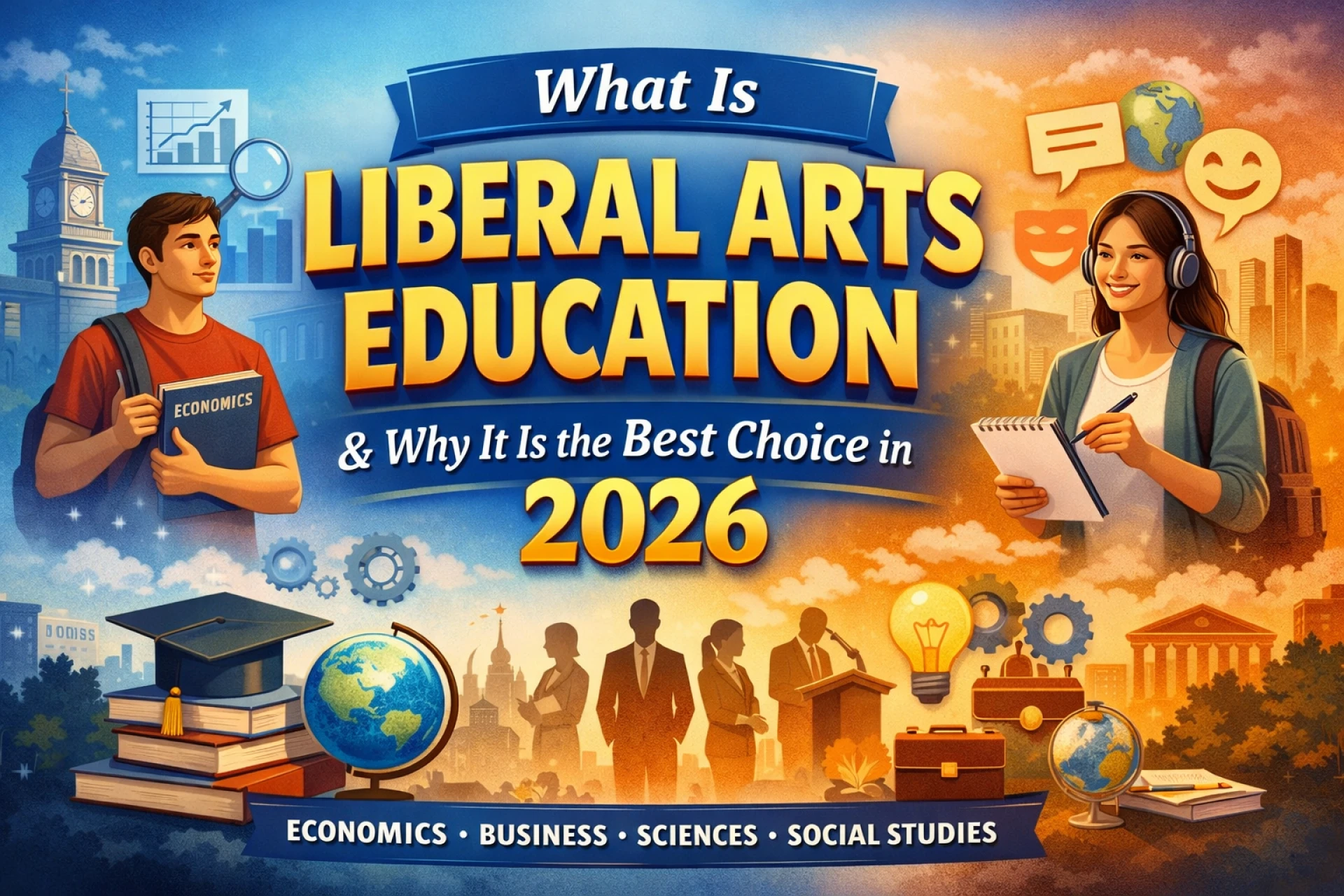
In a world where industries are evolving faster than ever, choosing the right degree is no longer just about specialization — it’s about adaptability. This is where liberal arts and sciences courses stand out in 2026.
But what exactly is liberal arts education? And why are more students choosing liberal arts colleges over traditional single-discipline programs?
Let’s break it down clearly.
What Is Liberal Arts Education?
Liberal arts education is an interdisciplinary approach to learning. Instead of focusing only on one narrow specialization, students explore multiple disciplines such as:
- Economics
- Political Science
- Psychology
- Business
- Data & Analytical Thinking
- Communication & Media
- Social Sciences
In simple terms, it blends arts and science courses to develop both analytical and creative intelligence.
This approach builds what employers call “transferable skills” — critical thinking, communication, research ability, leadership, and problem-solving.
Why Liberal Arts Education Is Powerful in 2026
The Job Market Demands Multi-Skilled Graduates
In 2026, automation and AI are transforming industries. Companies are no longer hiring only technical experts — they are hiring thinkers.
A student pursuing a bachelor's degree in economics within a liberal arts framework doesn’t just learn economic theory. They also understand:
- Policy impact
- Data interpretation
- Business strategy
- Social behavior
This makes them adaptable across sectors like finance, analytics, consulting, public policy, and entrepreneurship.
It Connects Business With Real-World Thinking
Take a bachelor's degree in business administration in a liberal arts environment. Students don’t only study marketing and finance — they also learn:
- Consumer psychology
- Global politics
- Ethical leadership
- Communication strategies
This produces leaders, not just managers.
Freedom to Explore Before You Specialize
Many students are unsure about their exact career path at 17 or 18. Liberal arts allows exploration before final specialization.
For example:
- A student interested in economics can also take business electives.
- A business student can explore political science or communication.
- Social science students can learn data analysis.
This flexibility reduces career regret and increases clarity.
Stronger Career Versatility
Graduates from liberal arts and sciences courses often move into careers such as:
- Corporate management
- Civil services
- Social entrepreneurship
- Financial consulting
- Media & communication
- International relations
- Research & academia
This diversity is why top global universities follow the liberal arts model.
Why Students Prefer Liberal Arts Colleges Today
Modern liberal arts colleges focus on:
- Smaller class sizes
- Mentorship-driven learning
- Interdisciplinary projects
- Research exposure
- Industry collaborations
This creates confident graduates who can think independently — a crucial advantage in 2026.
How Liberal Arts Differs from Traditional Degrees
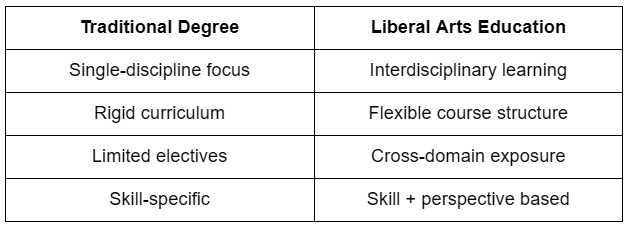
This broader perspective is what makes liberal arts education future-proof.
Is Liberal Arts Right for You?
You should consider liberal arts if:
- You enjoy asking “why” and “how”
- You want leadership roles in the future
- You are interested in economics, business, politics, or social sciences
- You want career flexibility instead of a narrow job path
If you are exploring arts and science courses that prepare you for both higher studies and industry, liberal arts is one of the strongest choices in 2026.
Final Thoughts
The future belongs to adaptable thinkers. A degree is no longer just about securing a job — it is about building a mindset.
Whether you pursue a bachelor's degree in economics, a bachelor's degree in business administration, or other liberal arts and sciences courses, this educational model prepares you not just for your first job — but for a lifetime of evolving opportunities.

























Sign in to leave a comment.