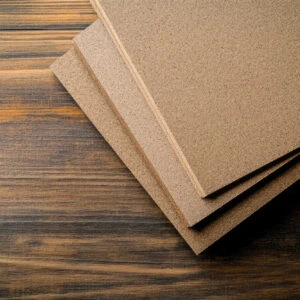

When it comes to modern furniture, modular kitchens, wardrobes, and office setups, one material quietly does the heavy lifting: particle board.
Affordable, versatile, and widely used, particle board has revolutionized how we design and furnish spaces. But what exactly is particle board, and how is it made?
Let’s dive deep into it.
What is Particle Board?
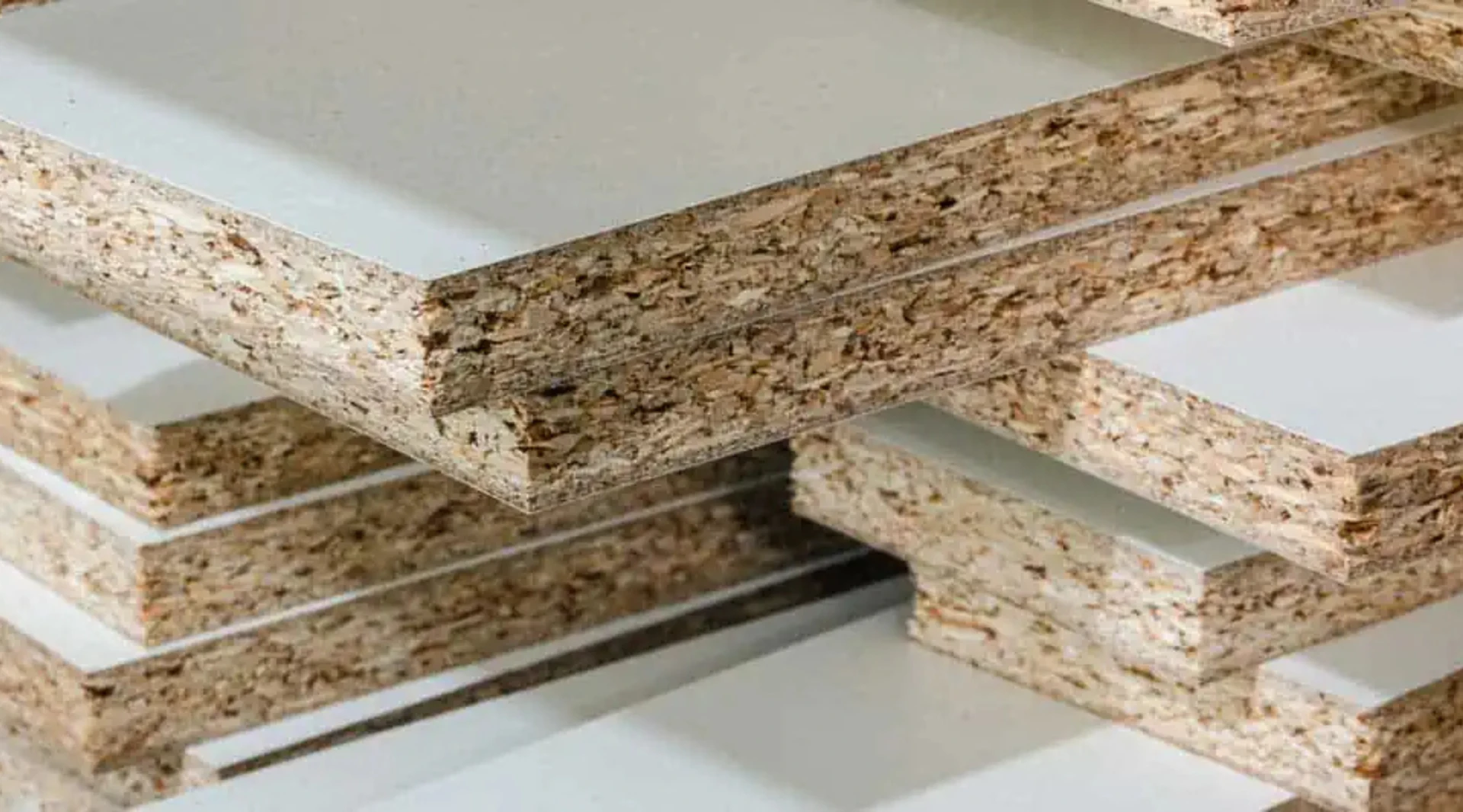
Particle board is an engineered wood product made by combining small wood particles like sawdust, wood chips, or even recycled wood waste. These tiny fragments are bound together using synthetic resins or adhesives and then compressed into flat, solid sheets under heat and pressure.
Unlike natural wood, particle board provides a smooth, uniform surface that is ideal for laminates, veneers, and paints. It's lightweight, cost-effective, and available in various thicknesses and densities depending on the application.
One common upgrade is pre-laminated particle board, where a decorative layer (like melamine or foil) is fused onto the board during production. This not only enhances the appearance but also protects the surface against moisture, scratches, and daily wear.
Understanding Pre-Laminated Particle Board
Before jumping into the manufacturing process, it’s important to highlight pre-laminated particle board because it plays a significant role in today’s furniture industry.
- Pre-laminated particle board comes with an already applied decorative finish, eliminating the need for post-lamination.
- Available in a range of colors, textures, and patterns (wood grains, solid colors, matte, glossy).
- Offers better moisture resistance compared to raw particle board.
- Saves time and labor costs for manufacturers and end-users.
For instance, 18mm pre-laminated particle board is widely used for making wardrobes, shelves, and modular kitchens because it balances strength, thickness, and a ready-to-use surface.
When it comes to pricing, the 18mm pre-laminated particle board price can vary depending on the brand, surface finish, and quality, but it typically remains a very budget-friendly choice compared to plywood or MDF alternatives.
Manufacturing Process of Particle Board
The journey from wood waste to a finished particle board sheet is surprisingly intricate. Here’s a step-by-step overview:
1. Collection and Preparation of Raw Materials
The process starts with collecting wood residues like sawdust, wood shavings, and small chips from sawmills or recycling centers.
These particles are cleaned and sorted to ensure consistency in size and quality, as uniform particles contribute to a stronger board.
2. Drying
Moisture content plays a crucial role. The collected wood particles are passed through dryers to reduce their moisture to an optimal level (usually around 2-3%).
Excess moisture would weaken the adhesive bond during pressing.
3. Blending with Resin
The dried wood particles are mixed with synthetic resins like urea-formaldehyde or melamine-based adhesives.
Other additives—such as hardeners, waxes for moisture resistance, and fire retardants (if needed)—are also introduced at this stage.
4. Forming the Mat
The resin-coated particles are layered on a conveyor belt to form a loose mat.
Typically, coarser particles are placed in the core, while finer particles are spread over the surface layers to create a smoother finish.
5. Pressing
The loose mat is compressed under immense heat and pressure in a large hydraulic press.
This step:
- Activates the resin to bond the particles tightly.
- Shapes the mat into rigid, flat sheets of desired thickness (such as 18mm).
- Reduces voids and increases board strength.
The pressing temperature can reach around 150–200°C depending on the resin type.
6. Cooling and Trimming
After pressing, the hot boards are cooled to stabilize their structure.
Once cooled, the edges are trimmed, and the boards are sanded to achieve uniform thickness and smoothness.
7. Lamination (for Pre-Laminated Boards)
For pre-laminated particle boards, a decorative laminate (like melamine-impregnated paper) is fused to the surface using heat and pressure.
This adds color, design, texture, and an extra protective layer right at the manufacturing stage.
8. Quality Inspection and Grading
Each board undergoes stringent quality checks to assess:
- Thickness uniformity
- Surface finish
- Bonding strength
- Resistance to moisture and warping
Based on the performance, boards are graded and dispatched for commercial use.
Advantages of Using Particle Board
- Cost-Effective: Much cheaper than solid wood or plywood.
- Smooth Surface: Excellent for laminations and coatings.
- Lightweight: Easier to handle and install.
- Eco-Friendly: Utilizes recycled wood material and reduces logging pressure.
Conclusion: Choose Quality, Choose Elite
The world of furniture and interior design relies heavily on reliable, affordable materials, and particle board stands tall among them. Whether you're looking for a raw base material or a ready-to-install pre-laminated particle board, knowing its manufacturing journey helps you appreciate its value.
When it comes to investing in quality, trusted names like Elite Particle Boards make a significant difference. Known for their precision, durability, and wide range of designs, Elite ensures that whether you need an 18mm pre-laminated particle board or customized options, you're getting a product that's built to perform beautifully over time — at competitive prices.
In a market crowded with options, choosing a brand that prioritizes consistency and innovation can make all the difference for your projects. Elite Particle Boards stands as a brand that you can trust for modern, stylish, and reliable solutions.
























Sign in to leave a comment.