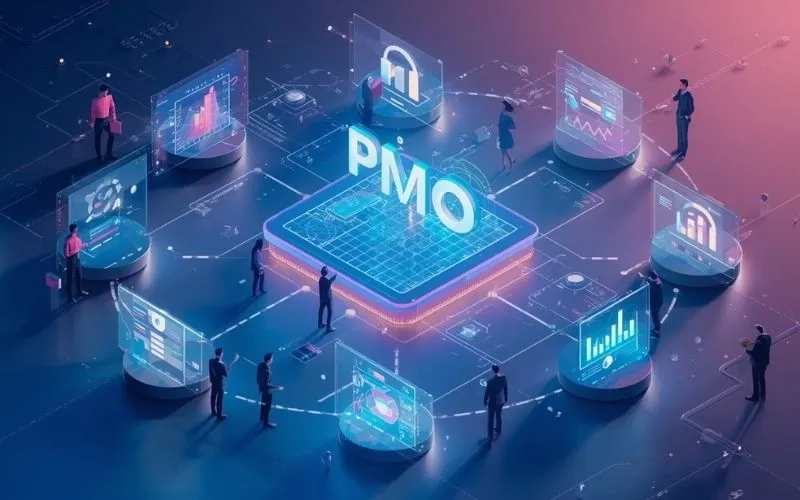

Managing several projects at the same time can become difficult when teams use different processes, priorities, and reporting methods. Deadlines can overlap, resources can become stretched, and important project risks may not reach decision makers soon enough.
A Project Management Office, commonly known as a PMO, can bring more structure to this environment. It helps organizations coordinate project work, improve visibility, and create consistent practices that make projects easier to manage.
What Is a PMO?
A PMO is a function within an organization that supports the management of projects. Its responsibilities can vary depending on the company and the way its projects are organized.
Some PMOs mainly provide guidance, templates, and support to project managers. Others have greater responsibility for governance, standards, reporting, and portfolio level decisions.
The main purpose is to help projects operate in a more organized and consistent way.
Why Organizations Establish a PMO
As organizations take on more projects, managing everything independently can become challenging.
One team may have its own reporting process while another uses completely different methods. Management may also struggle to understand which projects are on track and which ones need attention.
A PMO can create common practices across projects and give leadership a clearer view of overall project activity.
This does not mean every project has to follow exactly the same process. Instead, the PMO can establish a useful framework while allowing teams enough flexibility to deal with their specific requirements.
Improving Project Planning
Planning is one of the areas where a PMO can provide valuable support.
A PMO may establish guidelines for defining project objectives, timelines, milestones, responsibilities, resources, and risks.
Having a consistent approach makes it easier for teams to identify what needs to happen before project work begins.
It can also help stakeholders understand what the project is expected to deliver and how progress will be measured.
Better Resource Management
Resources are often shared between different projects.
For example, several projects may need the same technical specialist at the same time. Without proper coordination, one project can experience delays simply because the required person or resource is unavailable.
A PMO can provide visibility into resource requirements across projects.
This allows management to identify conflicts, adjust priorities, and make better decisions about how available resources should be allocated.
Managing Project Risks
Every project has risks.
Some may involve budgets, deadlines, technology, suppliers, staffing, or changing requirements.
A PMO can introduce a structured approach to identifying and monitoring these risks.
Project teams can document potential problems, assess their impact, and determine what actions should be taken.
This makes it easier for management to see significant risks before they develop into major project issues.
Creating Consistent Reporting
Project reporting becomes increasingly important as the number of projects grows.
Senior leaders need accurate information about progress, budgets, risks, milestones, and issues.
A PMO can create standard reporting practices so important information is presented in a consistent way.
This gives decision makers a clearer picture of project performance and makes it easier to compare different projects.
Supporting Project Managers
A PMO can also provide practical support to project managers.
Instead of every project manager creating their own templates, reporting formats, risk registers, and planning documents, the PMO can provide established resources.
This saves time and creates greater consistency across the organization.
The PMO can also share lessons learned and provide guidance when project teams encounter common challenges.
Improving Communication
Communication problems can quickly affect project performance.
A project team may understand an issue that senior management does not know about. Stakeholders may also have different expectations about deadlines or deliverables.
A PMO can establish clear communication and reporting processes.
This helps ensure that important project information reaches the appropriate people and that stakeholders have a better understanding of what is happening.
Helping Leaders Make Better Decisions
Senior management often has to make decisions about multiple projects at the same time.
A PMO can bring information from different projects together and provide a broader view of performance, risks, resources, and priorities.
This can help leaders decide where additional resources are needed, which risks require attention, and whether project priorities need to change.
The value is not simply in producing reports. The real benefit comes from turning project information into useful visibility for decision making.
Keeping Projects Aligned With Business Goals
Completing a project on time does not necessarily mean the project has been successful.
The project should also contribute to the organization's wider goals.
A PMO can help connect project activity with business priorities by providing portfolio level visibility.
This allows leaders to consider whether projects are still aligned with current objectives and whether available resources are being directed toward the areas that matter most.
The Value of a Well Managed PMO
A PMO should not become another layer of unnecessary administration.
If teams spend more time filling out forms than managing their projects, the PMO is not providing much value.
An effective PMO should make project management clearer and more efficient.
Its processes should help teams plan better, identify problems earlier, communicate more effectively, and make informed decisions.
The exact structure will depend on the organization's size, industry, project complexity, and goals.
Final Thoughts
A PMO can provide organizations with the structure and visibility needed to manage projects more effectively.
From planning and resource coordination to risk management, reporting, communication, and governance, its role can support both project teams and senior leadership.
The most effective PMO is not necessarily the one with the most rules. It is the one that creates useful standards, provides practical support, and helps the organization deliver projects with greater clarity and control.


























Sign in to leave a comment.