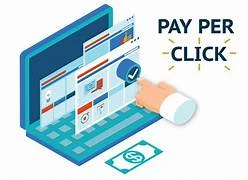

What is Pay-Per-Click?
PPC or Pay-Per-Click is an internet advertisement strategy where you, as the advertisement giver, pay the publisher every time individuals click on the specific advertisement. PPC can also be termed as the cost-per-click model. The approach is implemented as the advertisement giver would not like to invest just in placing the advertisement but only when there's action on it by clicking.
Typically, the pay-per-click model is provided by search engines like Google, social media like Facebook, Google Ads, Facebook Ads, and Twitter Ads, which are some of the most common forms of PPC advertising.
How does the PPC Model work?
When it comes to the PPC model, it largely revolves around keywords. For example, in search engines, when someone searches for a keyword, in specific, online ads will show up. In this scenario, the keyword must be connected with the product or service that has been advertised.
Hence, the organizations that are developing the pay-per-click advertising models, typically labor over finding out the most relevant keywords for the products or services. This is crucial since putting money into keywords that are related will bring in more clicks and hence higher earnings.
If we take both publishers and advertisers into account, then the Google PPC model is found to be useful for them. You would wonder how it is useful for them. The reason is very simple. When we take the advertisers into account, they receive an opportunity to advertise the product or service for reaching a particular group of people who are looking for that type of content.
Not only this, but the PPC model is also beneficial to the advertiser in saving some money as the worth of every visit or click made by a potential customer is more than the cost of the click paid to the publisher.
Now, as we discuss publishers and their benefits, one main income stream is available to them. You should reflect on cases like Google and Facebook, where their users are served for free. In these scenarios, web companies are able to earn revenue with their free product by making money online using PPC advertisement models, in particular.
Rates for pay-per-click advertisement are determined by the use of two models, i.e., the flat-rate model, and the bid-based model, according to word from experts from one of the top-rated Indian PPC Companies.
Flat-rate model
In such instances, a fixed amount per click is remitted by the advertiser to the publisher. Various PPC rates are quoted by publishers, keeping in mind that it is for different sections of their site. You also must remember that publishers are negotiable. It is observed that the publisher reduces the fixed price if the advertiser provides a long-term deal.
Bid-based model
In such instances, the amount for which the advertiser is willing to pay for an ad spot is reserved. Automated software is utilized by the publisher for the purpose of conducting the auction. Moreover, it may be based on the multiple PPC packages that are offered to the users.
Keep in mind that the auction winner can be determined by rank, rather than the sum amount bid.
Aspects of PPC
One of the top PPC Management firms quoted the various aspects of a PPC Campaign as follows
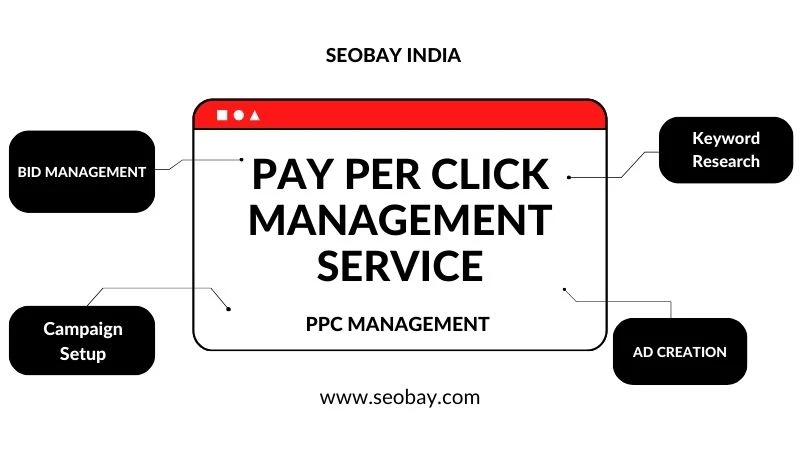
The Campaign- The campaign for the PPC advert takes the lead among all.
The Ad Group- Set of ads related to a campaign included in the Ad group. For example, in one campaign, one of the ads may be related to a Christmas party, while the other ad may be related to a holiday.
Keywords- You must make sure that keywords ought to match and be appropriate for the Ad group. These keywords will be utilized by Google to verify their relevance and thus their position.
Ad Text- Some catchy text should have been written on the ad so that it lures the individual to click on it. It is recommended to seek the help of a professional copywriter while developing ad text.
Landing Page- This page is the page where people land when they click on the advertisement. It is also stated that it should be relevant to the keywords.
Why PPC is necessary for social media businesses?
Some of the reasons why PPC is necessary for increasing the success of social media businesses are given below:
Gives results immediately and continuously
PPC advertising assists in providing the marketers with results at the earliest possible time after posting their ads. Compared to search engine optimization, they are fast in providing the results since this concentrates on organic traffic. For companies, where revenue is likely to be produced at a quick pace, PPC is deemed significant. Even for general advertising strategies, PPC is regarded to be significant not just in the short term but also for long-term digital marketing approaches.
Contribution towards Business Objectives and Income-
PPC directly contributes to the business's core KPIs and assists in generating revenue straight away. In businesses that are online, PPC plays a very significant role as it assists in developing advertisements to drive sales, leads, traffic to websites, brand awareness, etc. These types of ads are suitable for businesses to promote for their specific purposes and also monitor and measure performance.
Now that you are aware of what PPC is and how it assists in social media management services, contact PPC experts at Bloom Agency, India's top SEO Company, and avail the best SEO packages in India.
Disclaimer- The contents given here are solely for educational intentions and are produced by a professional writer. Hire us for more details on PPC and the way it works.







Sign in to leave a comment.