Precision machining is a manufacturing process used to create components with extremely tight tolerances and exacting specifications. It involves the controlled removal of material from a workpiece to achieve precise shapes, dimensions, and surface finishes. Commonly used in industries such as aerospace, automotive, medical, and electronics, precision machining ensures that parts perform accurately and reliably in demanding applications.
This article provides a technical explanation of what precision machining is, how it works, and why it’s critical to modern manufacturing.
Defining Precision Machining
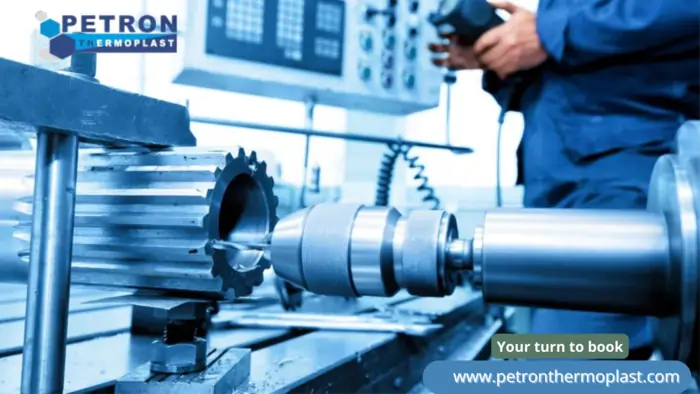
Precision machining refers to a range of machining processes that involve cutting, grinding, milling, turning, and drilling to produce parts with high dimensional accuracy. Typically, these processes are carried out using CNC (Computer Numerical Control) machines, which are programmed to follow exact design parameters defined in CAD (Computer-Aided Design) models.
Precision machining is used when parts must meet tight tolerances, often within ±0.001 mm or even finer, depending on the application.
How Precision Machining Works
The process begins with a solid block of material, such as metal (aluminum, titanium, steel) or engineering plastic (PTFE, PEEK, nylon). The material is then shaped into a final part through one or more machining techniques:
- CNC Turning: The workpiece rotates while a cutting tool removes material to create cylindrical parts.
- CNC Milling: A rotating cutting tool moves across a stationary workpiece to create complex shapes and contours.
- Grinding: Uses abrasive wheels to achieve ultra-fine surface finishes and tight tolerances.
- EDM (Electrical Discharge Machining): A non-contact process where material is removed using electrical discharges, ideal for very hard materials or intricate details.
Throughout the process, precision is maintained through advanced software, servo motors, and closed-loop feedback systems.
Key Characteristics of Precision Machining
- Tight Tolerances
- Essential for parts that must fit perfectly or function under stress, such as gears, bearings, and valves.
- High Repeatability
- CNC machines can reproduce identical parts consistently, which is vital for mass production or component standardization.
- Superior Surface Finishes
- Often required in sealing surfaces, sliding mechanisms, or medical implants where rough surfaces could lead to failure or contamination.
- Advanced Inspection Techniques
- Tools such as CMMs (Coordinate Measuring Machines), laser scanners, and optical comparators are used to verify dimensional accuracy.
Applications of Precision Machining
Precision machining is critical in industries where failure is not an option:
- Aerospace: Engine components, structural supports, turbine blades
- Medical: Orthopedic implants, surgical tools
- Automotive: Fuel injection parts, pistons, and transmission components
- Electronics: Housings, connectors, and cooling plates
- Defense: Firearms, missile guidance components
Conclusion
Precision machining is the backbone of high-accuracy manufacturing. By combining skilled craftsmanship with advanced CNC technology, it enables the production of components that meet strict dimensional and performance standards. Whether you're building satellites or surgical tools, precision machining delivers the reliability and exactness modern industries demand.





Sign in to leave a comment.