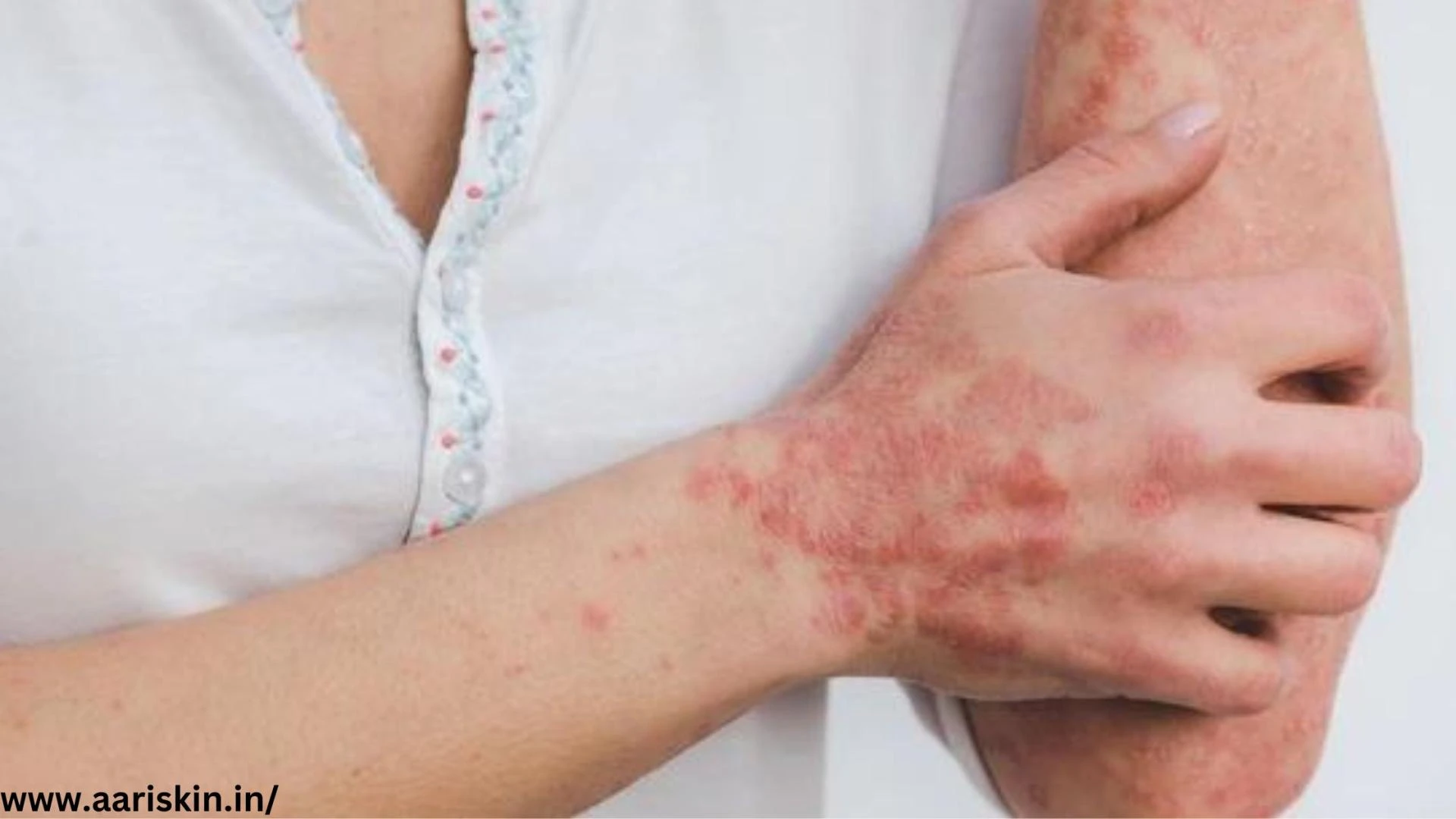

Psoriasis is a chronic autoimmune disorder that affects the skin. It is a non-contagious skin condition that causes red, scaly patches on the skin. These patches are often itchy and painful, and they can occur anywhere on the body. Psoriasis can be a lifelong condition that comes and goes.
Symptoms:
The most common symptoms of psoriasis are red, raised, scaly patches of skin that may be itchy or painful. The patches may be white or silvery and have a dry, flaky surface. They can appear anywhere on the body, but they are most commonly found on the elbows, knees, scalp, and lower back.
Causes:
The exact cause of psoriasis is unknown, but it is thought to be a combination of genetic and environmental factors. People with a family history of psoriasis are more likely to develop the condition. Environmental factors such as stress, infection, and injury can also trigger psoriasis.
Types:
There are several types of psoriasis, including:
Plaque psoriasis: This is the most common form of psoriasis. It causes red, raised, scaly patches on the skin.
Guttate psoriasis: This type of psoriasis often occurs in children and young adults. It causes small, drop-shaped lesions on the skin.
Inverse psoriasis: This type of psoriasis causes smooth, red patches of skin that are often found in skin folds, such as under the arms or breasts.
Pustular psoriasis: This type of psoriasis causes small, pus-filled blisters on the skin.
Erythrodermic psoriasis: This is the least common form of psoriasis, but it can be the most serious. It causes widespread redness and scaling of the skin.
Treatment:
There is no cure for psoriasis, but there are several treatments that can help to manage the symptoms. These treatments include:
Topical treatments: These are creams and ointments that are applied directly to the skin. They can help to reduce inflammation and itching.
Light therapy: This treatment involves exposing the skin to ultraviolet light, which can help to reduce inflammation and slow the growth of skin cells.
Systemic medications: These are medications that are taken orally or by injection. They can help to reduce inflammation throughout the body.
Biologic medications: These are medications that are made from living cells. They can help to reduce inflammation and slow the growth of skin cells.
In conclusion, psoriasis is a chronic autoimmune disorder that causes red, raised, scaly patches on the skin. There are several types of psoriasis, and the exact cause of the condition is unknown. While there is no cure for psoriasis, there are several treatments that can help to manage the symptoms. If you are experiencing symptoms of psoriasis, it is important to take Best Psoriasis Treatment In Jaipur for an accurate diagnosis and treatment plan.





Sign in to leave a comment.