
Installing your own solar power system is now easier than ever, thanks to advances in solar technology and the rapidly increasing popularity of solar power. The growing standardization of connectors and other components that don’t require specific skills or knowledge contributes to the simplicity of do-it-yourself installations.
The solar connector is one of these inventions that allows almost anyone to use solar electricity.
Solar connectors are still somewhat mysterious despite their ease of use. So, let’s examine their uses, benefits, and usage techniques.
What Is a Solar Connector?
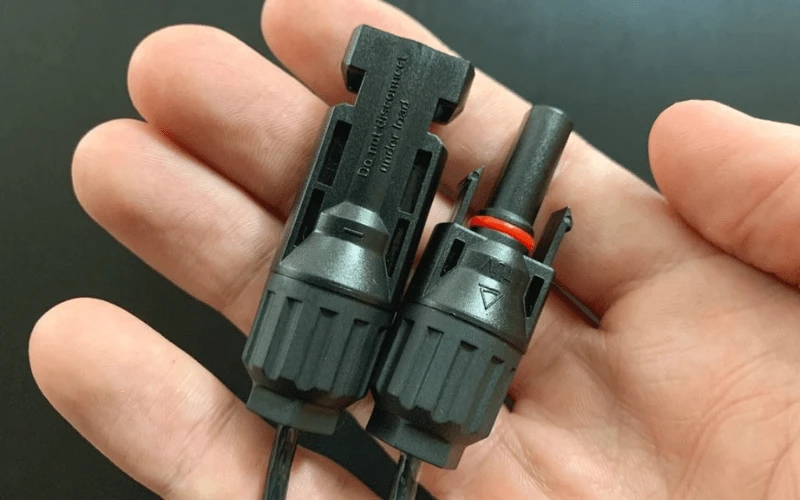
One kind of electrical connector found in modern solar power systems is the solar connector. The most common use for these connectors is connecting solar panels together.
What are The Parts of Solar Connectors?
Various components that make up each solar connector:
Male or Female Connector: Solar connectors come in matching male and female pairs. The female connector has a matching receptacle, and the male connector has a rod.
Contact Pins: Every connector has a male and female metal pin. Typically, tinned copper is used to make these contact pins, which offers superior electrical conductivity and resistance to corrosion.
Housing: Usually composed of sturdy black plastic, the housing is the external component of each connector. Weather and UV light resistance should be features of the housing. A locking mechanism in the plastic housing keeps unintentional disconnections from occurring.
Sealing Glands: Where the cable enters the connection, at the bottom are the sealing glands. They offer a weather-resistant seal.
How and When To Use a Solar Connector?
Solar connectors are most frequently used to connect solar panels in parallel or series. On certain occasions, they link solar panels to junction boxes and additional solar parts. Simply insert the male connector into the female connector until the locking mechanism clicks, and that’s how simple they are to use.
Simply use a solar cable disconnect tool (or your fingers) to squeeze the clips on the side of solar connectors to disconnect them. Never work on your system when it is under load, and use caution when handling solar panels. Always buy solar parts from reliable electronic components manufacturers to ensure longevity.
What’s the Most Effective Way to Connect Solar Panels (Series or Parallel)?
Several considerations, including array structure, shading, and distance from the power grid, must be considered when choosing whether to link solar panels in series or parallel.
Long wire lines benefit from series connections, which combine panel voltages while maintaining a steady current. However, if one panel is shaded, power loss may occur.
Parallel connections suffer from energy loss over long wires and need additional wiring. Still, they maintain output even if one panel is shaded since they provide current while keeping the voltage constant.
Large arrays typically combine the two methods. Panels are linked parallel to ensure output reliability and then joined into series strings to benefit from higher voltage. This hybrid strategy maximizes reliability and efficiency. Solar connections can be used in parallel or series arrangements.
Final thoughts
As you can see, solar connectors are really useful and simple to use. Always buy components from elcom.in.com for your solar panels. elcom.in.com offers the best quality solar components for an affordable price.




























Sign in to leave a comment.