In today’s modern world, the demand for privacy, energy efficiency, and stylish design is reshaping how we think about glass. One innovation leading this transformation is switchable glass film, a smart technology that allows glass surfaces to change from transparent to opaque at the touch of a button. But what exactly is switchable glass film, and how does it work? Let’s explore the technology, its benefits, and why it’s becoming an essential feature in smart homes and commercial spaces worldwide.
What Is Switchable Glass Film?
Switchable glass film, also known as smart film, switchable film or privacy film, is an advanced material that can instantly alter its appearance when powered on or off. It’s typically made using PDLC smart glass film (Polymer Dispersed Liquid Crystal) technology, which enables the film to control the amount of light passing through a glass surface.
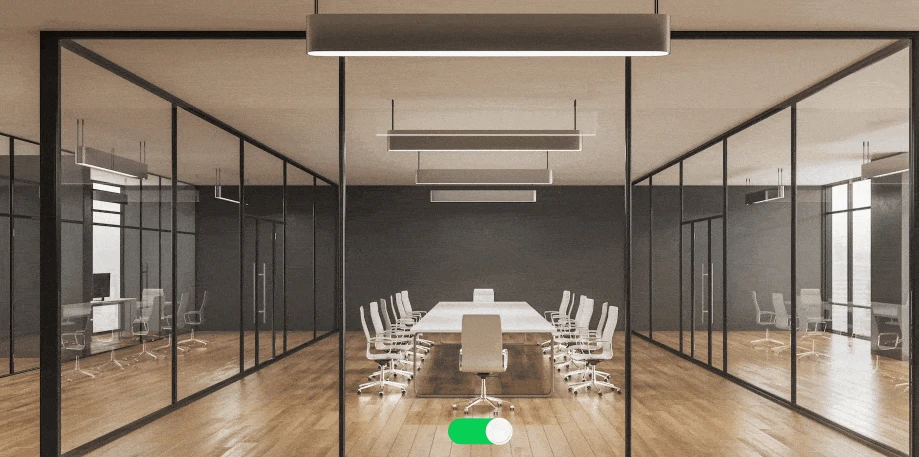
This film can be applied directly onto existing glass windows, doors, partitions, or skylights. Once installed, it offers users the flexibility to switch between a clear (transparent) and frosted (opaque) state providing privacy without the need for blinds, curtains, or physical barriers.
In short, switchable glass film transforms ordinary glass into smart glass with the flip of a switch.
How Does Switchable Glass Film Work?
The science behind switchable glass film lies in its liquid crystal technology. Here’s a simple explanation of how it functions:
- Structure of the Film:
- The film consists of a layer of liquid crystal droplets suspended in a polymer matrix, sandwiched between two transparent conductive layers.
- OFF State (Opaque Mode):
- When the power is off, the liquid crystal molecules are randomly oriented. This irregular alignment scatters light, making the glass appear frosted or opaque, ideal for privacy.
- ON State (Transparent Mode):
- When an electric current is applied, the liquid crystals align uniformly, allowing light to pass straight through. The glass instantly becomes clear and transparent.
This transition happens almost instantly, usually within milliseconds offering dynamic control over visibility and light transmission.
Types of Switchable Glass Film
There are two main types of switchable glass films available in the market:
- Self-Adhesive Switchable Film:
- This type can be applied to existing glass surfaces, making it ideal for retrofitting offices, homes, or retail spaces without replacing the glass.
- Non-Adhesive (Laminated) Film:
- This film is laminated between glass panels during manufacturing, creating permanent smart glass installations. It’s commonly used in high-end architecture and new construction projects.
Key Benefits of Switchable Glass Film
Switchable glass film offers a wide range of advantages beyond just privacy. Let’s take a look at some of its most notable benefits:
1. Instant Privacy on Demand
You can switch from clear to frosted glass in seconds, maintaining privacy without compromising natural light. It’s perfect for bathrooms, meeting rooms, and healthcare facilities.
2. Energy Efficiency
By controlling the amount of light and heat passing through, switchable film helps reduce energy consumption from air conditioning and lighting.
3. Enhanced Aesthetics
The clean, minimalist look of switchable glass film complements modern architecture and interior design. It eliminates the need for blinds or curtains, giving spaces a sleek, high-tech appearance.
4. UV Protection
Most films block over 99% of harmful UV rays, helping protect furniture, flooring, and artwork from fading.
5. Easy Maintenance
Unlike blinds or curtains that collect dust, switchable glass film requires minimal cleaning — just a wipe with a soft cloth.
Popular Applications of Switchable Glass Film
Switchable glass film is incredibly versatile and can be used across multiple industries and environments:
- Corporate Offices: For conference rooms and executive cabins where privacy and transparency are both needed.
- Homes and Apartments: In bathrooms, sliding doors, and windows for elegant privacy solutions.
- Healthcare Facilities: For patient rooms, partitions, and operating theatres to enhance hygiene and comfort.
- Retail and Hospitality: For storefront displays, hotel bathrooms, and meeting spaces to create a modern, luxurious feel.
- Educational and Government Buildings: To create adaptable spaces for meetings or secure discussions.
The Future of Switchable Glass Technology
As smart home technology evolves, switchable glass film is becoming an integral part of energy-efficient building design. Integration with smart automation systems now allows users to control transparency through smartphones, voice commands, or sensors.
Furthermore, ongoing research is improving the film’s energy efficiency, durability, and color customization options, paving the way for more creative architectural applications.
Conclusion
Switchable glass film represents the perfect fusion of privacy, technology, and design. Whether used in a modern office or a luxury residence, it provides an elegant solution for controlling light and privacy with just a touch.
As the demand for smart and sustainable materials grows, Privetek's switchable glass film is set to play a major role in shaping the future of architecture and interior design.



























Sign in to leave a comment.