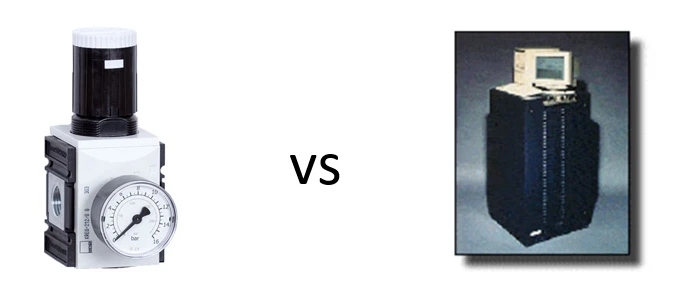

The mechanical devices have completely automated through which we can conduct processes in our household, businesses, and industries. For example, industrial application methods were always a complicated task before the introduction of new concepts like the Conventional and Computer Controlled Automated Pressure Regulator.
Today, let’s discuss both of these devices and assess which one is better. The primary purpose for explaining this differentiation is to help you understand how these devices function. It would then become more comfortable for you to select the most appropriate device for your use.
So, let’s put Conventional and Computer Controlled Automated Pressure Regulator against each other to extract vital information.
The Conventional Regulator vs. Computer Controlled Automated Pressure Regulator
The Application of a Conventional Regulator and Computer Controlled Automated Pressure Regulator
Conventional regulators are classified as valves that can automatically cut off the liquid or gas flow, especially when they are at a specific pressure. The regulators are utilized for allowing high-pressure fluid supply tanks or lines to get reduced to usable and safe pressures for different types of applications.
Moreover, you can see that these regulators in many traditional homes and industrial applications, such examples include gas grills, heating furnaces, medical and dental equipment.
On the contrary, the Computer Controlled Automated Pressure is a machine that works with a precision that is controlled electronically. The regulator can handle the pressure along with the vacuum accurately. Furthermore, it can manage high resolution due to a closed volume or a system with low flow rates.
The dual valve technology can control the pressure with the minimum loss of expensive gases. This particular regulator is managed with an analog or a digital command signal. It can also be commanded through the use of the convenient keypad interface.
The Use of a Conventional Regulator & Computer Controlled Automated Pressure Regulator
The Conventional Regulator is a standard tool that is utilized across several different industries and applications.
One of their most famous uses is the air compressors. It is mainly used in adjusting the pressure coming out of an air receiver to match what is needed for completing the task.
These regulators play a vital part in the propulsion pressurant control for several systems in the Aerospace industry. It also includes reaction control systems and altitude control systems as corrosive fluids, high vibration, and large temperature extremes are present.
Electronic Regulators and Filter Regulators are valuable in providing a quick response and an accurate pressure regulation.
On the other hand, the Computer Controlled Automated Pressure is used for static to low-flow applications or an inert gas like nitrogen or air. There is one common application within this regulator that provides high-pressure piloting for the signal dome-loaded regulators.
The regulator utilizes and controls the output pressure of the catalyst research reactor. It is possible to precisely managing reaction conditions along with highly varying process flow rates. This regulator is indeed an excellent pilot for maintaining accuracy.
Furthermore, this regulator can customize the software in producing reports and data that can be used in a variety of different applications for further research and analysis.
To Sum Up
You have to make the ultimate decision to select any one of these devices that can fulfill your needs in the best possible manner.
Luckily, there are no serious concerns regarding both these machines. For instance, a safety issue could have become a big hindrance in their use. Many people have an expectation that they must not suffer any negative consequences after selecting a specific machine.
It is recommended to use Computer Controlled Automated Pressure Regulator because it has good benefits for the different industries. Therefore, it is expected that the demand for the former regulators can increase in the future.



























Sign in to leave a comment.