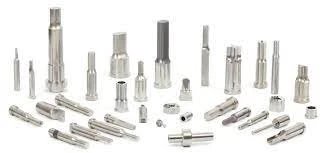

The tooling process is a crucial stage in the manufacturing process, but many companies aren't sure what their best production plan should look like or how much money they should be spending.
The most common types of tooling are welding and inspection fixtures; work holding tools like jigs and fixtures; cutting tools for milling and grinding machines; dies for cold forming, sheet metal, forging, and extrusion machines; and dies for die-casting machines. The purpose of tooling designs, their significance, and the tooling design process will all be covered in this blog.
Importance of Tooling Design in Manufacturing
Companies that manufacture products take part in the tool-making process. Every stage of the manufacturing process is crucial, as is the tooling design, which is used to avoid expensive mistakes. In order to create successful tools, the tool design team must consult with the supplier of die-cut tooling and follow manufacturer design specifications.
At every level of the production process, the tooling design is crucial. When the manufacturing process is finished without any mistakes, the manufacturer's design will guarantee the material's quality and productivity.
Types of tools used in tooling designs
In tooling designs, particular tools are employed:
Cutting tools:Cutting tools are tools that can handle significant temperature variations and work under extremely tight restrictions. These requirements are essential, especially for high-speed machining operations that last a long time. Milling cutters, reamers, shapers, fly cutters, planers, etc. are a few examples of cutting tools.
Die:
A die is a specialized tool used to cut, stamp, or shape materials like metal, plastic, wood, or fabric into predetermined shapes. To produce very complicated shapes, such as tiny fasteners or substantial automobile and machine parts, dies can be utilized in the production, or die-casting process.
Objectives of Tooling Designs in Manufacturing
Listed below are a few goals of tooling designs used in manufacturing:
Boosting production while protecting the quality of the final product by developingApparatus that consistently churns out components of high caliber.Manufacturing things within engineeringly permissible limits and at the lowest possible cost. Basically, the price of tooling frequently affects the total cost of production.To design user-friendly, straightforward products.Aid in reducing the overall cost of tooling.What is the Tooling Design process?
Here are some of the processes for tooling designs:
1. Analysis of the problem and its formulation:
The company's in-house tool designer should report any issues by looking at the manufacturing process's problems. He should give the manufacturer all the information in the statement of the product plan, including the anticipated product's design and precise organization.
Evaluation of the manufacturer's specifications:The tool must be made in accordance with the requirements that the maker has for the finished item. A designer can evaluate the product's structure, feel, etc. The tool's primary requirements, which are material efficiency and cost reduction, should be satisfied in its design.
Initial concept development and design options:The tool's design is essential for creating the fundamental concepts for manufactured goods. The designer of the tool should produce a backup version of the same product. Although the tool might not be required, designers should still create one of its kind just in case.
Finalizing design concepts:After the manufacturer completes the anticipated product, the tool designer should complete the tool design process in accordance with the manufacturer's requirements. When a tool's designer is certain that it will realize the manufacturer's vision, the process is considered to be finished.
Conclusion
At every stage of the production process, tooling is crucial—and for good reason. Manufacturers can be confident in the quality, effectiveness, and profitability of the material because efficient and effective tooling ensures fewer mistakes. Poor tooling can have disastrous effects, to put it mildly. For instance, poor tooling could result in an unreliable or ineffective final product. The tooling design helps manufacturers create new products within the allotted time. There are many different uses, including lowering costs, making deliveries on time, improving product quality, etc. Manufacturers typically rely on their staff to develop the product, but due to labor shortages, mechanical issues, etc., they frequently fail to deliver on time. However, tool design eventually started to play a more significant role in the creation of the products.
0










Sign in to leave a comment.