
Training and development in Human Resource Management (HRM) plays a crucial role in enhancing employee skills, knowledge, and performance. As organizations strive to remain competitive in today\'s fast-paced business environment, investing in their workforce has become more important than ever. This article will explore the concept of training and development in HRM, its objectives, and the key differences between training and development.
Training Definition in HRM
Training in HRM refers to the process of imparting specific skills, knowledge, and abilities to employees to improve their performance in their current roles. It is a short-term, goal-oriented activity designed to address immediate needs and close skill gaps. Training programs can range from on-the-job instruction to formal classroom sessions, e-learning modules, or workshops.
Career Development in HRM
While training focuses on immediate needs, career development in HRM takes a long-term approach. It involves helping employees identify their career goals and providing opportunities for growth and advancement within the organization. Career development programs may include mentoring, job rotations, and leadership development initiatives.
Objectives of Training and Development
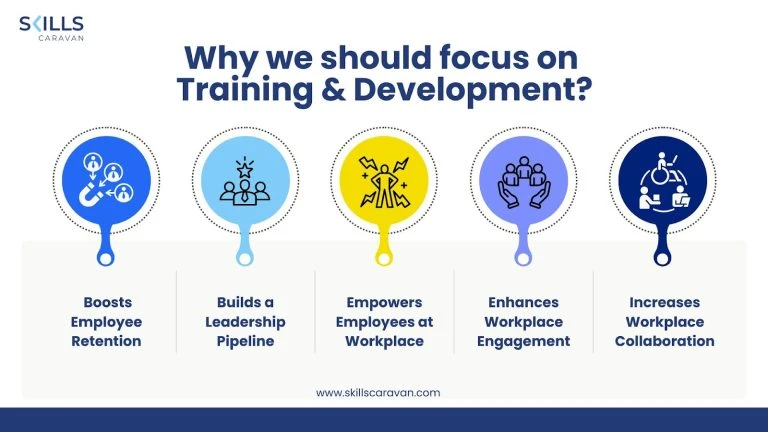
The primary objectives of training and development in HRM include:
- Improving employee performance and productivity
- Enhancing job satisfaction and motivation
- Reducing turnover and increasing employee retention
- Preparing employees for future roles and responsibilities
- Adapting to technological advancements and industry changes
- Fostering a culture of continuous learning and innovation
Difference Between Training and Development in HRM
To better understand the concepts, it\'s essential to differentiate between training and development in HRM:
- Time frame: Training is typically short-term and focused on immediate needs, while development is a long-term process aimed at future growth.
- Scope: Training is job-specific and addresses current skill gaps, whereas development is broader and prepares employees for future roles.
- Focus: Training emphasizes technical skills and knowledge, while development focuses on soft skills, leadership abilities, and overall personal growth.
- Measurement: Training outcomes are often easily measurable, whereas development results may be more challenging to quantify.
- Participation: Training is usually mandatory for specific job roles, while development programs are often voluntary and driven by employee initiative.
Explain the Role of Human Resource Development
Human Resource Development (HRD) is a broader concept that encompasses both training and development. The role of HRD in an organization includes:
- Identifying skill gaps and learning needs across the workforce
- Designing and implementing effective training and development programs
- Aligning employee development with organizational goals and strategies
- Creating a learning culture that supports continuous improvement
- Evaluating the impact of training and development initiatives on individual and organizational performance
Distinguish Between Training and Development
To further distinguish between training and development:
Training:
- Focuses on acquiring specific skills or knowledge
- Has a clear beginning and end
- Is often conducted in a structured environment
- Addresses immediate organizational needs
- Is typically instructor-led or guided
Development:
- Emphasizes overall employee growth and potential
- Is an ongoing, continuous process
- Can occur through various formal and informal experiences
- Prepares employees for future challenges and opportunities
- Often involves self-directed learning and exploration
In conclusion, training and development in HRM are essential components of organizational success. While training addresses immediate skill gaps and performance needs, development focuses on long-term employee growth and career advancement. By implementing a comprehensive approach to both training and development, organizations can build a skilled, motivated, and adaptable workforce capable of meeting current and future challenges.









Sign in to leave a comment.