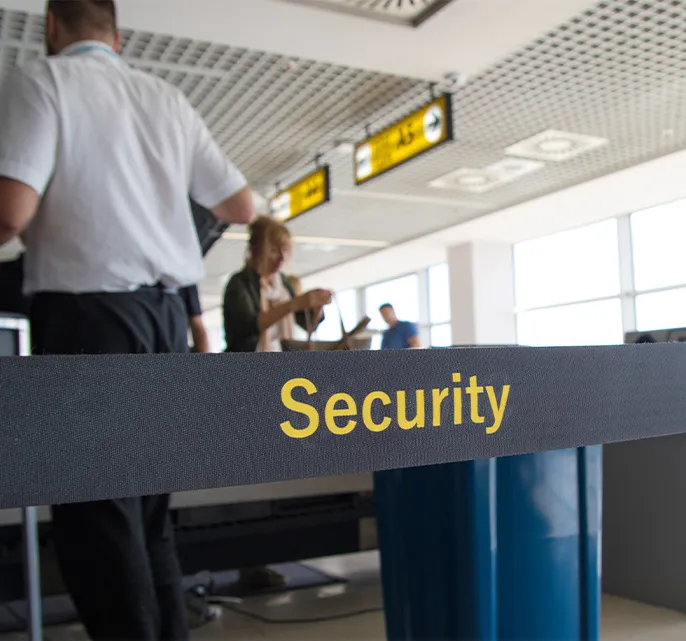

Last year, I was at Chhatrapati Shivaji Maharaj International Airport in Mumbai, running late for a flight to Hyderabad. The lines were long, the announcement boards were confusing, and somewhere between check-in and the boarding gate, I lost count of how many personnel had quietly checked my documents, scanned my bag, or just watched the crowd with that particular kind of focused calm. It was only on the flight that I thought how much of what made that experience orderly was invisible to me?
India's aviation sector has grown faster than most people expected. According to DGCA data, domestic passenger traffic crossed 150 million in a single year recently, and airports like Delhi, Bengaluru, and Hyderabad are handling volumes that rival several European hubs. With that scale comes a security challenge that cannot be managed by checkboxes and rosters alone.
The Human Layer That Technology Cannot Replace
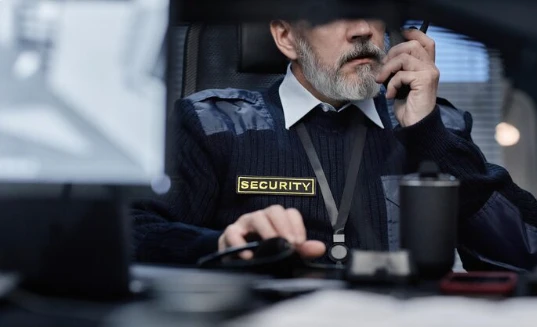
There is a tendency to assume that CCTV cameras, baggage X-ray machines, and automated alerts have made human judgment less important at airports. That assumption is wrong. A well-trained security guard in airport environments does something no algorithm does well they read context. A nervous passenger. A bag placed in an unusual position. Someone who avoids eye contact at the wrong moment. These micro-observations happen in real time, and they depend entirely on the person making them.
The best professionals in this space are not just physically present they are trained to respond proportionately, communicate clearly with diverse passengers (including international travellers and elderly flyers), and coordinate with CISF teams, airline staff, and ground handling crews without creating chaos. That is a real skill set, not a given.
Here are the core competencies that define effective airport security personnel in India today:
- Access control and perimeter monitoring at tarmac entry points and cargo zones
- Passenger profiling and queue management during peak travel hours
- Coordination with aviation authority protocols during emergencies or suspicious activity
- Documentation verification for restricted areas like crew lounges and ATC buildings
- De-escalation when passengers challenge security procedures
Why Corners Get Cut — and What It Costs
A security guard in airport duty is not a role that should be filled by anyone available. Yet outsourcing decisions at many smaller Indian airports have led to situations where personnel are underpaid, under-trained, and rotated so frequently that institutional knowledge never builds up.
The 2022 incident at Kannur International Airport, where an unauthorized individual briefly accessed a restricted zone, is one of several cases that pushed the Bureau of Civil Aviation Security (BCAS) to revise its audit framework. The lesson there wasn't about better cameras. It was about gaps in the human layer poor handover protocols between shifts, inadequate briefings, and no clear chain of command when something happened.
Aviation security is not a department that should be treated as a cost centre. When it fails, the consequences are not just financial or reputational. They affect passenger safety at a fundamental level.
What a Professional Aviation Security Partner Actually Delivers
If you manage airport operations or are responsible for an airline's ground security compliance, the difference between a vendor and a genuine security partner shows up quickly. A vendor sends bodies. A partner sends trained, vetted professionals who understand aviation-specific threat scenarios not just the kind of threat management used in malls or corporate offices.
Raxatech Nosecurity Solutions specialises in aviation security solutions built for this specific operating environment. Their personnel are trained in BCAS guidelines, equipped for both pre-boarding and airside security functions, and deployed with clear standard operating procedures that hold up during audits.
For airport operators, that specificity matters. Generic security firms rarely understand the difference between sterile area management and public zone management. Aviation-specific providers do.
FAQs
Q: What qualifications does a security guard working at an Indian airport need?
A: Personnel must meet BCAS standards, which include background verification, physical fitness criteria, and formal training in aviation security procedures. Many airports also require CISF coordination training and proficiency in basic English communication for passenger interaction.
Q: How is airport security different from regular commercial or industrial security?
A: Airport environments involve multiple restricted zones airside, landside, cargo, and sterile areas each with different access protocols. Personnel need to understand threat scenarios specific to aviation (such as improvised device recognition and disruptive passenger management), which standard security training does not cover.
Q: How often are airport security personnel audited in India?
A: BCAS conducts periodic audits of all civil aviation security programmes, including third-party security contractors. Frequency varies by airport category, but international airports are subject to more rigorous and frequent review cycles than domestic-only facilities.

























Sign in to leave a comment.