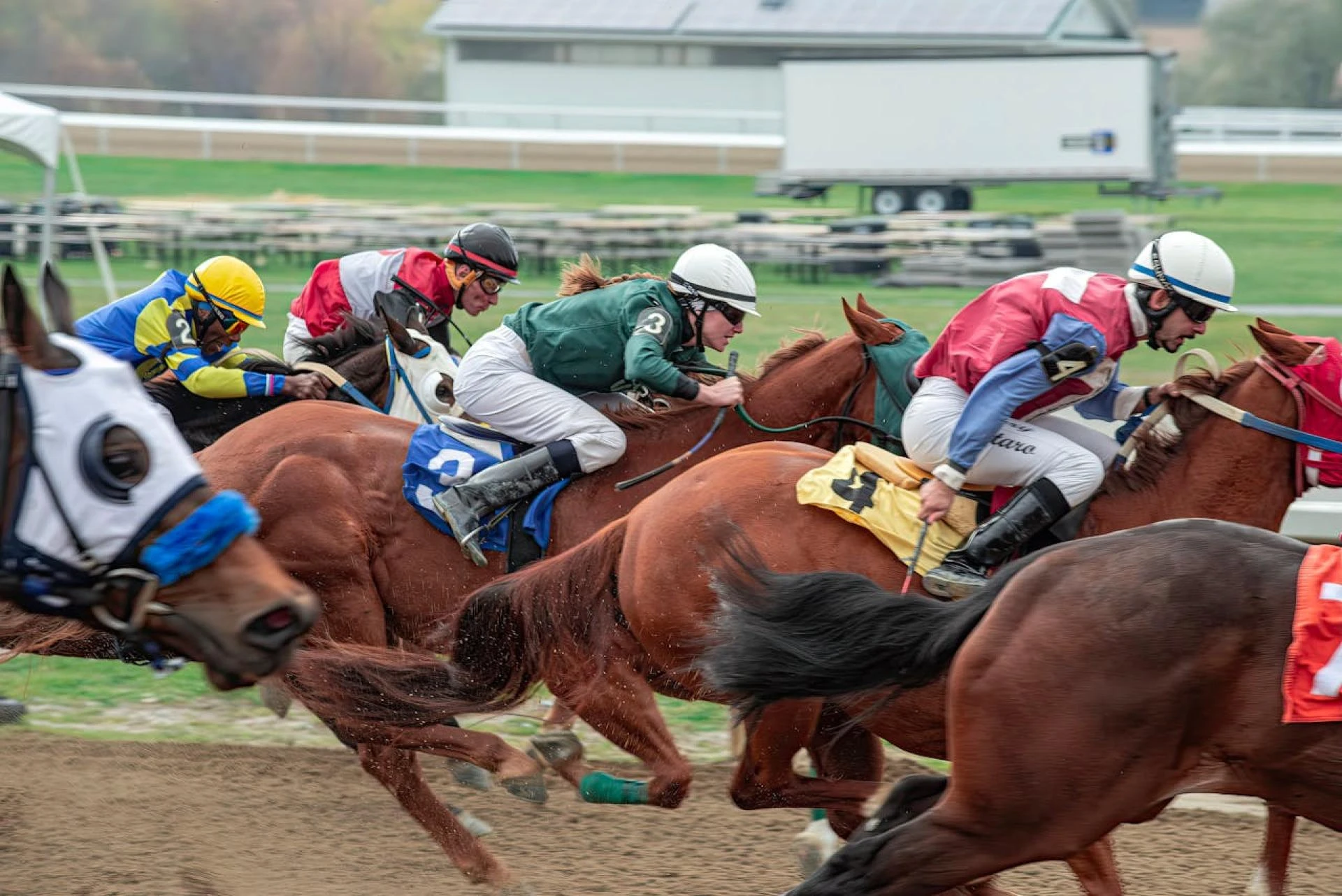

After watching a race, have you ever thought about how some horses are faster than others and what makes a horse a champion? It is not like they have tuned parts on their body that let them go faster. They all look the same, and their physique are very similar, so how can one run faster than the others?
Well, several different factors influence the horse’s speed. You have genetics, which actually play a very important role, which is why Champion breeds are usually much more expensive than other horses.
Next, we have the training of the horse, which allows them to maximize their potential.
There are also other factors like form, jockey connection, recent races, previous injuries, and many other things.
Also, some horses just have a big heart (literally) like the Secretariat, which may be considered a birth anomaly, but it allows them to pump blood faster and reach a faster speed.
Let’s look into the science and biology of a horse’s speed and find out what the secret recipe is to be training a Champion horse.
The Bloodline: Born to Run (Literally)
First and most importantly, we have genetics that directly impact the horse’s ability to run. In the horse racing world, this is called a bloodline. And which bloodline the horse comes from makes a big difference in their speed and power.
That’s why breeding is very important. Racehorses aren’t just born, they are carefully planned, like a royal wedding. Breeding experts are combining different bloodlines with a goal to produce a horse with exceptional abilities.
The question is, are all horses that come from champions really fast? Well, not really. The breeding process is quite scientific and hard, and there is no way to predict whether or not the foal will have the same characteristics.
But it is proven that if the horse comes from a fast bloodline, there is a greater chance that the newly born horse will have similar abilities.
That’s why bloodlines like the Secretariat (which is too distant nowadays), or the more recent ones like Tapit or Into Mischief, are very expensive.
Good genes mean that the horse has a solid start, but there is no guarantee, even in a world with AI predictive analysis. So, even if you have two million-dollar horses make a baby, the baby horse might still prefer naps over running.
Training: No Days Off
Ever heard the phrase, “You can’t out-train bad genetics”? In horse racing, the opposite is also true: great genes still need great training.
This is where trainers step in. The best of the best (think Bob Baffert, Todd Pletcher, or, more recently, Kenneth McPeek) have one job: turn raw potential into peak performance.
Training isn’t just daily jogs around the track. It includes:
● Conditioning runs to build stamina
● Gate work to make sure they don’t panic at the start
● Pace drills to teach them when to push and when to conserve
● Nutritional regimens that are basically fancier than most human diets
● And yes, even mental training, because horses get spooked, stubborn, and straight-up moody
Trainers need to read their horses like a book. Some are introverts. Some are drama queens. And some just want to race without being fussed over. Knowing how to tailor a routine to each horse is what separates champions from also-rans.
Performance
Here’s the wildcard part: even with perfect breeding and world-class training, not every horse wants to win.
Some horses—just like people—have that fire. That competitive edge. They want to beat the horse next to them, even if it’s just Tuesday morning and nobody’s watching.
That’s the X-factor.
You’ll hear trainers say things like, “This horse has heart,” or “He just knows when it’s go time.” That can mean the difference between a photo finish win and a “thanks for showing up” jog.
That’s why this is a commonly used strategy when betting. Handicappers like to look for that fiery spirit, even though the horse might not have exceptional times. The ones that can pick a favorite based on their X-factor benefit the most.
If you are that kind of person, maybe you should put your handicapping skills to the test and join a betting tournament here: https://www.twinspires.com/tournaments/
Also, don’t forget race conditions matter too—track surface, weather, jockey performance, even crowd noise can influence how a horse runs that day. It’s not a controlled lab. It’s a wild mix of adrenaline, chaos, and instinct.
So… What Makes a Champion?
Let’s tie it all together. A champion racehorse is the sum of a lot of parts:
● Born from greatness
● Trained like an athlete
● Cared for like royalty
● And most importantly… driven like a competitor
They’re not just fast—they’re fierce, focused, and sometimes, a little mysterious. You can study the data, analyze the splits, and memorize the pedigree—but sometimes, you just have to watch them fly down the track and say, “That horse gets it.”
Final Words
So, whether you’re an owner, a bettor, or just someone who loves watching history in motion, understanding where the horse’s speed comes from helps you appreciate the sport in a much deeper way.
Remember, we are talking about a complex issue where there are many scientists involved just to produce a horse that can run fast, and it doesn’t happen every time.




































Sign in to leave a comment.