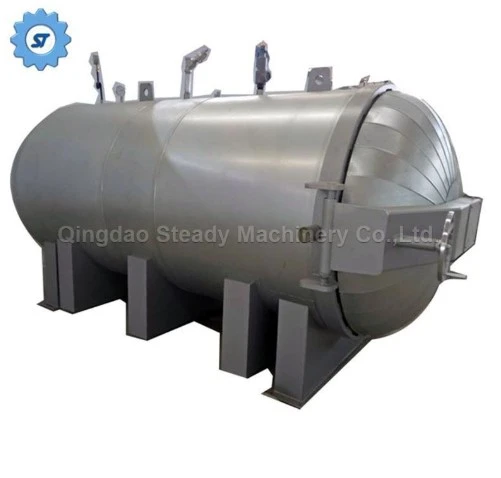

In the world of rubber manufacturing, achieving strong, elastic, and durable rubber products requires more than just mixing materials. The key lies in vulcanization—a process that transforms raw rubber into a more resilient and stable form through heat and pressure. One of the most critical tools in this process is the rubber vulcanizing tank, a specialized vessel designed to ensure uniform and effective vulcanization for a wide range of rubber-based components.
What Is a Rubber Vulcanizing Tank?
A rubber vulcanizing tank, also known as a rubber autoclave, is a pressurized container that uses steam or electric heat to cure rubber products. It operates under tightly controlled temperature and pressure settings to activate chemical cross-linking between rubber molecules. This treatment significantly improves the elasticity, strength, and heat resistance of rubber, making the material suitable for industrial use. Vulcanizing tanks are commonly used to cure hoses, rubber sheets, conveyor belts, and molded rubber parts.
Why Is It Important in Manufacturing?
Using a rubber vulcanizing tank ensures that every rubber product is evenly and thoroughly cured, reducing the risk of weak spots or material failure. Without proper vulcanization, rubber remains sticky, soft, and prone to wear and deformation. The tank allows for batch processing and can accommodate various product sizes, making it ideal for mass production or custom applications. With accurate control systems, it maintains consistency and quality, which are vital for meeting industry standards and customer expectations.
Key Benefits of Using a Vulcanizing Tank
One major benefit of a rubber vulcanizing tank is its ability to produce uniform results across all batches. It minimizes curing time while maximizing energy efficiency, especially when equipped with automated systems. The closed environment of the tank ensures safety, reduces emissions, and provides better working conditions for operators. Additionally, the tank’s design supports easy loading, unloading, and maintenance, making it a practical choice for continuous production workflows.
Industrial Applications
Rubber vulcanizing tanks are widely used in industries such as automotive, aerospace, construction, and mining. They cure parts like rubber gaskets, seals, expansion joints, rubber rollers, and insulation sleeves. In the tire manufacturing process, vulcanizing tanks are also used for treating inner tubes and other rubber components. Their ability to handle both large and small batches makes them suitable for a variety of production demands, from heavy-duty parts to lightweight consumer goods.
Choosing the Right Equipment
When selecting a vulcanizing tank, it’s important to consider the chamber size, pressure capacity, heating method, and automation features. Reliable sealing systems and safety valves are essential for secure operations. For companies aiming for long-term productivity, investing in a durable, well-engineered tank ensures fewer breakdowns and consistent output.
Qingdao Steady Machinery Co. offers dependable solutions tailored to modern manufacturing needs, including advanced rubber vulcanizing tank systems designed for precision and performance.
In conclusion, incorporating a rubber vulcanizing tank into your production process enhances product quality, boosts efficiency, and ensures your rubber goods meet stringent industry requirements. It’s a foundational tool for any serious rubber manufacturer.










Sign in to leave a comment.