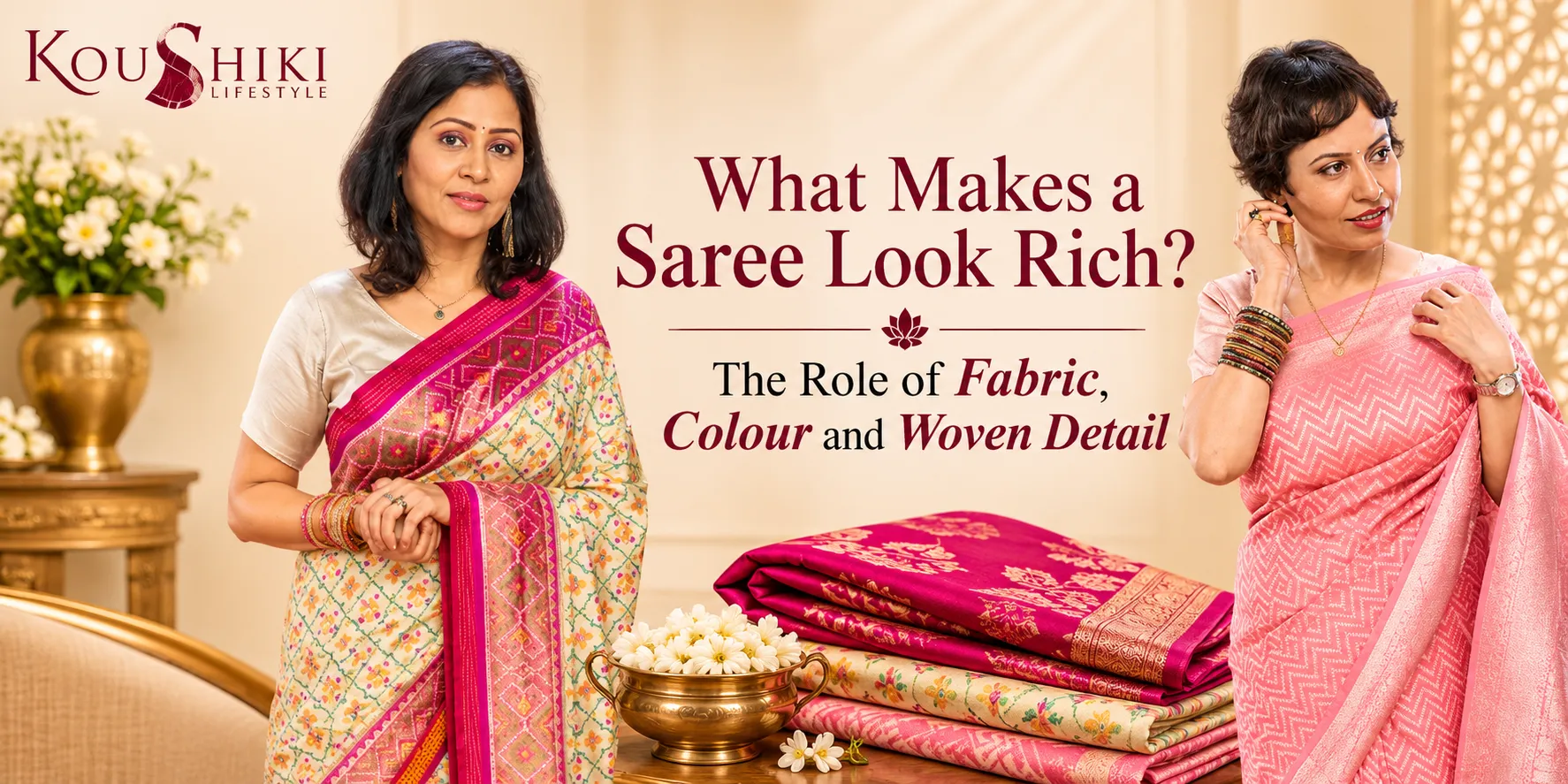

Have you ever noticed how one saree catches your eye even when it has very little embroidery or embellishment? It might be the way its fabric catches the light, the contrast of its border, or the delicate details woven into the pallu. You may not immediately know what makes it stand out, but something about the design feels special.
That is often what gives a saree its richness. It is not always about the price, the amount of zari, or how elaborate the design looks. The fabric, colour, weave, and finishing all play a part. Understanding these elements can help you recognise a well-designed saree and choose one that suits your taste.
How Fabric Influences a Saree's Appearance
The fabric has a lot to do with how a saree looks when worn. Some materials have a natural sheen, others have a textured surface, and some are known for the way they fall when draped.
Banarasi silk, for instance, is recognised for its woven motifs, brocade patterns, and zari work. Muga silk has a distinctive golden sheen that gives it character even without heavy embellishment.
Tussar silk offers a textured, earthy appearance, while tissue sarees have a noticeable shimmer that catches the light.
Satin silk has a smooth, polished finish, whereas georgette is known for its fluid drape and softer movement. Each fabric creates a different visual effect.
A saree does not have to shine brightly to look beautiful. Sometimes, its texture or the way it falls is what makes it memorable.
How Colour Combinations Add Depth to a Saree
Colour can completely change the mood of a saree. A deep maroon with gold detailing creates a different impression from an ivory saree with a delicate border, even if both feature similar motifs.
Wine, emerald, navy, and maroon often create a striking appearance. Red, rust, and mustard bring warmth and a traditional feel. If you prefer softer colours, blush, sage, ivory, and powder blue can look equally elegant when paired with thoughtful detailing.
However, the main colour is only one part of the design. Look at how the saree's body, border, and pallu work together. A contrasting border can add definition to a simple base, while complementary shades can create a coordinated appearance.
This is why lighter shades should not be overlooked. The right weave and a well-chosen border can give even a subtle colour plenty of character.
The Woven Details That Make a Saree Stand Out
Sometimes, the smallest details make you look at a saree twice. A beautifully woven border, a patterned pallu, or tiny motifs spread across the fabric can give the design a distinctive character.
1. The Border and Pallu
The border frames the saree. A broad border with intricate zari can create an elaborate traditional look, while a narrow one may suit a simpler design.
The pallu deserves just as much attention. It often carries detailed brocade patterns, woven motifs, or contrasting colours. Notice how it connects with the rest of the saree. It should complement the body rather than look like a separate decorative element.
2. Motifs and Butti Work
Motifs bring patterns to life. Some sarees feature floral jaal spread across the fabric, while others have geometric designs or small butti motifs placed at regular intervals.
Closely arranged patterns can make a saree look elaborate, whereas spaced-out motifs allow more of the base fabric to show. The choice depends on the look you prefer, but the pattern should feel balanced.
3. Zari and Brocade
Zari adds metallic detail through threads woven into the design, while brocade creates decorative patterns through weaving. Both can give a saree more depth and texture.
However, more zari does not automatically mean a richer appearance. Its placement, colour, and relationship with the fabric matter too. A little detailing in the right place can make a stronger impression than embellishment spread across the entire saree.
Why Design Balance Matters More Than Heavy Embellishment
Imagine a saree with a heavily decorated border, an elaborate pallu, and dense motifs across its body. Each detail may be beautiful on its own, but together they can make the design feel crowded.
Now picture a saree with a detailed pallu and border but a relatively simple body. The woven work gets room to stand out, making the overall design feel more balanced.
This is why it helps to look at the saree as a whole. Notice the size of the motifs, the width of the border, and how much detailing appears across the fabric. When these elements complement one another, the saree feels thoughtfully designed without needing decoration everywhere.
How to Recognise These Details When Shopping Online
Buying a saree online can be exciting, but the photographs do not always tell you everything about the fabric or weave. Before placing an order, check a few important details:
- Fabric Composition: Read the product description instead of relying only on a broad label such as silk.
- Close-up Photographs: Examine the fabric surface, motifs, zari work, and border.
- Type of Detailing: Check whether the patterns are woven, printed, embroidered, or added as Embellishments. These techniques create different finishes.
- Pallu and Border: See how their colours and patterns complement the main body.
- Colour Accuracy: Compare all available photographs because lighting and screen settings can affect how a shade appears.
These checks help you understand what you are buying instead of choosing a saree based only on its first photograph.
Choosing a Rich-Looking Saree That Reflects Your Style
A richly detailed saree may catch your attention, but it should also feel right for your personal style. If you enjoy traditional designs, you may be drawn to Banarasi silk with its elaborate motifs and zari. If you prefer understated dressing, Muga or Tussar silk may appeal to you.
For those who love colour and patterns, Patola and Bandhani offer plenty of visual interest. A fluid georgette saree or a tissue design with subtle detailing may suit someone who prefers a softer look.
Think about where you plan to wear it, too. A saree that works with your favourite jewellery and blouse styles is more likely to find a regular place in your wardrobe.
True Richness Lies in the Details
A saree does not need heavy embellishment or layers of zari to look special. Sometimes, it is the texture of the fabric, a beautifully finished border, or the way the pallu brings the entire design together. These are the details that give a saree its character.
Koushiki Lifestyle brings together Banarasi, Muga silk, Patola, and Bandhani styles for different preferences. Browse our collection to find a design that feels right for your taste, whether you love intricate weaving, vibrant patterns, or understated elegance.

















Sign in to leave a comment.