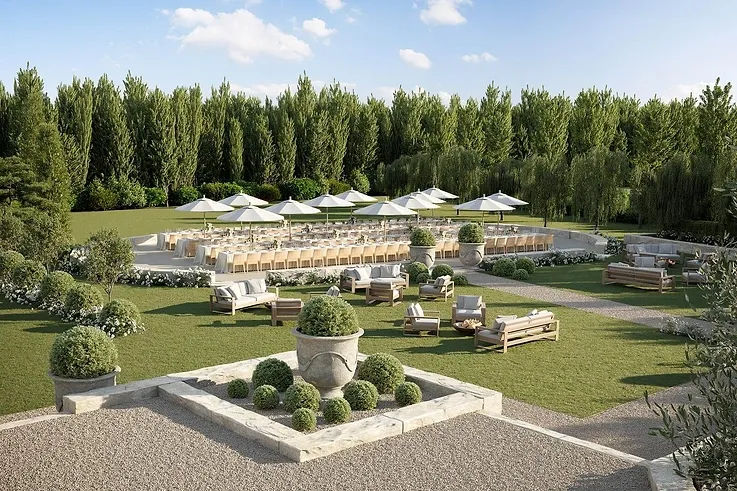

Sunset exposes everything a historic landscape already knows about itself. Stone warms before it cools. Gardens lose their sharpness and begin blending into shadow. Water reflects light long after the sky starts fading behind the mountains. In places shaped by age and weather rather than construction schedules, evening feels less like a lighting change and more like the estate settling into its natural state. That shift explains why historic garden venues feel fundamentally different at sunset than modern event spaces ever do. The romance is already there before the candles are lit.
A true European-Style Garden Venue creates atmosphere through layers accumulated over time rather than through decoration alone. At The Ruins at Sassafras Museum, the property unfolds like a restored landscape rather than a designed venue. Forests open into terraces. Gardens emerge beside preserved stone ruins. Waterfalls move quietly through the estate beneath old Shaker structures restored carefully enough to retain their imperfections.
One corner recalls the softness of an English garden after rain. Another feels startlingly close to Tuscany in late evening light. Elsewhere, candlelit stone and dense surrounding greenery evoke the intimacy of a courtyard tucked somewhere beyond Marrakech. None of it feels themed. That distinction matters. The estate carries influence without imitation because the atmosphere comes directly from the landscape itself.
Historic Gardens Absorb Time
Modern venues often feel complete the second guests arrive. Historic estates reveal themselves more slowly. The details emerge through movement, light, and proximity.
At The Ruins at Sassafras Museum, gardens grow naturally into pathways and stonework instead of remaining sharply separated from the architecture. Moss settles into old walls. Trees frame mountain views unevenly depending on the season. Water from Sassafras Falls moves beneath the ruins with the kind of quiet consistency that eventually shapes the entire mood of a place. These are not decorative gestures added for weddings. They belong to the property already.
That authenticity changes how sunset behaves across the estate. Light catches rough stone differently than polished surfaces. Garden and terraces are lit unevenly with shadows. The air seems to change and the mountains start changing color around the premises. Guests notice it instinctively, even if they cannot quite explain why the atmosphere feels more emotional outdoors.
Sunset Changes the Pace of a Wedding
The strongest outdoor venues allow the evening to slow naturally instead of forcing momentum through scheduling and production. Historic gardens are particularly good at this because they encourage wandering rather than containment.
At Deere Pond, guests gather beneath the willow tree while the mountains fade gradually behind the water. People drift toward quieter corners of the estate without needing direction. Conversations lengthen. The landscape starts doing part of the work that music and lighting often have to force inside conventional venues.
That slower rhythm matters more than most couples realize during planning. Weddings become memorable when guests feel immersed in the environment rather than processed through it. Historic estates create space for pause. A terrace overlooking the hills. A garden path lit softly by candles. Water moving somewhere nearby in the dark. Small moments begin accumulating quietly throughout the evening.
Candlelight Belongs in Historic Spaces
Candlelight works best in places that already contain shadow and texture. Inside newer venues, candles often feel ornamental. In historic ruins and garden estates, they feel necessary.
At The Ruins at Sassafras Museum, candlelight settles directly into the architecture. Hundreds of votives flicker against preserved stone walls while surrounding gardens disappear gradually into darkness. String lights remain subtle enough that the landscape still dominates the experience rather than competing with it.
The effect feels intimate because the estate itself remains slightly imperfect. Stone stays weathered. Pathways remain uneven in places. Gardens move freely around the ruins rather than appearing overly controlled. Sunset simply reveals those textures more clearly before night takes over entirely.
That restraint is rare now. Too many venues mistake spectacle for atmosphere.
Restoration Carries Emotional Weight
One reason historic estates feel romantic is because they visibly carry preservation within them. Guests sense immediately when a place has been restored carefully rather than redesigned for efficiency.
The Sassafras property still holds traces of the original Shaker settlement throughout the estate. Restored structures maintain their age instead of disguising it. Reclaimed materials remain visible. Ruins uncovered beneath overgrowth were preserved as gathering spaces rather than erased completely.
The museum identity becomes important here because the property functions less like a commercial venue and more like a curated landscape experience. History exists throughout the estate in physical form. Architecture, objects, gardens, and pathways all contribute to the atmosphere together.
That layered preservation gives the estate emotional depth newer venues struggle to replicate no matter how polished the design becomes.
The Landscape Creates Distance from Ordinary Life
Historic garden venues often feel romantic because they remove guests from familiar surroundings almost immediately. The transition happens quietly.
Mountain roads lead toward forests, terraces, waterfalls, gardens, and restored buildings spread throughout the property. At dusk, the estate is not associated with daily life or nearby towns. As it grows dark, the mountains converge around the landscape. Terrace lighting up with candles, stone ruins start to feel like they're out of this world.
The property unfolds gradually and Sassafras copes particularly well with this. Visitors keep stumbling onto more gardens, overlooks, paths and spaces to gather, as the evening progresses. That sense of discovery keeps the atmosphere emotionally active long after the ceremony ends.
Historic Gardens Encourage Intimacy Naturally
Outdoor historic estates also create intimacy differently than traditional reception halls. Visitors are not confined within a single room but instead break up into smaller talks by terraces, gardens, and candle lit pathways.
This is best represented at sunset in the Stone House Terrace. Dinners last long with the mountains as a backdrop as the light slowly recedes behind the hills. The atmosphere feels personal rather than performative. More like an evening gathering at a private European estate than a structured event venue.
That intimacy becomes one of the defining memories guests carry home afterward.
Conclusion
Historic garden venues feel especially romantic at sunset because the landscape itself begins shaping the emotional experience of the evening. Light softens against preserved stone. Gardens settle into shadow. Candlelight reveals texture instead of decoration. Guests slow down, wander, linger, and absorb the atmosphere almost unconsciously. Few places capture that balance between restoration, nature, history, and intimacy more completely than The Ruins at Sassafras Museum, where preserved Shaker architecture, mountain landscapes, waterfalls, gardens, and candlelit ruins create an experience that feels immersive, transportive, and entirely grounded in the character of the estate itself.

























Sign in to leave a comment.