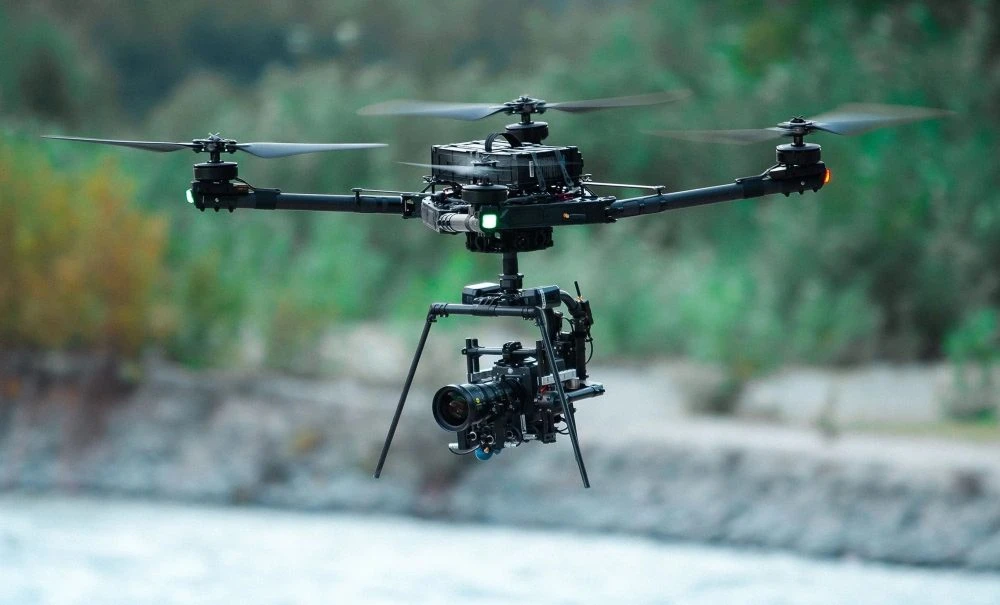

The world of drone technology has evolved at lightning speed — transforming from hobbyist gadgets to industrial-grade machines capable of carrying heavy payloads, capturing high-resolution data, and performing complex missions. Among them, the largest commercial drones stand as the pinnacle of innovation, strength, and utility.
But what exactly makes the largest commercial drone so powerful? Is it the size, payload capacity, or the advanced AI and sensors built within it? For a deeper understanding of overall drone quality and features, check out our guide: A Quick Comprehensive Knowledge about Commercial Quality Drones
1. Understanding What “Powerful” Means in Drones
When we talk about “power” in a drone, it’s not just about how fast it can fly or how big it looks. Power is defined by a mix of payload capacity, endurance, propulsion, stability, and smart technology.
The largest commercial drones are designed not just for flight — but for serious industrial work like cargo delivery, precision agriculture, power line inspection, and even disaster response.
2. Size and Payload Capacity: The Core of Power
The first element that defines the power of any commercial drone is its payload capacity — the amount of weight it can carry.
Example: The Griff 300, made by Norway’s Griff Aviation, can carry up to 225 kilograms (496 lbs) of payload. This allows it to transport emergency supplies, tools, and even small machinery to remote sites.
Another Example: The EHang 216, a two-seater autonomous aerial vehicle from China, can lift two passengers for urban air mobility — redefining what we call a “drone.”
These examples show that the largest commercial drones aren’t just for filming or mapping — they can perform heavy-duty logistics operations that previously required helicopters.
3. Propulsion System and Battery Technology
The propulsion system — the combination of motors, propellers, and energy source — is a major determinant of drone power.
Larger commercial drones often use hybrid systems (electric + fuel-based) for longer flight durations. For instance:
The HYBRiX 2.1, developed by Quaternium (Spain), combines fuel and electric power to achieve 4+ hours of flight time — almost 10 times more than standard commercial drones.
This hybrid capability allows drones to handle large-scale surveillance, agriculture spraying, and industrial inspection without frequent charging interruptions.
Such endurance makes them ideal for real-life applications like inspecting long oil pipelines or surveying large construction areas.
4. Intelligent Flight Control and AI Integration
Modern commercial drones are far beyond manual control. The largest commercial drones integrate artificial intelligence (AI) and advanced flight control systems to ensure stability, obstacle avoidance, and mission automation.
Key features include:
· AI-powered object recognition for detecting humans, vehicles, or structures.
· Autonomous navigation using LiDAR and GPS systems.
· Predictive maintenance alerts powered by onboard sensors.
Example: The DJI Matrice 350 RTK is equipped with real-time positioning and AI-assisted object detection that allows it to operate safely even in challenging weather or terrain.
AI integration ensures that drones perform precision tasks autonomously, reducing human error and improving operational efficiency — a major reason behind their “power.”
5. Durability and Build Quality
The largest commercial drones are engineered for tough environments. They are built using carbon fiber, titanium, or reinforced polymers, giving them a strong structure without excess weight.
They are designed to withstand:
· High winds
· Dust, rain, and extreme temperatures
· Heavy vibration from flight and payload
For example, the Freefly Alta X drone is known for its robust build that can handle demanding cinematography setups in extreme weather.
Such durability makes these drones reliable for defense, mining, and offshore operations, where traditional drones often fail.
6. Advanced Sensor and Imaging Systems
Another reason why the largest commercial drones are powerful lies in their sensors and imaging capabilities.
These drones often carry multiple payloads at once — from high-definition cameras to LiDAR scanners and multispectral sensors.
Real-life Example:
The Quantum-Systems Trinity Pro drone is used in agriculture and land surveying. It combines a high-resolution RGB camera with a LiDAR sensor to generate 3D maps of farmland, helping farmers make data-driven decisions.
By integrating such technology, drones provide accurate data for:
· Mapping & 3D modeling
· Crop health monitoring
· Infrastructure inspection
· Search and rescue operations
The ability to capture and analyze data in real time makes them a powerful tool across multiple sectors.
7. Range and Connectivity
The larger a drone, the more advanced its communication system must be. These drones often operate over several kilometers, requiring secure, low-latency connections.
· Example: Some industrial drones like Skyfront Perimeter 8 can maintain a communication range of up to 100 kilometers using hybrid power and long-range radio transmission.
· This feature enables beyond-visual-line-of-sight (BVLOS) missions — crucial for mapping, surveying, and security surveillance.
Such capabilities make them essential for border patrol, oil and gas monitoring, and environmental research.
8. Real-Life Applications of the Largest Commercial Drones
The true power of large commercial drones can be seen in how industries are applying them:
a. Construction and Infrastructure
Drones are being used to inspect tall buildings, bridges, and tunnels. For example, in Dubai, large drones assist in monitoring skyscraper maintenance, reducing the need for human climbers.
b. Agriculture
Farmers use drones like DJI Agras T50 for spraying fertilizers and pesticides across hundreds of acres efficiently. The larger the tank and flight time, the more area covered in less time.
c. Logistics and Delivery
Amazon Prime Air and Zipline are experimenting with heavy-lift drones to deliver goods and medicines to remote areas — making supply chains faster and more eco-friendly.
d. Disaster Response
In 2024, during wildfires in California, large drones equipped with thermal cameras and water tanks were deployed for early detection and firefighting support.
Each of these examples shows that the largest commercial drones aren’t just machines — they are life-saving and business-transforming assets.
9. Regulatory and Safety Considerations
With great power comes responsibility.
Large commercial drones require strict regulatory approvals because of their weight and operational range.
Authorities like FAA (U.S.), EASA (Europe), and CAA (UK) demand special permissions for BVLOS and heavy-lift operations.
Manufacturers must also integrate:
· Geo-fencing
· Remote ID systems
· Fail-safe landing features
These safety measures ensure responsible use of powerful drones in populated or sensitive zones.
10. The Future of Large Commercial Drones
The future of large commercial drones is incredibly bright.
Trends like hydrogen fuel cells, 5G connectivity, and AI-driven fleet coordination will make them even more capable.
For instance:
· Hydrogen-powered drones are being developed that can fly for 10+ hours continuously.
· AI swarming technology allows multiple drones to work together — inspecting wind turbines or monitoring forests collaboratively.
In the next five years, we may see drones replacing small helicopters in surveying, cargo delivery, and emergency response.
11. Real-Life Example: ZenaDrone 1000
A remarkable real-world case is ZenaDrone 1000 by ZenaDrone Inc.
It’s designed for industrial, agricultural, and military applications — combining:
· Smart AI for autonomous operation
· Heavy payload capability
· Multispectral cameras for inspection and analysis
The ZenaDrone 1000 has been used in agricultural spraying, power line inspection, and environmental monitoring. Its advanced AI and robust design make it one of the most powerful drones currently in commercial use — bridging innovation with real-world performance.
12. Why Businesses Choose Large Commercial Drones
Companies are increasingly investing in large drones for three main reasons:
· Efficiency: They can do the work of multiple smaller drones in one flight.
· Cost-effectiveness: Reduces man-hours and equipment costs.
· Data accuracy: Equipped with multiple sensors for high-precision analytics.
This combination of speed, scalability, and intelligence gives organizations a competitive edge in data-driven decision-making.
13. Challenges Facing Large Drone Development
Despite their power, large commercial drones face challenges:
· High cost of manufacturing and maintenance.
· Complex regulations for heavy-lift flight.
· Battery limitations for pure-electric models.
However, ongoing research in battery density and hybrid systems continues to overcome these barriers — signaling a strong growth curve for the industry.
FAQs About the Largest Commercial Drones
1. What is the largest commercial drone in the world?
Currently, drones like Griff 300 and EHang 216 are among the largest commercial models. Griff 300 can carry nearly 225 kg, while EHang 216 can lift two passengers.
2. How much weight can the largest commercial drone carry?
Most large drones can carry between 100 to 500 kilograms, depending on their design and propulsion system.
3. Are large commercial drones legal to operate?
Yes, but operators need special permissions from aviation authorities like the FAA or local CAA for heavy-lift or BVLOS operations.
4. How much does a large commercial drone cost?
Prices vary from $25,000 to over $200,000, depending on specifications, payload systems, and automation features.
5. What industries use large commercial drones the most?
Common industries include agriculture, logistics, construction, defense, and energy inspection.
Conclusion
The largest commercial drones symbolize the future of unmanned aerial innovation — where power, intelligence, and endurance meet. From carrying hundreds of kilograms to flying miles beyond human sight, these machines are reshaping industries and saving lives.
Their strength doesn’t just come from size — it comes from technology, adaptability, and real-world performance. As companies like ZenaDrone, Griff Aviation, and EHang continue to innovate, we can expect the next generation of drones to fly higher, work smarter, and redefine what’s possible in the skies.










Sign in to leave a comment.